How the Blue Wave Crested on the Greater West Side
Eight takeaways from an election that reshaped the country, elevated new political powerhouses, and changed the balance of power over Chicago’s public schools

Tuesday’s midterm election sent a Democratic wave across the country—and brought consequential changes to the Greater West Side.
Voters chose a successor to longtime U.S. Rep. Danny K. Davis, helped elect Illinois’ first Black male lieutenant governor (who has roots on the Greater West Side) and selected Chicago’s first fully elected school board. They also delivered an emphatic message about the cost of living and who should shoulder the burden of funding public services.
Here are eight developments worth watching as the votes are counted and the winners prepare to govern.
A national blue wave reached Republican strongholds
Democrats reclaimed control of both chambers of Congress and broke through in states where Republican victories had long seemed routine. The results transformed the final two years of President Donald Trump’s term, giving the opposition party the power to investigate his administration, contest his spending priorities and shape the legislative agenda.
Some of the most striking victories came in gubernatorial races. In Texas, Democrat Gina Hinojosa defeated Gov. Greg Abbott, ending a Republican winning streak stretching back to the 1990s. In Georgia, Keisha Lance Bottoms became the first Black woman elected governor in American history. Democrats also captured governorships in Ohio and Iowa.
Those victories disrupted longtime Republican dominance in states like Texas and Georgia (where Republicans had trifectas, meaning they controlled the governorship and both legislative chambers) to divided governments. Democrats secured new trifectas in Minnesota, Pennsylvania and Wisconsin.
The dissatisfaction behind the results extended across several issues. The Associated Press’ national voter survey found that voters blamed Trump for tariffs, the war in Iran and his failure to deliver promised price reductions. More than half said government corruption was crucial to their congressional vote.
For Greater West Side residents, the implications reach beyond the partisan scoreboard. The new congressional majorities will confront decisions about health coverage, food assistance, education funding, immigration enforcement and the costs of war—all matters with direct consequences for local households.
Democratic victories create opportunities to change federal priorities. Turning those opportunities into laws, however, will require agreement within the party and a strategy for dealing with a Republican president who retains veto power.
Black voters and young voters helped power the shift
The election challenged assumptions that Trump’s 2024 gains among younger voters and Black men represented a durable Republican realignment.
According to the AP Voter Poll, roughly seven in 10 voters under 30 supported Democratic House candidates. About nine in 10 Black voters also backed Democrats, with Republican support among Black men falling substantially compared with Trump’s performance two years earlier. These comparisons involve different offices and electorates, but they indicate a significant shift.
Tufts University’s CIRCLE research center found similarly strong youth support in pivotal statewide contests. In Georgia, 70% of young voters supported Bottoms for governor and 71% backed Democratic U.S. Sen. Jon Ossoff.
That support mattered even as Republicans attempted to protect their House majority through new congressional maps. Reuters reported that Democratic gains threatened to turn some Republican gerrymanders into liabilities. Spreading Republican voters across additional districts can create more competitive seats when the electorate swings sharply in the other direction.
The evidence supports a story of strong Democratic support among Black and young voters. It does not yet establish that either group experienced a nationwide turnout surge.
Participation rose sharply from March
Chicago’s certified March primary turnout was 27.3%, with 424,564 ballots cast among 1,555,301 active registered voters. On Nov. 3, unofficial data from the Chicago Board of Elections shows 43.3% of the city’s voter’s turned out to the polls, a roughly 16% increase and a 58% increase over March’s turnout rate.
Suburban Cook County saw an even larger increase. Certified March results recorded 394,256 ballots cast among 1,727,843 registered voters, a turnout rate of 22.8%. November’s unofficial results showed 738,851 ballots cast among 1,750,625 registered voters, or 42.2% turnout, according to Cook County Clerk data. That represents an increase of around 85% over March’s turnout rate.
November’s vote count remains unfinished, though. Chicago election officials reported outstanding precinct results and mail ballots after Election Day, meaning the final turnout will change.
What is clear is that the general election drew substantially more participation than the primary.
Chicago’s historic school board election produced a divided mandate
Chicago voters elected all 21 school board members for the first time, choosing a citywide president and representatives from 20 districts.
The Chicago Teachers Union emerged with a substantial bloc but lost important contests. As of Wednesday morning, WBEZ reported that CTU-backed candidates had won seven district seats and were leading in three additional races that remained too close to call. Those results could give the union significant influence without an outright majority.
In District 5A, LaPamela Williams defeated incumbent Aaron “Jitu” Brown. Preliminary returns showed Williams receiving approximately 64% of the vote to Brown’s 36%. Brown, a nationally known education organizer, had CTU backing.
In District 5B, incumbent Michilla “Kyla” Blaise held a narrow lead over Anthony Hargrove, the WBEZ reported. Blaise, who was backed by the CTU, had nearly 53% with approximately 96% of precincts reporting early Wednesday. The race remained too close to call. Hargrove’s supporters included SEIU’s Illinois State Council, the Illinois Network of Charter Schools and Common Ground Collective, a political action committee heavily funded by billionaire Michael Sacks.
Jessica Biggs won the citywide presidency with around 49% of the vote, defeating CTU-backed Hilario Dominguez and attorney Victor Henderson. Dominguez and Henderson garnered around 31% and 18%, respectively, according to unofficial data. Biggs’ coalition included the union representing CPS support staff and Common Ground Collective.
The new board will inherit difficult decisions about budgets, enrollment and school buildings. Those questions are especially consequential on the West Side, where residents have experienced both school closures and decades of disinvestment.
Davis passes the torch to, and Franklin prepares to succeed, Ford
La Shawn K. Ford’s election to Illinois’ 7th Congressional District marks a generational transition in the seat held by Danny K. Davis for nearly three decades.
According to Austin Weekly News, Ford celebrated with supporters at XS Tennis Village on the South Side on election night. Speaking to the newspaper the next day, Ford emphasized the responsibility accompanying the victory and the work awaiting the incoming Congress.
“I was at a loss for words, given that I’m able to take the torch from Cong. Davis,” Ford told Austin Weekly News. He identified health care, voting rights and spending on international wars among his priorities.
The transition also reaches Springfield. Shantel Franklin, who ran unopposed in November, is set to succeed Ford in Illinois’ 8th House District. Austin Weekly News reported that Franklin entered the general election without a Republican challenger after winning the Democratic primary.
Ford and Franklin will assume their new roles when their respective terms begin in January. For constituents, the change means new leadership in both Washington and Springfield.
Pritzker brings his next agenda to Austin
One day after winning a third term, Gov. JB Pritzker visited Columbus Park in Austin to unveil “Fighting for Illinois: The Day One Agenda.”
The package contains approximately 200 proposals directed at the incoming Congress. According to the governor’s office, state agencies helped develop the recommendations by identifying federal decisions and funding changes affecting Illinois residents.
The proposals include reversing Medicaid and food-assistance cuts, restoring enhanced Affordable Care Act premium tax credits, strengthening oversight of immigration enforcement and restoring federal education capacity. Pritzker also renewed calls to end the Iran war, raise the federal minimum wage and expand access to health care and child care.
It also offered a glimpse of how Pritzker could use his third term to strengthen his national profile ahead of a possible 2028 presidential run.
One Greater West Side history-maker prepares to govern while another fights to keep his speakership
Christian Mitchell’s victory alongside Pritzker will make him Illinois’ first Black male lieutenant governor when he takes office. Mitchell grew up in Maywood and Westchester, raised by his mother and grandparents. In a pre-election profile, the Chicago Crusader described how his family’s experiences with work, illness and financial pressure shaped his approach to public policy.
Mitchell brings experience as a state representative and deputy governor. His work in the Pritzker administration included major infrastructure and clean-energy initiatives.
Meanwhile, another politician with roots on the Greater West Side faces challenges to his leadership. Illinois House Speaker Emanuel “Chris” Welch, a Hillside resident and Maywood native, faces an organized effort to deny him another term as speaker. Twenty-six current and incoming House Democrats issued a statement Wednesday calling for new leadership, turning private dissatisfaction into a public challenge, ABC7 reported on Nov. 5.
The opposition follows criticism of Welch’s handling of sexual harassment allegations against former state Rep. Harry Benton. Lawmakers have also raised concerns about his decision to withdraw the House Democratic political organization from the state party’s coordinated campaign and his requirement that bills secure support from 60 Democrats before receiving a floor vote.
Welch’s supporters have defended his fundraising and electoral record. POLITICO’s Illinois Playbook reported that his political organization raised $35 million, protected incumbents and helped expand the Democratic majority.
The leadership dispute remains unresolved. The House’s formal vote for speaker will occur when the new General Assembly takes office in January, although Democrats are expected to discuss their leadership during the upcoming veto session.
Voters strongly endorsed taxing millionaires to support schools and property-tax relief
Cook County voters delivered a clear advisory message on taxes. Nearly 80% of Chicago voters and more than 71% of suburban Cook County voters supported a nonbinding question asking whether Illinois should impose an additional tax on millionaires, according to unofficial results reported by WTTW.
The proposal calls for a 3% income-tax surcharge on millionaires, with half the revenue devoted to property-tax relief and half to public education.
The result signals strong support for asking wealthy residents to contribute more to offset rising property taxes and bolster school funding.
The vote itself creates no new tax. It is an advisory referendum intended to influence state policy. Nor do the countywide figures establish how each Greater West Side suburb voted.
See more election results
To view more statewide election results, click here. To view unofficial results from the Chicago Board of Elections, click here. To view unofficial results from the Cook County Clerk’s office for suburban races, click here.
Related Articles
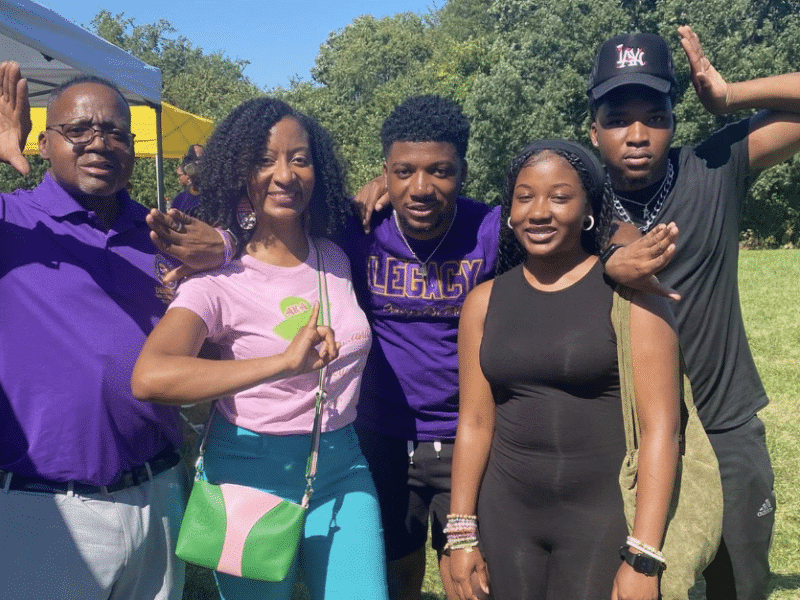
Barbara Deer Remembered as Community Leader After Tragic Killing
Services for Barbara and Kaleb Deer will take place on April 30 and May 1
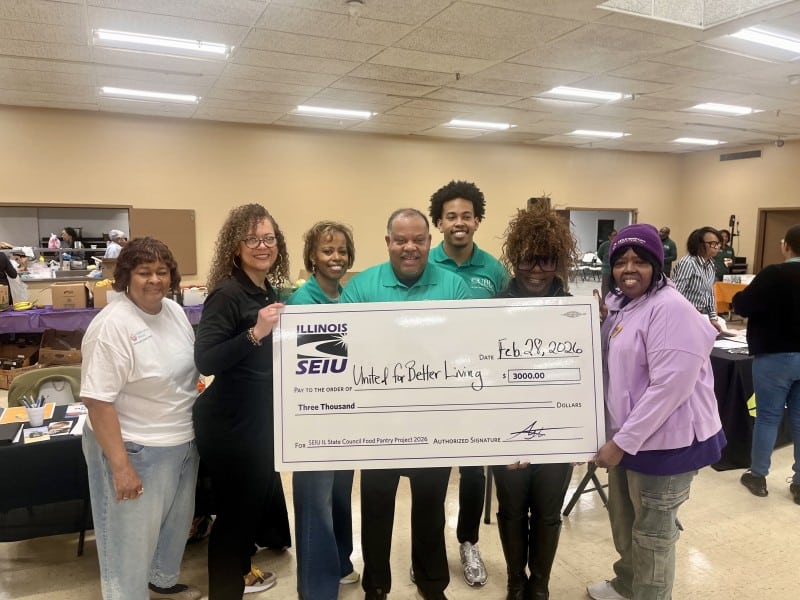
SEIU Local 73 Donation Helps Strengthen West Side Food Pantry
United for Better Living closed Black History Month with a healing fair, local vendors, and support for families in Garfield Park