
Aldermen Vote Against Mayor Johnson’s Proposal to Reimplement Daley-Era Corporate Head Tax
That the mayor’s proposal, a modest tax that was in place for 40 years before it was eliminated under Rahm Emanuel, is framed as remotely radical or controversial is a sad sign of our times
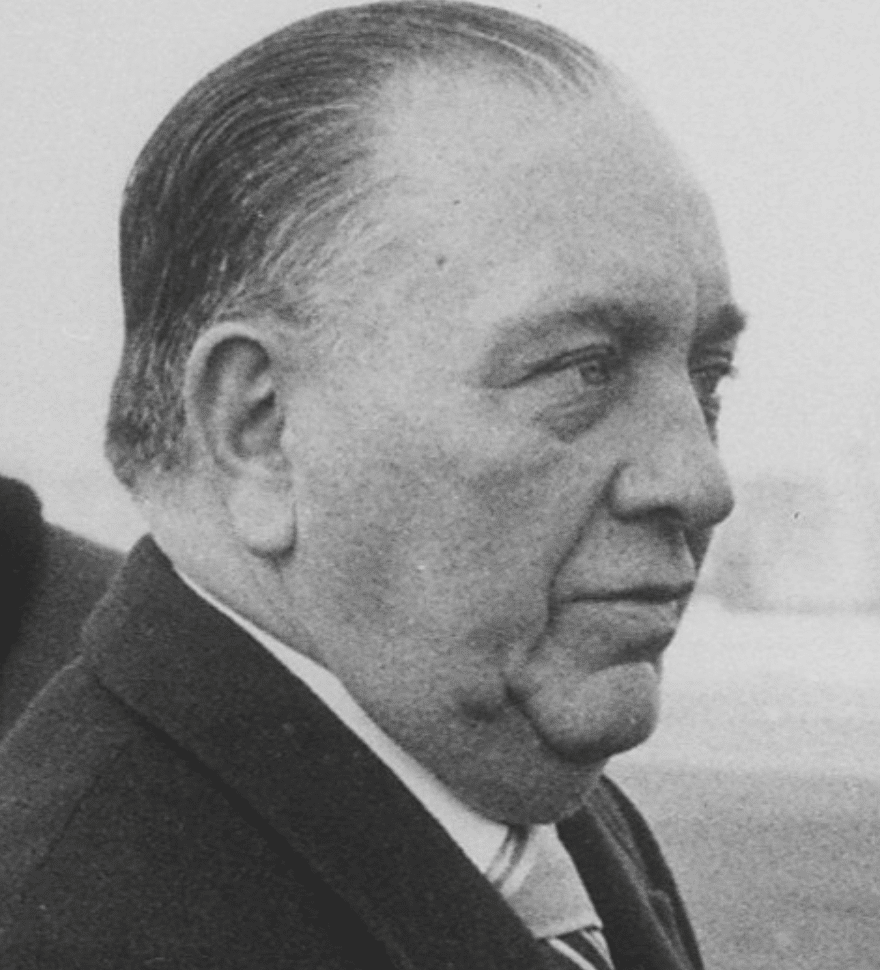
The corporate head tax advocated by Chicago Mayor Brandon Johnson, which was voted down 25-10 in the City Council’s Finance Committee on Nov. 17, may be framed by some as a controversial “job killer” and a threat to the economy.
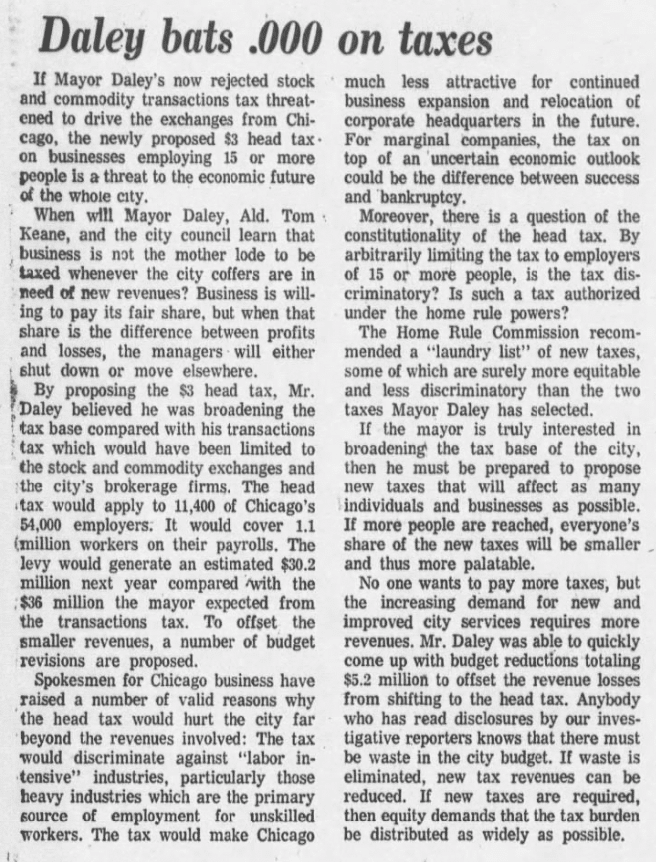
History, however, suggests this is the same lazy argument, devoid of hard evidence, that accompanied the tax when it was created decades ago.
Chicago’s corporate head tax dates back to 1973, when it was enacted under the late Mayor Richard J. Daley. At the time, a Chicago Tribune editorial warned, with scant proof, that Daley’s proposed $3-per-month tax on businesses employing 15 or more people was a “threat to the economic future of the whole city.” Daley, in contrast, argued that the tax was a simple way to expand the city’s revenue base to pay for critical public services.
In 1995, under Daley’s son, former Mayor Richard M. Daley, the tax was modified to apply only to companies with 50 or more full-time equivalent employees, and the rate increased to $4 per employee per month. The tax was fully repealed under former Mayor Rahm Emanuel in 2014. As with the Tribune editorial, Mayor Emanuel, a politician bought and paid for by the finance sector, relied more on “beliefs” and less on hard data to prove the head tax’s detrimental impact on the economy.
Johnson’s proposal — $21 per employee per month for companies with more than 200 workers (revised upward from 100 in an effort to mollify opposition) — is a return to more than 40 years of city precedent and hard, concrete revenue gains.
From 1973 to 2014, the time when the city had a corporate head tax, the number of millionaires and billionaires in Chicago surged while the middle class evaporated. This was a period when Chicago’s economy, according to the conventional wisdom, didn’t falter; rather, it avoided the fate of other “Rust Belt” cities in the Midwest like Detroit and Cleveland to become what the top business and society consultants call a global city (indeed, a perennial Condé Nast Traveler favorite among tourists).
This corporate head tax proposal should not be framed as a novel reform pushed by a radical progressive mayor. Johnson may be more progressive than most politicians, but his proposal is actually quite moderate — something once implemented by two mayors your average 1-percenter, Tribune editorial in hand, might gladly pay a bit more in taxes to have back in power. These were mayors under whom many of the wealthy look back on with delight as the good old days.
So, given this context, who should really be on the defensive? A mayor advocating for a modest, Daley-era tax that could generate an estimated $100 million to prevent cuts to essential services like public safety, public works, and public transportation? Or a bloated business elite that would rather protect their profits at the expense of everyone else?
Ald. Jason Ervin (28th), who supported reinstating the head tax, put it plainly — or, as the late, great radio host Joe Madison would say, “where the goats can get it.”
“At the end of the day, this comes down to a value question,” Ervin said during Monday’s Finance Committee meeting. “Everybody wants to get to heaven, but nobody wants to die. It’s ever so true. It also goes back to a point in the book of Joshua, which says, ‘Pick ye this day whom you will serve?’ Are we going to serve residents of the city or folks Downtown? Are we going to help Google or grandma? The stock market or the supermarket?”
In a time of severe wealth inequality, when asset prices are artificially inflated and the stock market is increasingly detached from the real economy, those seem like reasonable questions to me.
What This Is

The Quiet Before is a column about attention, thought, and the demystification of history and everyday life — and about the slow, communal work of reading and writing, the necessary and sufficient conditions for meaningful social change. It lingers in the spaces where reflection still matters — where taking time to think is its own quiet form of resistance.
Related Articles


OPINION: Halt the Current CPS CEO Selection Process and Install Dr. Macquline King as CEO Through the School Year
“This is not a casual disagreement over preference or personality”
OPINION: Eight Schools. One Purpose. Elevating the 8th District.
Shantel Franklin, a candidate for 8th District state representative, on her journey from homelessness to the campaign trail