
15th District Council Members Pitch Community Justice Alliance to Resolve Low-Level Conflicts, Build Trust
Pilot proposal would train residents, police officers, and council members in mediation, restorative justice, and racial healing practices
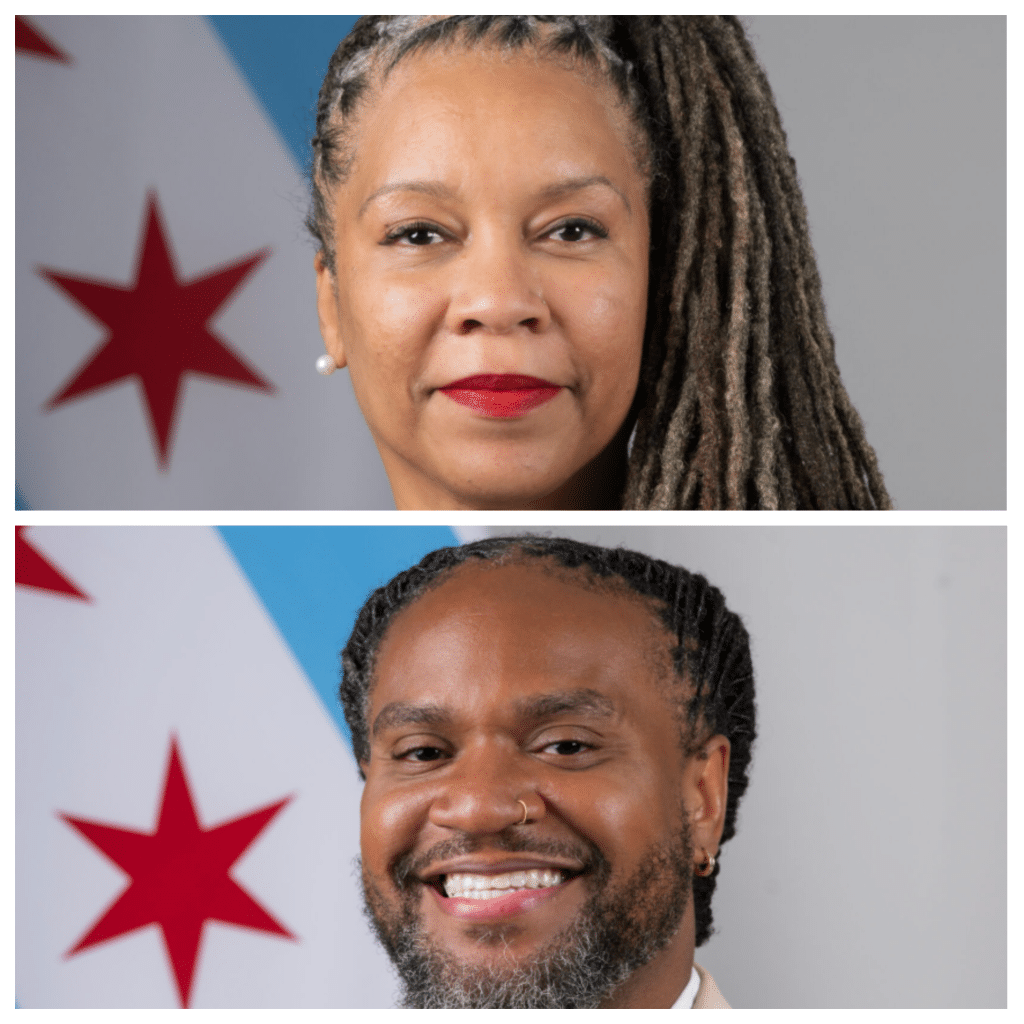
Members of the 15th Police District Council are advancing a proposal they hope could become a new model for public safety on the West Side. The Community Justice Alliance is designed to resolve low-level conflicts through mediation, restorative justice, and community-led accountability rather than arrest or escalation.
District Council members Deondre Rutues and Arewa Najm EKUA said in interviews on April 24 that the initiative is still being developed, but they envision it as a voluntary pilot program serving Austin and surrounding portions of the 15th District. The district includes most of Austin.
The proposed alliance would handle matters such as neighbor disputes, quality-of-life conflicts, business disagreements, and some community concerns involving police interactions that do not rise to the level of formal misconduct investigations or violent incidents.
“We keep us safe,” Ekua said, describing the philosophy behind the effort. “We need to own that by loving, caring, and respecting one another enough to have these conversations.”
Under the plan, trained mediators would guide residents and, when appropriate, police officers through structured conversations aimed at repairing harm, addressing misunderstandings, and preventing future conflict.
Council members said many neighborhood disputes worsen not because they are severe at the outset, but because people lack the tools to communicate through tension.
“A lot of times things escalate because people don’t know how to communicate with each other,” Ekua said. “This gives us an opportunity as a community to listen to people, have hard conversations, and come up with harm-repair tools to help people exist better in spaces.”
The idea has been under discussion for more than a year. Rutues said council members first developed the concept with restorative justice principles in mind, then brought it to a restorative justice conference, where they gathered community feedback on naming, training, and structure. They later workshopped the proposal during six district council meetings before narrowing it into what is now being called the Community Justice Alliance.
The current proposal calls for extensive training before the alliance launches. Rutues said participants could complete 30 to 40 hours of restorative justice instruction, 30 to 40 hours of mediation training, and additional Truth, Racial Healing and Transformation coursework.
Council members hope the alliance would include a mix of stakeholders — ideally a resident, a district council member, and a police officer serving together as mediators. In some cases, depending on comfort levels or case type, other combinations could be used.
Ekua said the council hopes to train a core group of nine to 12 people, including district council members, residents, and officers, so cases can be scheduled based on availability rather than relying on only a few volunteers. Preference would be given to participants who live in the 15th District, she said.
Rutues emphasized the alliance would not replace existing oversight agencies such as the Civilian Office of Police Accountability, known as COPA. Instead, he said, it could provide an alternative avenue for less serious concerns.
“We’re not trying to handle any issues or calls where COPA should be involved,” Rutues said. “We want to handle very low-level considerations.”
He cited examples such as residents who feel they were spoken to disrespectfully during a traffic stop or police encounter, but whose complaints may not warrant a lengthy formal process.
In those cases, Rutues said, the alliance could bring together the resident and officer for a restorative conversation that clarifies what happened and, ideally, builds a better relationship afterward.
The proposal still faces hurdles. Council members said support from the Chicago Police Department leadership, including the superintendent, may be necessary. Legal issues and possible union rules also may need to be addressed. They said they are consulting reform advocates and practitioners, including attorney Marcia Thompson, who has experience in mediation and police accountability work.
At present, no formal budget is attached to the initiative. Organizers said they are seeking donated training resources and may eventually pursue stipends, philanthropy, or support through the Community Commission for Public Safety and Accountability.
Even in its early stage, the idea has drawn outside interest. Ekua said a community member with fellowship experience in Ireland told the council that organizations there are pursuing similar models and may be interested in exchanging ideas.
For Rutues and Ekua, the proposal is about more than conflict resolution. It is also about showing that communities can help shape public safety systems themselves.
“This endeavor is new,” Ekua said. “District councils are only three years in. We may be the first district creating an initiative because that is what was called for in the ordinance.”
Related Articles

Artist Hebru Brantley Visits Lil Mama’s West Side Home
The Chicago artist saw his Austin sculpture in person for the first time and met a young West Sider dressed as his soaring character.
Athena Williams’ Dream of Bringing Downtown Living to Austin is Nearly Complete
The 78-unit mixed-income apartment complex will start accepting applications in June
Supreme Court’s Latest Voting Rights Decision Continues Long Rollback of Civil Rights Era Protections
Rep. Danny K. Davis says the recent Louisiana v. Callais decision ‘further erodes critical safeguards that protect voters’