
Congressman Davis Says Voting Rights Could Be Seriously Jeopardized
On the West Side, Congressmen Jonathan Jackson and Danny K. Davis warn a Supreme Court case could erase hard-won Black representation
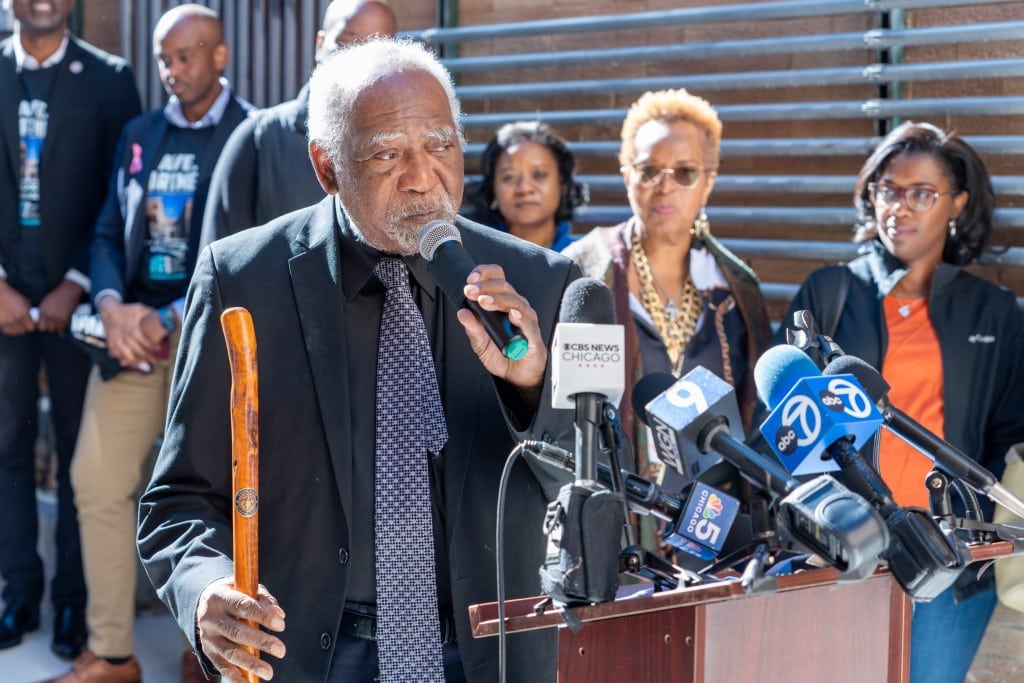
During separate appearances on the West Side this month, U.S. Reps. Jonathan Jackson and Danny K. Davis urged residents to pay close attention to a Supreme Court case they say could roll back decades of progress in Black political representation.
The justices heard oral arguments on Oct. 15 in Louisiana v. Callais, a dispute testing whether the creation of a second majority-Black congressional district in Louisiana — ordered by lower courts to comply with the Voting Rights Act of 1965 — is itself unconstitutional.
If the court sides with Louisiana, civil rights advocates warn, it could strike a further blow to the law’s already-fragile protections. The court effectively gutted Section 5 in 2013’s Shelby County v. Holder, ending the requirement that states with histories of discrimination seek federal approval before changing voting laws.
Since then, Section 2 has been the main tool left to challenge racial vote dilution — and Callais could sharply limit it.
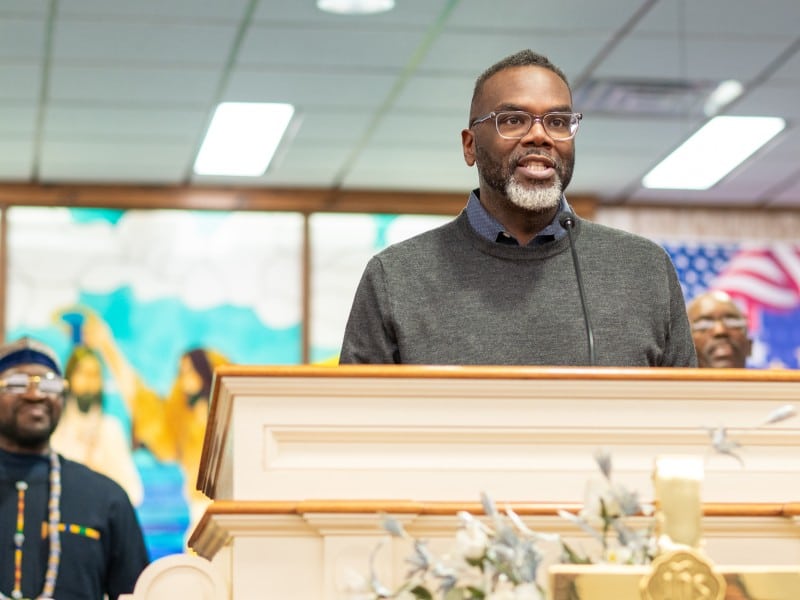
Speaking at the Leaders Network’s monthly meeting Oct. 14 at the Columbus Park Refectory, 5701 W. Jackson Blvd. in Austin, the South Side congressman delivered a strong warning about the case and the grim reality of today’s civil and voting rights landscape.
“It has everything to do with your voice — your vote,” Jackson said. “The Democrats are running a campaign. The Republicans are running a crusade. I’m 59, born in 1966. The Voting Rights Act was passed in 1965. I’m the first generation of African Americans born with equal rights. I’m trying not to tear up, because my daughter has fewer rights today than I did growing up in my lifetime.”
A week later, after appearing at the grand opening of the Avenue Apartments in Austin, West Side Rep. Danny K. Davis echoed Jackson’s concerns but expressed cautious optimism about the judicial process.
“I’ve got faith in the judiciary,” Davis said. “I maintain it. I put my faith in their analysis of the situation and that the outcome will be fair.”
Analysts Warn of Potential Seat Losses
A joint report by the Black Voters Matter Fund and Fair Fight Action estimates that curtailing Section 2 could cost the Congressional Black Caucus up to 30 percent of its seats and the Congressional Hispanic Caucus roughly 11 percent, as states redraw maps without federal guardrails. At least 19 U.S. House seats currently protected by Section 2 could flip under new maps.
The Supreme Court is expected to issue its ruling in June 2026, just ahead of the midterm elections — timing that could immediately reshape the national political map.
For both congressmen, the warning delivered on the West Side carried the same message: Louisiana v. Callais is not only about district lines, but about whether the last meaningful safeguard of the Voting Rights Act will survive.
“It would be a seriously negative outcome,” Davis said when asked what a ruling in favor of Louisiana would mean. “I think it would dampen the spirit and meaning of our country.”
The Stakes
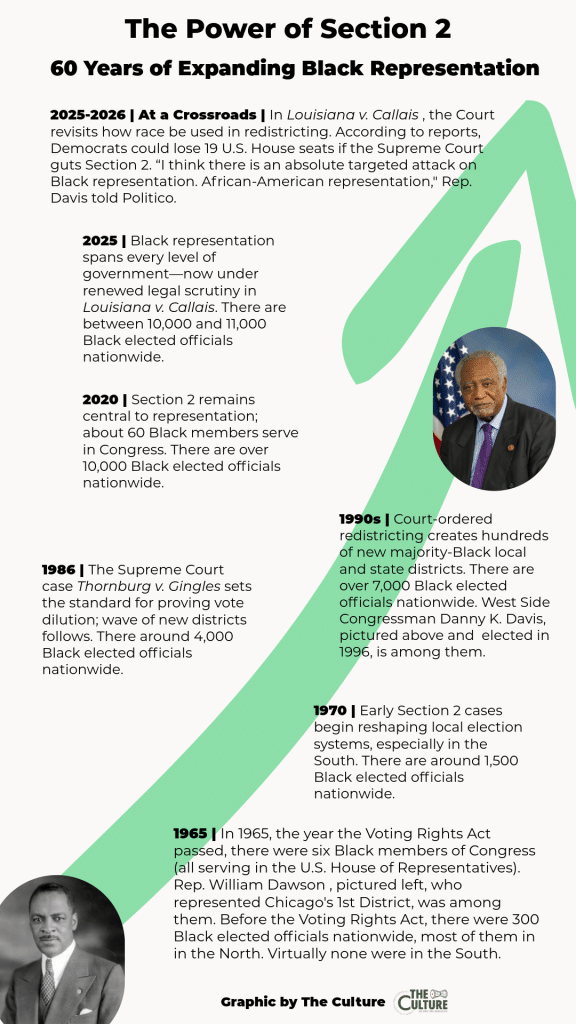
For nearly 60 years, Section 2 of the Voting Rights Act has been the backbone of Black political representation in America. It’s the provision that bans election systems or maps that dilute minority voting power — and it’s the reason thousands of Black elected officials serve in office today.
But that progress now hangs in the balance. As the Supreme Court reconsiders Section 2 in Louisiana v. Callais, civil-rights advocates warn that a ruling to limit or strike it down could undo decades of gains first secured in 1965.
This timeline traces how Section 2 has expanded — from just six Black members of Congress at the time of the Voting Rights Act’s passage to more than 10,000 Black officials across the country today — and what’s at stake if those protections are rolled back.
Related Articles
Supreme Court’s Latest Voting Rights Decision Continues Long Rollback of Civil Rights Era Protections
Rep. Danny K. Davis says the recent Louisiana v. Callais decision ‘further erodes critical safeguards that protect voters’
15th District Council Members Pitch Community Justice Alliance to Resolve Low-Level Conflicts, Build Trust
Pilot proposal would train residents, police officers, and council members in mediation, restorative justice, and racial healing practices
Mayor Brandon Johnson’s Budget Dealt Blow After Failing in Committee, but What’s in It?
The City Council’s Finance Committee vote underscores divisions over head tax, cloud tax hikes, and citywide cost pressures