A Forum for the Absurd: Democracy in the 7th District, 2026
A candidates’ forum in North Lawndale became an accidental portrait of American democracy in 2026: earnest, fragmented, and drifting into political absurdity

A candidates’ forum held Jan. 27 at Collins Academy High School, 1313 S. Sacramento in North Lawndale—featuring 12 of the 15 people running to succeed 30-year incumbent Rep. Danny K. Davis in the 7th Congressional District—was a confusing and surreal event, one that mirrored a confusing and surreal political era.
One moment, in particular, captured the strangeness of our current moment more vividly than anything I’ve witnessed in 13 years of covering local politics.
Asked what specific federal policies he would champion to address the racial wealth and income gap in the 7th District, Chad Koppie—an 87-year-old retired farmer and jet pilot who acknowledged in his opening remarks that he does not live in the district—abandoned his prepared comments and launched into a free-ranging history lesson that drew audible gasps from the audience.
“What I have to say is altogether different than what that paper says,” he began.
“I am well aware of the crisis in the Black community that’s gone on for what—hundreds of years? I’m fully aware of how people were stolen from their homes in Africa and brought here on slave ships that were so overloaded and so crowded with feces, etc., that ships passing within miles could smell the rot coming off those slave ships as they came here. So there were 10 million slaves who came here.
“Now, there’s another issue, the abortion issue, that is very much akin to the slavery issue. They were both approved by the Supreme Court of the United States. The slavery issue was resolved with the Civil War, which was an awesome situation. We all know about that. Six hundred thousand people were killed. Well, since the abortion thing became legal in the United States, there’s something like 75 to 100 million dead Americans. And, of course, the ratio of abortion in the Black community is much higher than it is in the white community.
“What I’m trying to say is, I was employed in the Jim Crow South. When I went to work for Delta Airlines, everybody was segregated. In other words, there was a place to drink—the drinking fountains—where the Blacks, or the Colored, and the whites … a friend of mine, a white pilot, went into these Colored lavatories, and when he came out, a Delta official was waiting for him and said, ‘Do that one more time and you’re fired.’”
Forum moderator Remel Terry, president of the Westside Branch NAACP, noted that Koppie’s two-and-a-half minutes were up. Koppie had one final thought.
“We need reparations,” he said.
With that, Koppie and most of the candidates on stage found themselves—somehow—in agreement. The Democratic candidates also largely aligned around the need for universal health insurance, medical debt forgiveness, student loan forgiveness, and a higher federal minimum wage. Several went further, arguing that the United States now functions as an oligarchy and that representative democracy itself is under threat.
That kind of rhetorical consensus around left-leaning programs and ideas would have been unthinkable at a similar forum even a decade ago. And yet, the likelihood of any of the proposals becoming law or the existential problems facing this country being resolved—even under Democratic control of Congress—feels vanishingly small.
It would have been nice to see those very ideas and proposals implemented when Democrats last held a supermajority, or when they still controlled the institutional levers necessary to govern. Instead, these candidates are running in a moment when a sitting president has openly and illegally usurped core congressional powers, from control of the federal budget to basic oversight and accountability. The most minimal responsibilities of representative government are now treated as optional.
This is what passes for democratic deliberation in 2026: a shared diagnosis without power, a widening gap between rhetoric and reality, and political theater that veers between earnestness and absurdity.
These are, indeed, confusing and surreal times.
Related Articles
A Tale of Two Museums
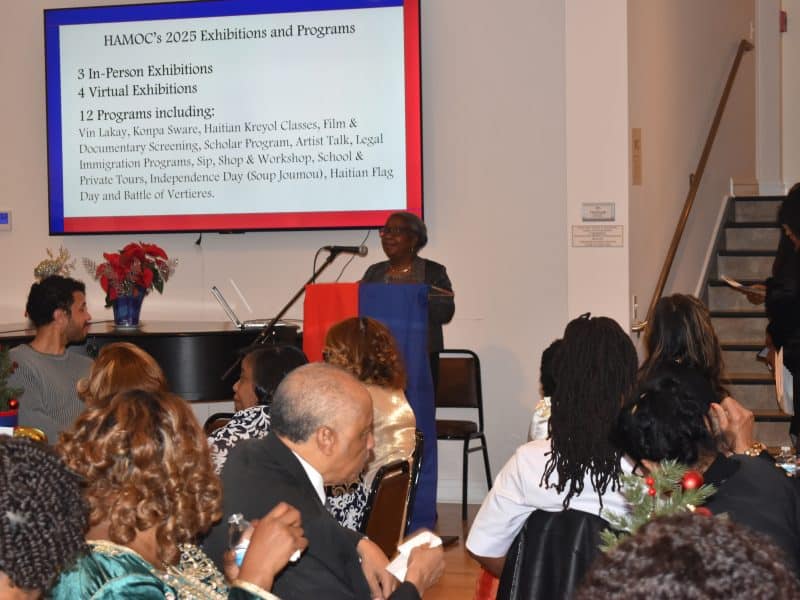
The Haitian American Museum of Chicago marked its 13th birthday by hosting a fundraiser at the Ukrainian National Museum of Chicago and the experience was eye-opening

Aldermen Vote Against Mayor Johnson’s Proposal to Reimplement Daley-Era Corporate Head Tax
That the mayor’s proposal, a modest tax that was in place for 40 years before it was eliminated under Rahm Emanuel, is framed as remotely radical or controversial is a sad sign of our times
The Quiet Before
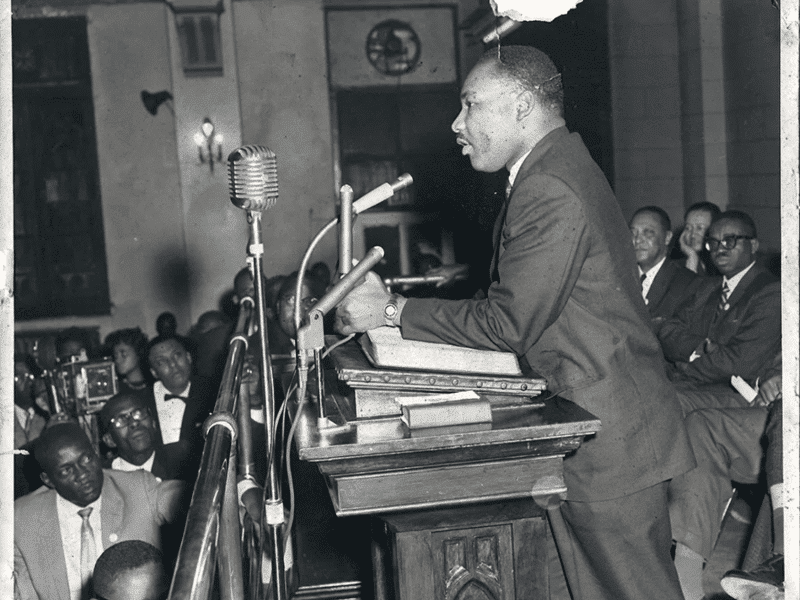
Demystifying MLK and a Movement in a West Side Church Still Shaking With History