West Siders Learn Tools and Techniques of Preserving Their Own Stories
At a May 9 workshop at Legler, residents explored how oral history can preserve firsthand accounts often missing from mainstream narratives about Black life
Barbara Stewart still remembers the fear and uncertainty that swept across the West Side after the assassination of Dr. Martin Luther King Jr. in 1968. She was just 12 years old when riots erupted in North Lawndale, leaving entire commercial corridors in flames and communities reeling.
“The lights were off. The water was off. I walked home through all of this,” Stewart recalled.
But decades later, while watching the WTTW documentary series When the West Side Burned from her couch, Stewart said something felt missing. During a subsequent community screening of the documentary at historic Stone Temple Baptist Church in North Lawndale, she posed a pointed question to the filmmakers.
“As I was sitting on my couch watching, I felt that the film didn’t depict what happened to me,” Stewart said. “That film depicted what happened to white folk. It did not depict what happened to me as a 12-year-old girl. That’s why we need to tell our stories.”
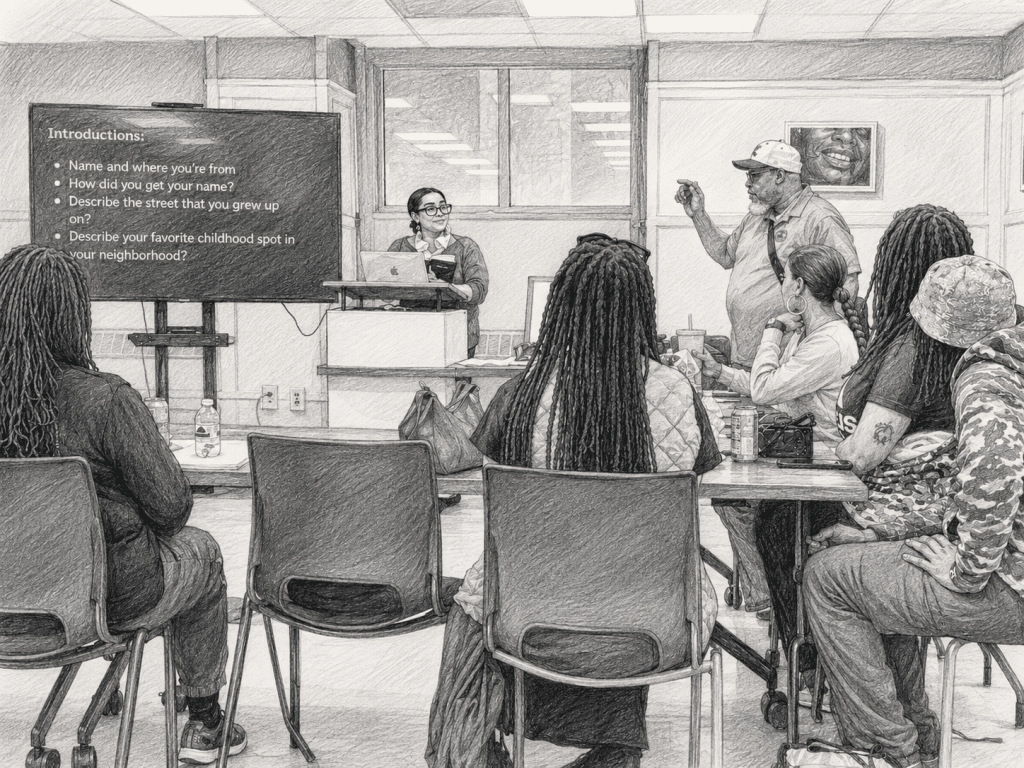
Stewart was among roughly two dozen people — from toddlers to elders — who gathered May 9 at Legler Regional Library in Garfield Park for a workshop designed to help community members preserve those stories before they disappear.
Hosted by the Black Lunch Table and the Westside Historical Collective, the workshop, “Oral History Fundamentals: Technology and Technique,” introduced participants to the basic tools and methods of oral history gathering — from conducting interviews to preserving recordings and building community archives.
Kenn Cook Jr., a West Side photographer and founder of the Westside Historical Collective, said the event was the first in a planned two-part series aimed at equipping residents to document their own neighborhoods and lived experiences.
Facilitating the workshop was Dylan Lewis, programming assistant with the Black Lunch Table, a national nonprofit known for facilitating artist roundtables, oral history projects, and initiatives to expand documentation of Black artists and communities online, including through Wikipedia.
Lewis told attendees that oral history work begins with listening.
“We listen and we keep building on what we listen to,” Lewis said before asking participants to identify the people in their families who serve as keepers of family history. “There’s always history to be told.”
Throughout the session, Lewis highlighted several notable oral history projects that preserve firsthand accounts often omitted from mainstream historical narratives.
Among them was the Black Women Oral History Project at Harvard University, which interviewed dozens of Black women in their 70s, 80s, and 90s about family background, heritage, and life in America during the 20th century. Those interviews, Lewis said, provide future historians with a richer and more human understanding of the period than official records alone ever could.
Another example shared during the workshop was the oral history project produced by BOMB Magazine, which features Black visual artists interviewing one another about their work and experiences. Lewis emphasized that oral history is not confined to academia but can emerge from neighborhoods, families, and local cultural spaces.
That hyperlocal approach resonated with Stewart, who participated in the East Garfield Park 40 Blocks Project, a neighborhood-based oral history initiative documenting life on the West Side. For Stewart, the workshop represented more than just technical training. It was part of a broader struggle over memory, representation, and who gets to define history.
Another oral history project Lewis shared was the Behind the Veil Oral History Project at Duke University, which documents the experiences of people who lived under Jim Crow segregation.
Lewis described the archive as the world’s largest collection of Jim Crow oral histories and stressed the importance of preserving firsthand testimony in an era when historical memory is increasingly contested.
“Imagine if we only had the people who created Jim Crow laws writing about Jim Crow history?” Lewis said. “These are firsthand accounts of what happened. We’re in a moment where people are trying to say, ‘Oh, Jim Crow wasn’t that bad.’ These are people who can speak firsthand to the experience of living through it. That is crucial to our history not being erased.”
Learn More
Part two in the series, the “Memory Worker Workshop, will happen virtually on Thursday, May 28, at 6 p.m. Georgia Dusk, a southern liberation oral history group co-founded by Ashby Combahee and Dartricia Rollins, will facilitate the workshop.
Participants will learn the basics of oral histories, how to develop community-embedded oral history projects, how to design their own oral history projects, and the methods and practices for conducting interviews.
These sessions are designed to support community members in becoming “memory workers,” people who help preserve and document their community’s stories and culture.
Registration is required. For more info, call (312) 746-7730 or email legler@chipublib.org.
Related Articles
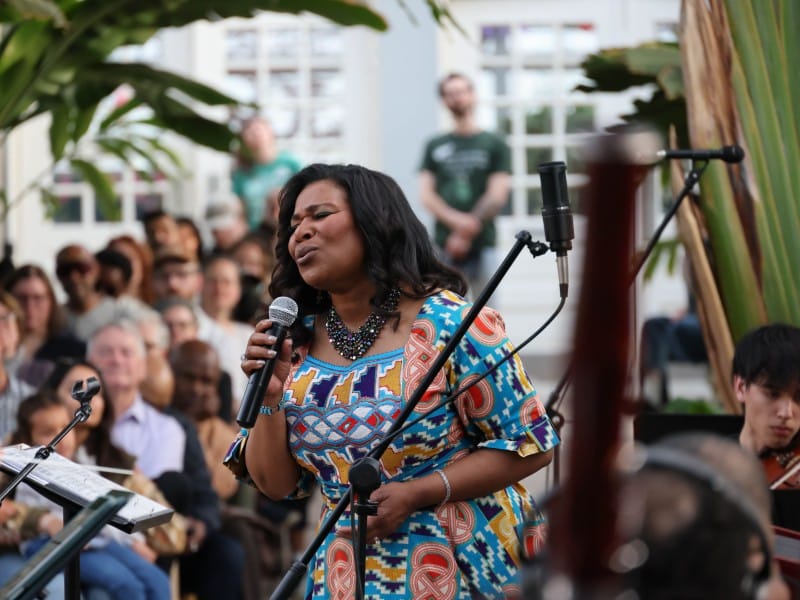
Chicago West Community Orchestra Honors City’s Jazz Legacy During International Jazz Day Celebration
Featuring acclaimed vocalist Tammy McCann, the Garfield Park Conservatory performance also showcased local musicians
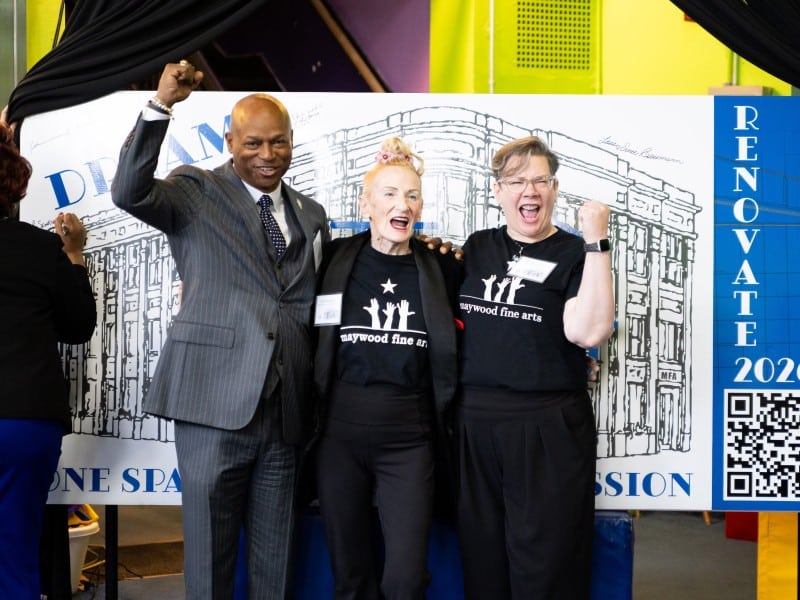
Maywood Fine Arts Launches Renovation of Historic Downtown Home
Upgrades to the century-old former bank at 5th and Lake will expand classrooms, modernize facilities, and preserve a cornerstone of Maywood’s arts community
EPISODE 14: Jamion and Reesheda Nicole Berry on Resilience, Love, and Art
Join Mike, Zoe, and a featured guest for a conversation about what it means to be Black in the face of cultural adversity, honoring relationships, and highlighting the strength of community