
In Haunting New Exhibition, Theaster Gates Draws Inspiration From His West Side Roots
In a symbolic homecoming, Gates partners with fellow West Sider Marvin Tate at GRAY Chicago to reimagine urban decay as a site of memory
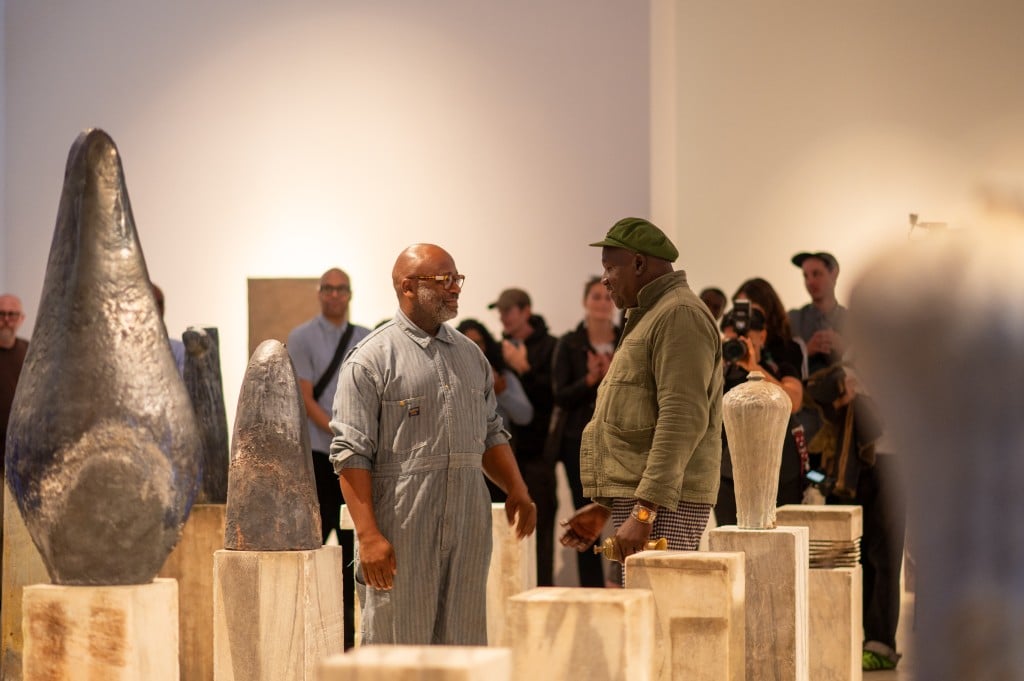
Artist Theaster Gates has long been preoccupied with the city, not just as a built environment but as moral and imaginative terrain. In his latest exhibition, OH, YOU’VE GOT TO COME BACK TO THE CITY, now on view at GRAY Chicago — 2044 W. Carroll Ave. in East Garfield Park — through Dec. 20, Gates turns that fixation inward, transforming tar, stone, and clay into a meditation on memory and renewal.
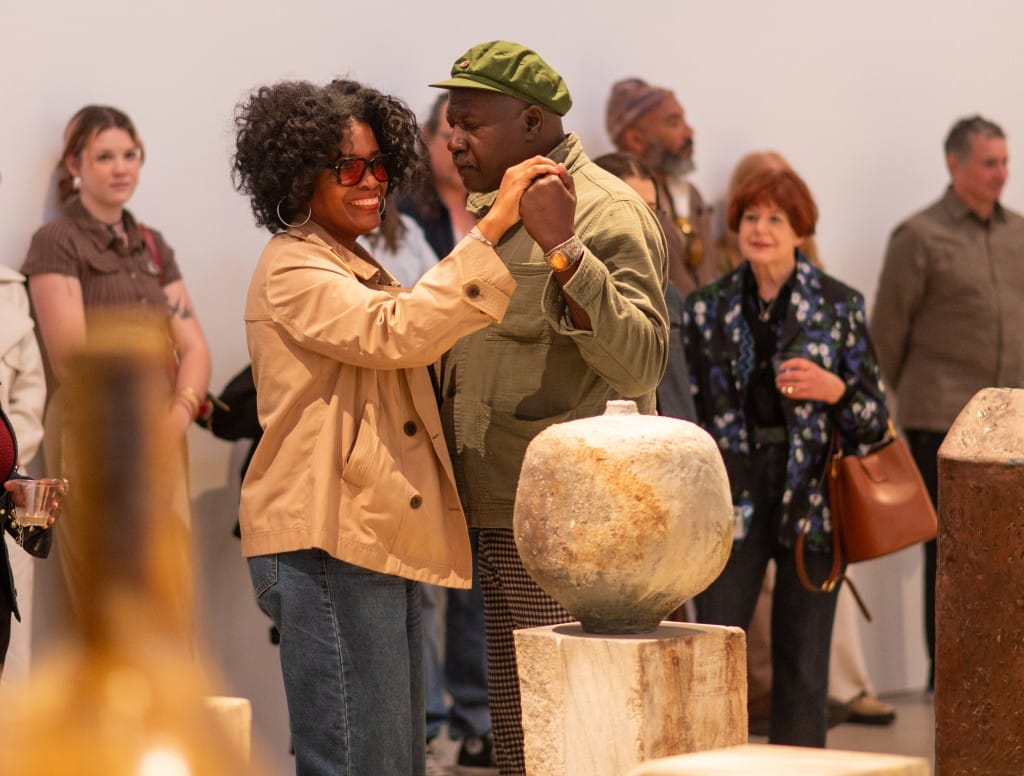
The show takes its title and inspiration from “City Promenade,” a song by North Lawndale native and poet/musician/singer-songwriter Marvin Tate, who performed the piece during the exhibition’s opening on Oct. 16. His performance — part lament, part incantation — was as much séance as concert. At one point, Tate broke into a spontaneous dance with a member of the audience, blurring performer and participant, art and life.
“It’s an old song I did years ago that Theaster dug up,” Tate said. “It’s about asking someone to come back to the city, whatever that means collectively or individually. A ghost perhaps, longing for you to come back — a seduction, an apparition reaching to the past and beckoning you to return.”
Tate’s lyrics — “Oh, you’ve got to come back to the city, the place where you belong … the city of dreams” — echo through the gallery like a civic hymn. They become a framework for Gates’s exploration of what it means to dwell amid the remnants of urban life.
“In some ways,” Gates said during the opening, “this work, this question of the city, has everything to do with the things I saw growing up on the West Side — the removal of buildings, the complexity of a city that has a lot of love and a lot of challenges at the same time.”
Born and raised on Chicago Avenue and Pulaski, an area that straddles the border between Humboldt Park and West Garfield Park, Gates is perhaps the city’s most sophisticated mythologist.
For two decades, he has transformed abandoned buildings into spaces of culture and commerce — the Stony Island Arts Bank, the Dorchester Projects — and has turned the very materials of Black life into high art.
His practice, as GRAY’s exhibition text notes, “contends with the notion of Black space as a formal exercise — one defined by collective desire, artistic agency, and the tactics of a pragmatist.”
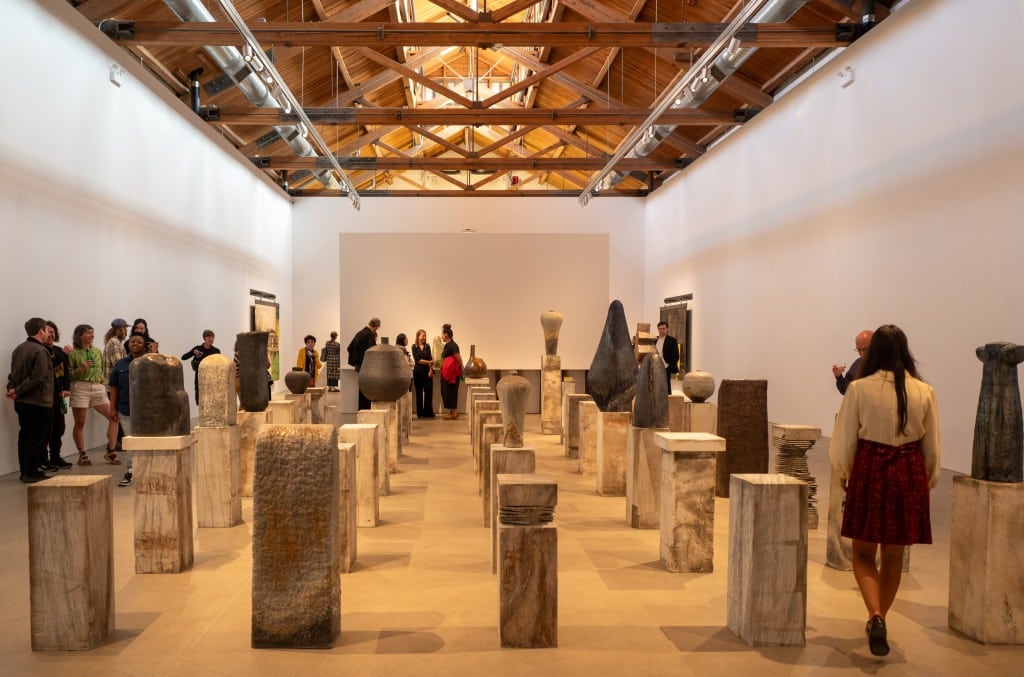
In OH, YOU’VE GOT TO COME BACK TO THE CITY, Gates assembles a new family of materials from his “stone repository” — marble, granite, scholars’ rocks, concrete — into a grid-like installation that evokes both the rational logic of city planning and the quiet, somber order of memorials.
On each stone rests a ceramic vessel or sculptural form — relics that evoke the tools, vessels, and fragments left behind by a city’s former inhabitants, artifacts of lives once lived and now forgotten. The installation’s solemn geometry recalls a graveyard — a metaphor Tate himself invoked.
“It’s like a graveyard,” he said. “At the start of the song, I’m ringing the bells as the town crier — to wake the town up. The words were: ‘Lock all your windows, shut all your doors, hide all your art!’ Whatever that means to you, I’m here to seduce you.”
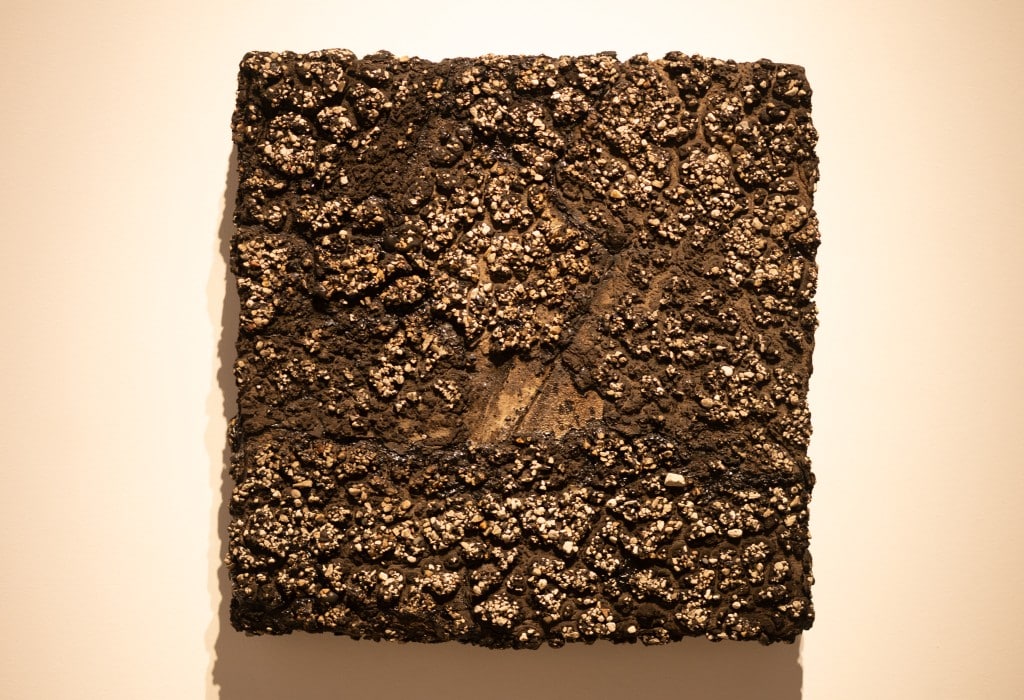
Around the central installation, a suite of new tar paintings extends Gates’s ongoing experiment with “patching and bonding” — a technique that reimagines the repair work of roofing and road maintenance as a painterly gesture. Thick, black surfaces ripple with light and texture, alternately evoking asphalt and skin, city and body. The effect is both formal and visceral — a meditation on endurance.
If Gates’s earlier work sometimes risked over-aestheticizing ruin, here the tone is more elegiac than heroic. The show’s emotional key is set not by grand transformation but by quiet persistence — the endurance of form, material, and memory amid inevitable decline. Gates seems less interested in saving the city than in listening to what its ruins have to say.
The collaboration with Tate deepens that inquiry. The two artists — both sons of the West Side, both fluent in the poetics of reclamation — mirror each other’s sensibilities.
Tate, who grew up at 18th and Homan and now works with Theater Y, 3611 W. Cermak Rd. in South Lawndale, described the song as “a black-and-white movie, but with a Black man in it.” His Oct. 16 performance collapsed nostalgia and critique, centering on an imaginative urban space that grapples with the concrete social realities of gentrification—realities that, like dreams, remain steeped in abstraction.
The interplay between Gates’s monumental restraint and Tate’s improvisational vulnerability gave the public reception its pulse. Gates’s stones stood as silent witnesses to the histories Tate animated through voice and gesture. Together they construct a theater of longing — a place where the ghosts of a city still call its people home.
In the end, OH, YOU’VE GOT TO COME BACK TO THE CITY feels like a duet between two artists who understand the seductions and sorrows of belonging. The city they summon is not simply Chicago but every city that has tried, and failed, to love its people enough.
Related Articles
Athena Williams’ Dream of Bringing Downtown Living to Austin is Nearly Complete
The 78-unit mixed-income apartment complex will start accepting applications in June
Supreme Court’s Latest Voting Rights Decision Continues Long Rollback of Civil Rights Era Protections
Rep. Danny K. Davis says the recent Louisiana v. Callais decision ‘further erodes critical safeguards that protect voters’

West Siders Learn Tools and Techniques of Preserving Their Own Stories
At a May 9 workshop at Legler, residents explored how oral history can preserve firsthand accounts often missing from mainstream narratives about Black life