
Film Producer Wants to Build ‘Midwest Hollywood’ by Cultivating a Local Workforce
Danita E. Patterson’s hands-on apprenticeship program, new LED screen technology, and expanded tax credits are helping young creators stay in Chicago instead of moving to the coasts
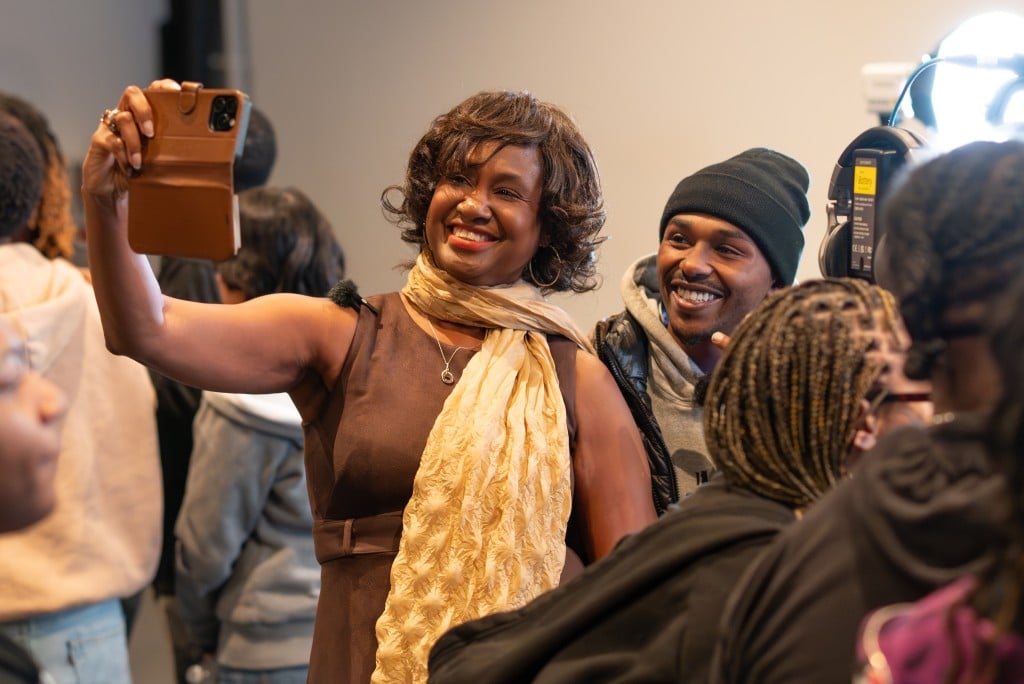
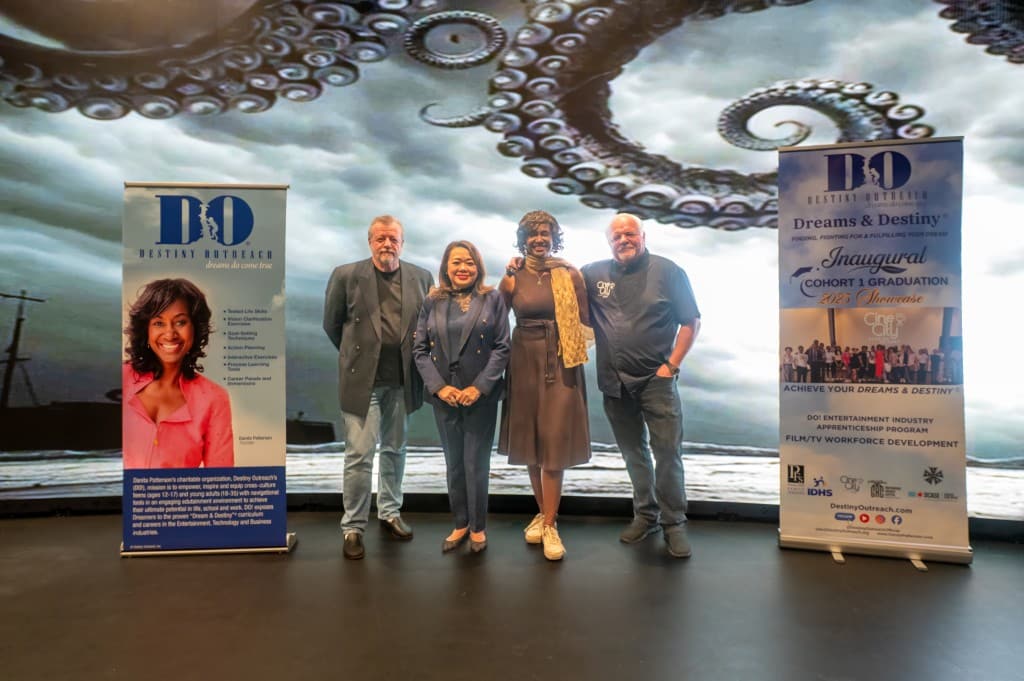
On Nov. 15, in front of a $1.5 million, next-generation LED screen — the only one of its kind in North America — Columbia College Chicago graduate Sam Koehler, 23, called out: “Quiet on the set! Roll sound! Roll camera!”
He wasn’t at Paramount. He wasn’t on a lot in Burbank.
He was on the West Side, inside CineCity Studios, 2429 W. 14th St., on the border of Pilsen and North Lawndale — the center of Chicago’s burgeoning entertainment landscape.
Koehler is part of a film and TV apprenticeship program run by Destiny Outreach, the nonprofit founded by Hollywood producer and Chicago native Danita E. Patterson, who built her career working on shows like The Fresh Prince of Bel-Air and Thea.
Patterson’s mission is to turn Chicago into a place where a new generation of industry professionals doesn’t have to leave for New York or Los Angeles to succeed. She’s so focused on the effort, she’s taken to calling her home city “Midwest Hollywood.”
“When you graduate, the number one thing on your mind is where you’ll go,” Koehler said. “To make my career happen without uprooting my life — that’s a message I can get behind.”
The apprentices trained in front of a 4D LED virtual production wall with a refresh rate and contrast ratio that outpace anything currently in Hollywood.
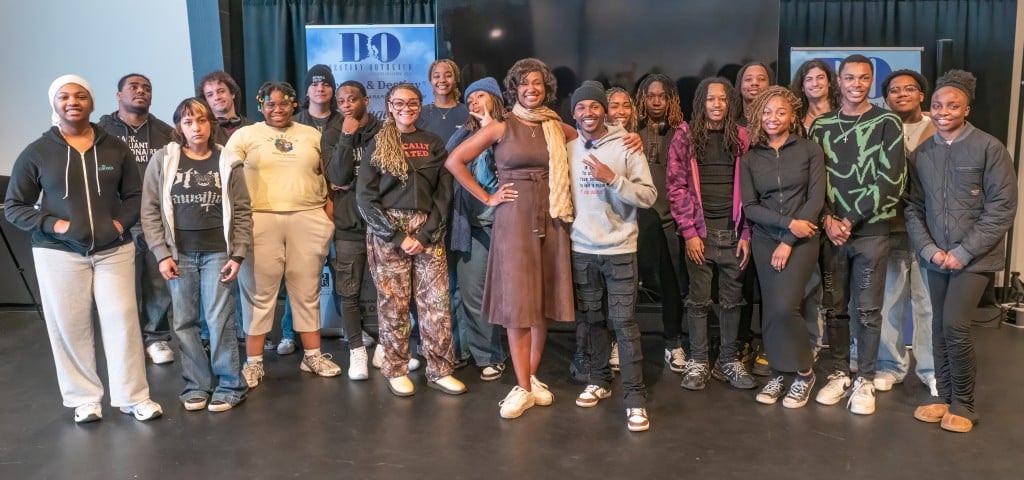
“I put them under pressure,” Patterson said. “They had to create a short film in 30 minutes — concept, blocking, lighting — all in front of a dynamic backdrop. Few young people get this experience.”
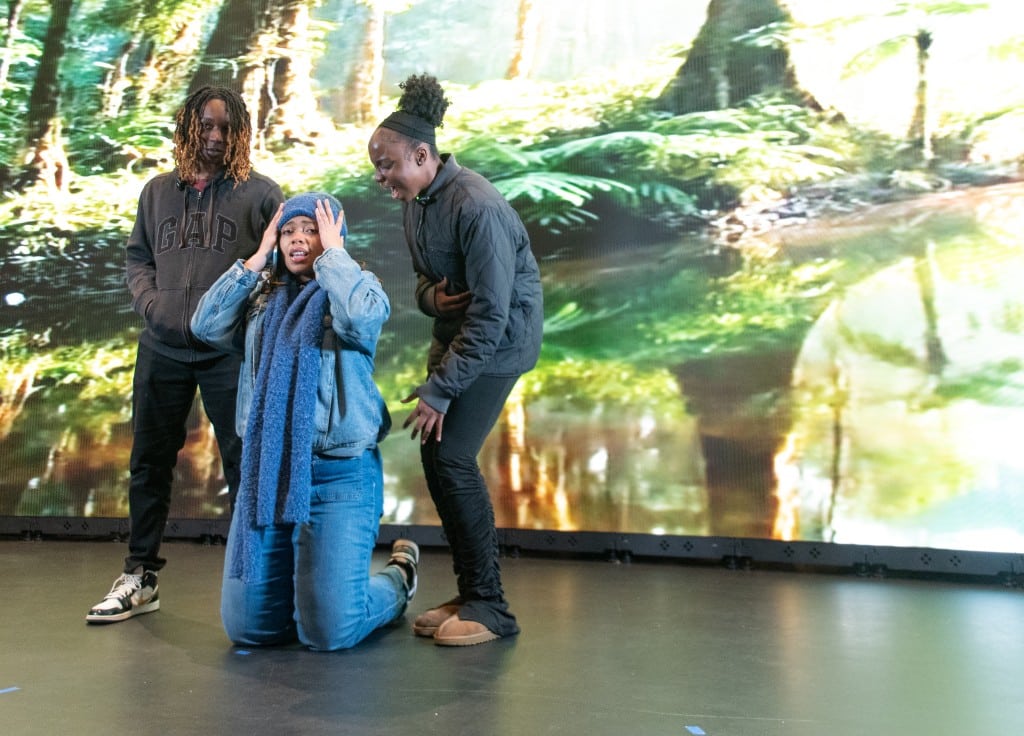
The wall was manufactured by Global LED RGB, whose chairman and CEO, Bill Curtis, has worked on more than 800 feature films.
“This has never been seen in North America,” Curtis said. “We’ve had independents, features, and TV shows utilize it — and we’re building larger projects all over the world. It pays for itself in a year.”
Curtis and Josephine Lee Gothong, president of Global LED RGB, said they brought the technology to Chicago because of their relationship with CineCity’s managing partner, Stan Wozniak.
“I knew Stan was in this business, and I knew we could trust him in this location because we travel all over the world,” Curtis said.
For many trainees, the apprenticeship is a bridge between college and career.
Trinity Newell, 22, and a producer on the filmmaking exercise, said the pressure was real — and necessary.
“I want to be a producer. This was high stress, high pressure — exactly like the industry,” said Newell, who lives on the West Side.
Savaun Stokes, 24, served as first assistant director. He said the experience has been valuable.
“My passion is directing and storytelling,” he said. “I want to bridge communities through television — and eventually become a showrunner.”
Lataryion “LT” Perry, 26, co-produced the exercise and runs his own company, Missed Turn Productions, which has an office in CineCity. Perry, a native of Gary, Ind., said he wants to follow in Patterson’s footsteps and cultivate an entertainment workforce in the Midwest.
“I started here because I want people in the Midwest — not just Chicago, but Gary, too — to have these opportunities,” Perry said. “We’re building the pipeline.”
A New Training Ground for a New Film Economy
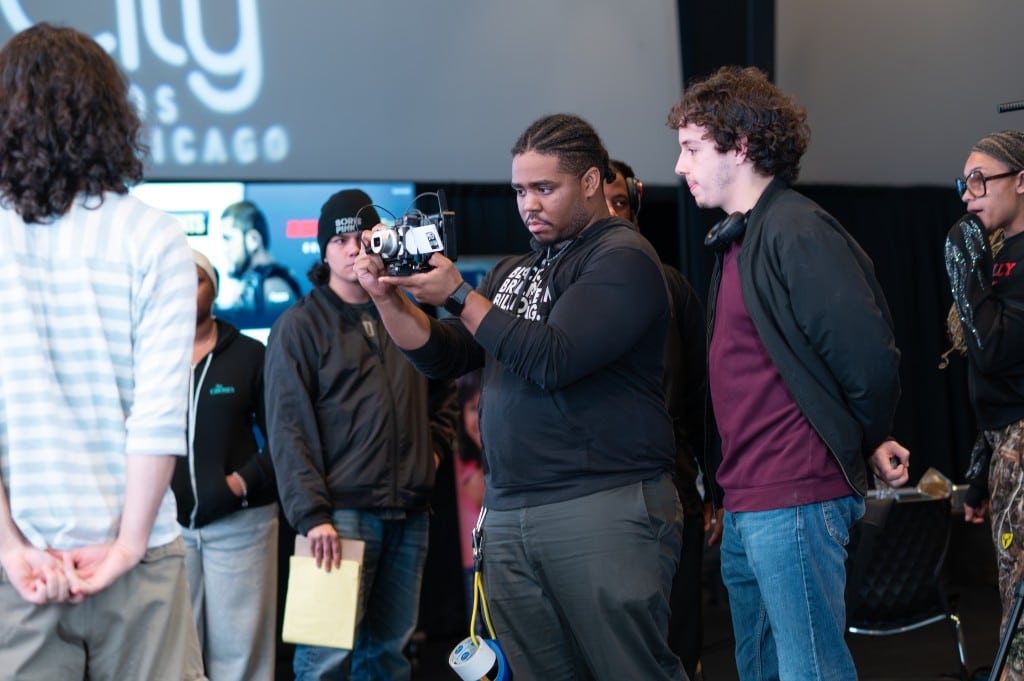
Patterson’s program combines technical training with leadership development, character, ethics, and networking.
Her nonprofit, which dates back to 1998, is rooted in a belief that personal development is as critical as production skills. The Dreams & Destiny Entertainment Industry Apprenticeship Program is funded by the Illinois Dept. of Human Services and the Illinois Youth Investment Program. Patterson has partnered with the International Alliance of Theatrical Stage Employees (IATSE) to help place apprentices in below-the-line film crafts, including lighting, camera, grip, costuming, makeup, and sound.
“We’re training them for Tier 1 union jobs and Tier 2 major productions,” Patterson said. “I’m exposing them to everything I’ve learned in 33 years. I’m giving them what I didn’t have.”
The timing could not be better.
New state legislation passed Oct. 31 increases existing tax credits for labor when film and TV productions hire Illinois residents from 30% to 35%. The credit for hiring Illinois vendors is also rising from 30% to 35%, among other features of the bill, which awaits Gov. JB Pritzker’s signature.
The Illinois Production Alliance — a nonprofit advocacy organization representing studios, unions, and film workers — says the boosted incentives could reshape the industry:
“This legislation will put film in Illinois on the trajectory to become a billion-dollar business, creating opportunities for diverse, good-paying jobs,” the IPA stated.
According to a 2023 IPA study evaluating the economic impact of the film tax credits, 37% of spending on a mid-budget TV drama stays within the film sector, while nearly 63% flows to other industries — including real estate and location fees (17%), travel and transport (14%), construction (7%), and power and utilities (6%).
Patterson said the expanded tax credits will bring new work — and new companies — to Chicago, which holds most of the state’s roughly one million square feet of stage space. CineCity’s 150,000 to 200,000 square feet works synergistically with larger facilities like Cinespace Studios, Wozniak said.
“Not everybody has all the equipment at one time,” he said. “So we communicate with each other. For instance, CineCity doesn’t have a traditional soundstage like Cinespace. We’re more like an amenity space. Tyler Perry came in and shot Netflix’s Mea Culpa here. We’re kind of a hybrid space that’s geared for TV shows.”
Patterson said the city’s growing filmmaking capacity and the new tax credits will make Chicago a much more dynamic competitor in the industry.
“This tax credit will take work from LA, Atlanta, and Toronto,” she said. “And what I’m building feeds right into that — especially for Black and Brown young people who’ve had less access to this industry.”
And for Wozniak, preparation to work in the industry doesn’t necessarily require a college degree. The CineCity head envisions cultivating an environment where programs like Patterson’s — intensive experiences that fully immerse aspiring creatives in the day-to-day grind of film and TV production — supplement or even replace the conventional college model.
“We have the talent here,” he said. “It’s just about getting these kids into unions. If you want to be a studio grip or an electrician, do you really need to go to film school in New York for four years? We’re trying to get back to the basics.”
Patterson — a South Side native who got her start in theater and TV production before moving to Los Angeles for major Hollywood work — said if she had access to a program like Dreams & Destiny, she likely would never have left. She returned to Chicago to care for her father, who died in 2019.
“I’m teaching them by being the message that I bring,” she said. “I would not have left when I was 22 or 23 if I could have done narrative film and TV here. I had reached a ceiling and couldn’t do any more because I had done so much in high school and college. Los Angeles equipped me and allowed me to be in the major leagues, so I could bring back what I learned and help build what I call Midwest Hollywood.”
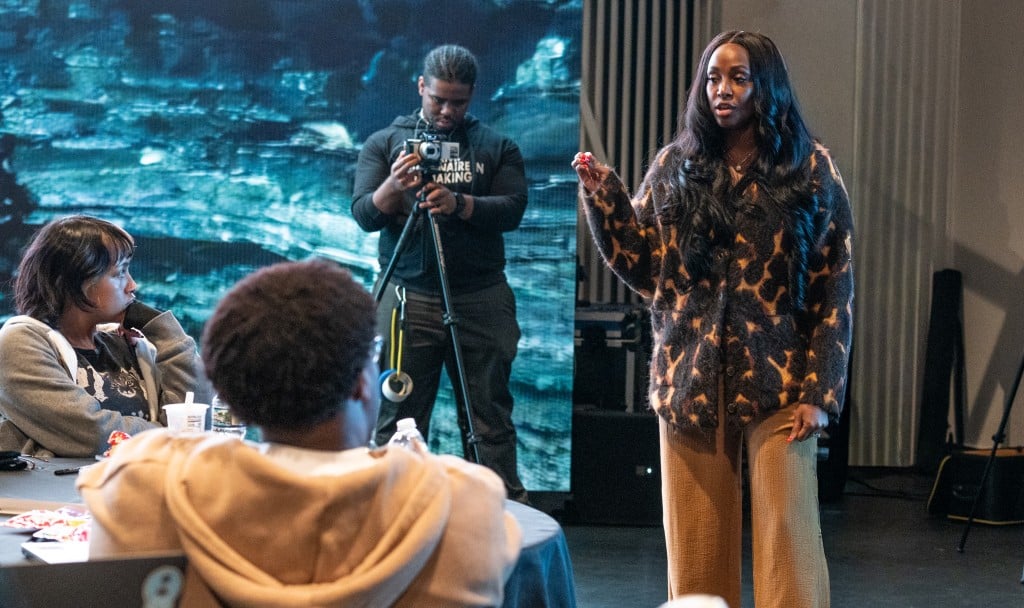
In addition to producing the short film, the apprentices also met with industry professionals like film writer Sylvia Jones — whose credits include The Clark Sisters: First Ladies of Gospel and The Chi — and SAG-AFTRA Chicago local president and actor Charles Andrew Gardner.
“Yesterday, we were at the International Alliance of Theatrical Stage Employees — those are all the below-the-line jobs when the credits roll: the gaffer, the lighting, the makeup, the hair, the sound, the camera team. We had that in the morning. And in the afternoon, we had above-the-line writers, like Sylvia Jones.”
Ultimately, Patterson said, the immersive training is designed to give apprentices the experience they need to seamlessly transition into industry careers right here at home.
“I want to make sure graduates from colleges like Northwestern, DePaul, and Loyola can work in their hometowns and where their families are,” she said. “That’s why it’s important for me to pay it forward and to help them go forward faster.”
Learn More
For more info on the Dreams & Destiny Entertainment Industry Apprenticeship Program:
- Email info@DestinyOutreach.org
- Visit destinyoutreach.org.
- Follow on Facebook at Facebook.com/DestinyOutreachOfficial
Related Articles
Community Leaders Reflect on Pain, Possibility at ‘Beyond Closure’ Screening in Austin
Documentary traces how residents reclaimed shuttered schools to build new neighborhood assets like the Aspire Center for Workforce Innovation

Five Finalists Named for Rekia Boyd Monument in Douglass Park
Artists advance in landmark effort to honor Boyd’s legacy and celebrate Black girlhood
Documentary Follows West Siders to West Africa in Search of Healing and Reparations
Film featuring Equity and Transformation Chicago to screen Nov. 9 and 11 at the Black Harvest Film Festival