
Publicly Funded Stadiums Make No Cents For Taxpayers
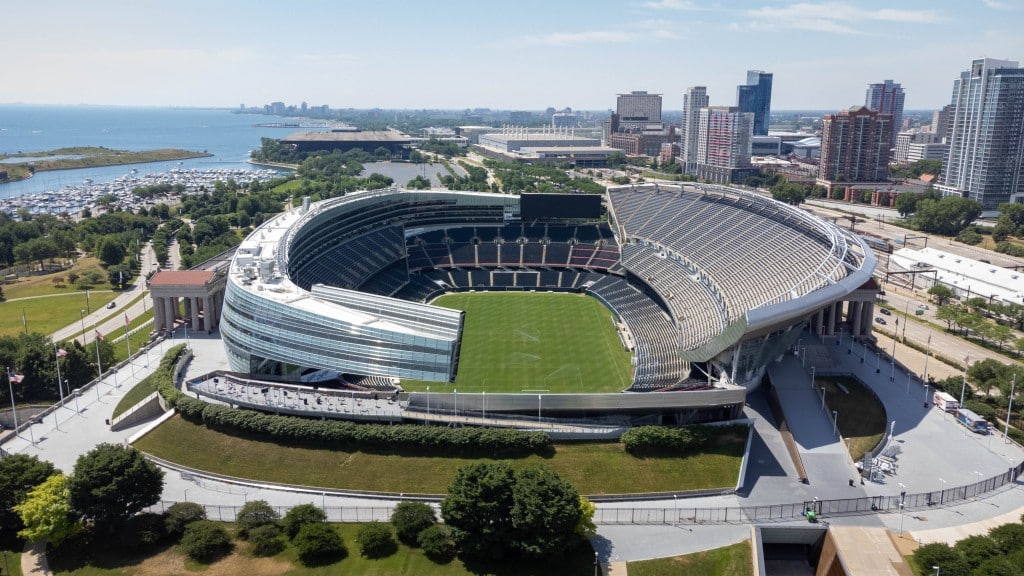
When voters in the 29th Ward go to the polls on Nov. 5, they’ll find the following non-binding referendum question on their ballots: “Shall the people of Chicago provide any taxpayer subsidy to the Chicago Bears to build a new stadium?”
According to a 2023 survey of studies analyzing stadium funding from 1909 to 2019, the historical record demonstrates that almost invariably “there are little to no tangible economic benefits from stadiums.” This the main argument of “The Economics of Stadium Subsidies: A Policy Retrospective,” by John Charles Bradbury, Dennis Coates, and Brad R. Humphreys.
My synopsis here closely tracks and quotes liberally from their exhaustvely researched conclusions. The authors argue that the overwhelming research finding is that public subsidies “tend to exceed any meager economic benefits [stadiums] may provide.” This is not controversial; there’s near-universal agreement among economists that stadium subsidies are poor public investments that worsen economic inequity.
New development strategies (stadium districts, as in Milwaukee and Los Angeles) don’t change this. Also, non-general taxes, like hotel taxes, only create a “fiscal illusion”—the myth that residents don’t bear the main burden of these taxes. In fact, “the average public contribution to stadium construction has increased substantially over time.” This is because stadiums have gotten more elaborate and expensive. Official reports projecting stadium costs often “exclude related costs, like land, infrastructure, operations, municipal services, and forgone property taxes.” These increase actual public costs by 25% to 40%.
Stadium lifespans are getting shorter (averaging 30 years) and it’s increasingly “common for owners to replace stadiums before their functional lives are exhausted.” This is incentivized by the honeymoon effect—the initial high usage caused by the new stadiums’ novelty. Another stadium construction wave is expected to peak in 2030.
The main argument for the claim that new stadiums have broader economic benefits is that they expand the local economy by attracting new business development to the surrounding area. But this argument confuses the concentrated spending that’s observed at sporting events with new spending.
Using dedicated taxes like hotel taxes hides rather than changes the fact that “most of the revenue collected to support stadiums will come from local residents and businesses.” In other words, special taxes are a shell game, intended to convince the public into thinking that costs are being exported to non-residents (visiting sports fans), rather than to residents.
So why do politicians and other policymakers often support publicly funded stadiums despite the lack of evidence showing stadiums benefit the public?
Does market power explain it? Most sports teams are monopolies. So threats to relocate teams don’t explain public subsidies—the markets are too good to leave, and many publics say no when given a vote (including even Kansas City residents to their recent Super Bowl champion Chiefs). Threats often backfire, pissing off the public. Anyway, many teams get public subsidies without threats.
Here’s what the research instead reveals. First, team owners rarely show their faces in pushing new stadiums—even though they’re the main beneficiaries. Instead, stadium campaigns are pushed by local growth coalitions representing an alliance of big corporations, elected officials, and local mainstream media.
This informal growth alliance believes in a growth model with parameters that favor “large, visible projects that will attract new corporations to the city and real estate policies that increase exchange value.” They also see sports as key to their personal financial interests—helping to promote the city as a “desirable place to live and work for highly sought-after executives, whom they hope to recruit and retain.” They also get personal perks like sky boxes.
The local growth coalition establishes itself as an “informal community institution” whose approval comes to be valued by elected officials. When this happens, politicians are afraid to not go along because they might need the backing of this business constituency for other matters.
The local growth coalition pretends to “promote a neutral pro-community agenda.” Rather than out-lobby the opposition, it tries to shut the opposition out. The coalition members operate religiously with shared “common core beliefs” that resist the evidence that stadium subsidies are bad policy. In the face of challenges based on evidence, they practice willful ignorance, and double down on advocacy.
Local growth coalitions dominate to the point where real policy debates can’t occur: “Municipalities are not neutral referees.” Blind support for stadiums is the “default” position. City officials are cheerleaders. Opponents must expect “to fight city hall.”
To sway opinion, growth coalitions often commission economic impact reports, sometimes by universities. Because taxpayers favor stadiums if they believe they catalyze development, these reports commonly claim this impact. But these reports’ assumptions and methodologies are deeply flawed. They obscure economists’ near-consensus that stadiums aren’t good public investments. To dodge debate and win approval, civic leaders often fabricate an artificially urgent timeline.
Local media often become the primary institutional booster that shapes public perception. Uncritical media fail the public by so-called “just the facts” reporting that leaves out the policy implications and contexts, uncritically repeats claims by commissioned advocacy reports, and is not based on familiarity with stadium economics. This reporting also touts a false both sides-ism to obscure economists’ near-consensus that stadiums are fiscal losers for the public and treats independent studies and advocate-commissioned reports as equivalent. This reporting also highlights cheerleading editors that deeply align with local growth coalitions and often ridicule the opposition.
The evidence clearly shows what the public often suspects: Despite claims about public benefits, the real winners when it comes to stadium subsidies aren’t regular Westsiders but billionaire team owners looking for free government handouts.
— Dan Giloth, Organizer, Black Workers Matter-Chicago West Side
Related Articles

OPINION: Halt the Current CPS CEO Selection Process and Install Dr. Macquline King as CEO Through the School Year
“This is not a casual disagreement over preference or personality”
OPINION: Eight Schools. One Purpose. Elevating the 8th District.
Shantel Franklin, a candidate for 8th District state representative, on her journey from homelessness to the campaign trail