
Westsiders Strategize Anti-Violence Efforts Ahead of Summer
The West Side Block Club Association hopes a gang truce stems the tide of summer violence on the Westside.
“Somebody’s daughter is counting on us! Somebody’s son is counting on us! Somebody’s child, mother, father is counting on us to make a difference and we cannot be scared!”
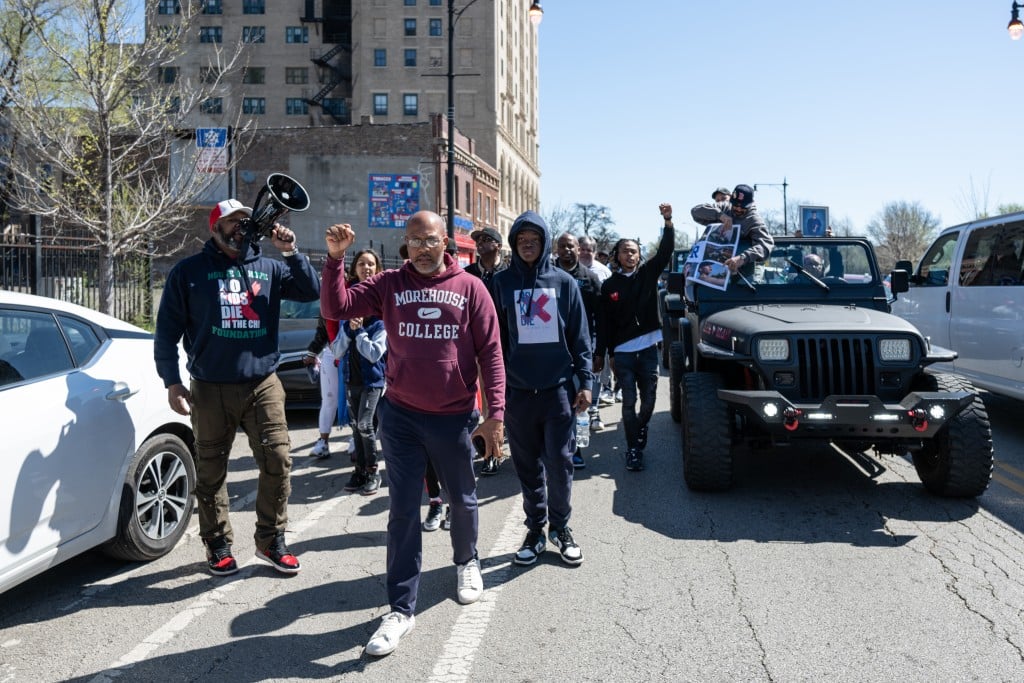
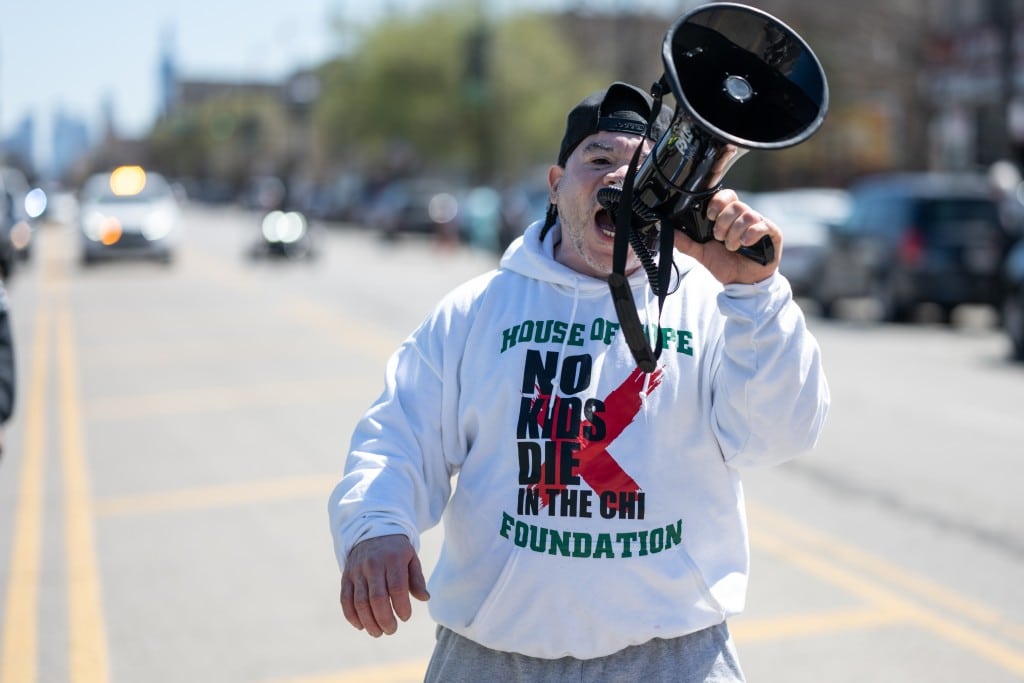
Talei Thompson, a Westside native and founder of the West Side Block Club Association, shouted into a bullhorn during a rally held in a parking lot on Madison and Hamlin on April 13.
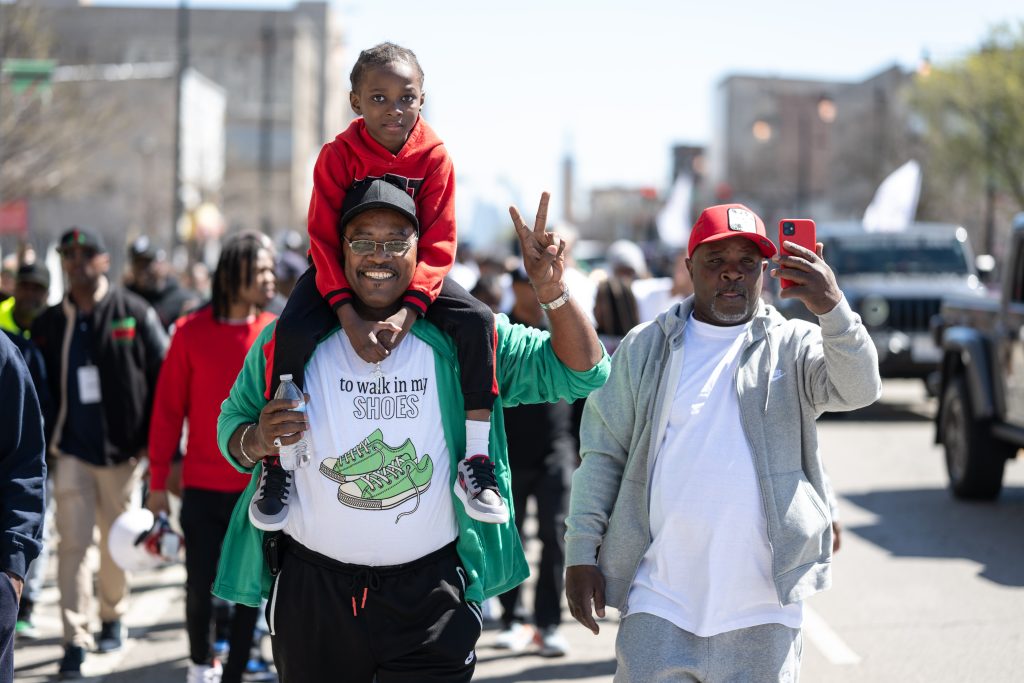
Roughly 30 minutes later, Thompson would lead a procession of a few hundred marchers and drivers, many of them members of the 7 Slot Platoon — a Jeep organization that promotes economic development — west on Madison towards Pulaski.
That Saturday’s march had been in the works for months, well before the fatal shooting of 26-year-old Dexter Reed in Humboldt Park on March 21. The organizers held the march to promote a truce among six of the most prominent gangs that Thompson and other local organizers had brokered ahead of the city’s potentially fatal summer months.
But Dexter’s killing nonetheless loomed large over the event. Death by gun — whether that of a police officer or another civilian — is still death by the gun. And many of the people who participated in the march didn’t make a distinction. They wanted all gun violence on the Westside to end, regardless of who holds the weapon.
Dickson Amoah, 44, traveled from the suburbs to be part of the Westside. He wore a shirt that reminded the viewer that Fred Hampton, the leader of the Illinois chapter of the Black Panther Party, was murdered.
“We’re out here to put a stop to all the murders happening in Chicago. We have to go back to history,” Dickson said. “Let’s call it all out. Let’s call it out with civilians and with the [police] too.”
Talei said coordinating both the march and the truce involved the close collaboration of a planning team that included West Side Block Club Association member LaTonya Brown, Westside activist Crystal E. Gardner, of the independent political organization 290 IPO, local organizer Greg Matthews, of Garfield Park Rite to Wellness, and Min. Phil Purkett, of New Mission Temple COGIC.
Talei said women were critical in organizing the truce and the march, adding that they greased the lines of communication between gang leaders and local organizers.
“This march would not have been possible had it not been for women,” he said. “There are individuals who I could not get in touch with and didn’t want to get in touch with me, but women got in touch with them for us. We are grateful for that.”
It wasn’t clear how many of the gang leaders were present during Saturday’s march since they weren’t identified for safety reasons. But what was much more obvious was Talei’s goal to cut the number of homicides committed on the Westside between May 1 through Sept. 1 to as close to zero as possible.
According to the City of Chicago Violence Reduction Dashboard, there were 70 total homicides (60 of them the result of fatal shootings) in Austin, North Lawndale, Humboldt Park, West Garfield Park and East Garfield Park between May 1, 2023, and Sept. 1, 2023 — a roughly 17% increase from 2022, when there 60 homicides (58 of them from fatal shootings) in those communities in that time.
There is at least one positive takeaway from the data. Between May 1, 2023, and Sept. 1, 2023, there were 333 shooting victimizations in those five Westside communities mentioned above — down 10% from that time in 2022.
Marchers like community member Michael Morris hoped the work of organizers like Thompson will lead to an even starker reduction in shootings. For him, any number is too high.
“I’m sick about it, and it happens way too often,” Michael said. “By the summer, I hope everyone is listening to this protest and we find a way to make it better.”


Get past and present Chicago crime data
| Did you know the Mayor’s Office Violence Reduction Dashboard shares real-time data on violence trends in Chicago and its inequitable impact across the city, as well as critical information about the City’s community-centered and trauma-informed response? The data in the Dashboard is updated daily with an approximately 48-hour lag. Due to the nature of CPD operations and often changing circumstances, some recorded data about incidents and victimizations may change once additional information arises and regularly updated datasets on the City’s public portal may change to reflect new or corrected information. Remember, it’s your right to know. Access the publicly available information here. |
Related Articles

Leadership Successions Announced by Organizations Founded by Prominent West Suburban Bishop
Bishop Claude Porter’s PLCCA and Interfaith Illinois Inc. both got new leadership this month, weeks after his death in December

West Siders Are Canceling TikTok Due to New Privacy Concerns, Fears of ‘Shadow Banning’
After the app’s U.S. operations split from its Chinese parent, creators reported sudden drops in reach and raised concerns about privacy, data use, and political speech
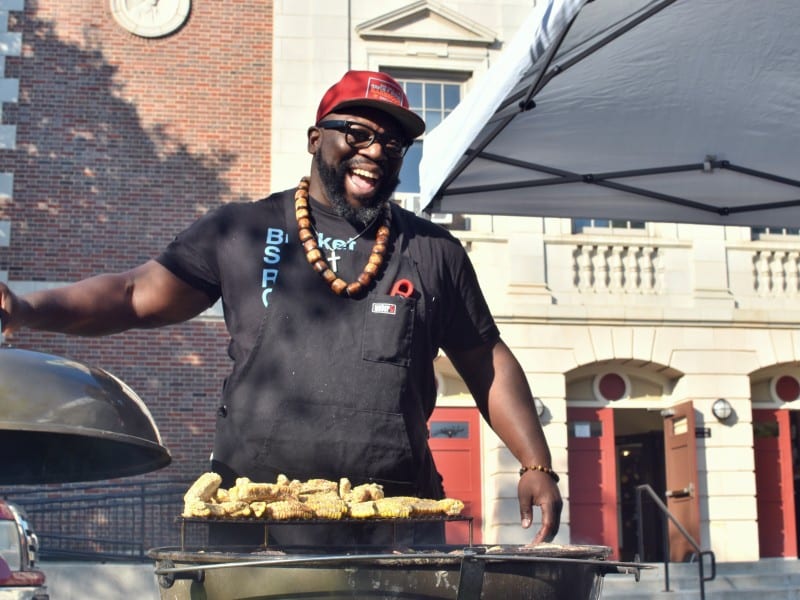
Pitmaster Daniel Hammond Schools Austin on the Art of the Perfect Turkey
Chicago pitmaster Daniel Hammond shares holiday-ready techniques for juicy turkey, perfect stuffing, and foolproof barbecue at Austin Town Hall Farmers Market