
West Side Leaders Sound Alarm on Food Aid Cuts
As federal funding stalls and new state costs loom, local grocers and families brace for another hit to neighborhood stability
At the Leaders Network’s monthly meeting on Oct. 14 at Columbus Park Refectory, 5701 W. Jackson Blvd. in Austin, Danielle Perry, vice president of policy and advocacy at the Greater Chicago Food Depository, delivered a stark warning about the future of food assistance in Illinois.
The Leaders Network, a coalition of West Side clergy and community leaders that meets monthly to address issues ranging from public safety to economic development, convened the gathering to brief members on pressing state and federal policy changes.
“Let’s talk about the Big Beautiful Bill,” Perry told clergy and advocates. “It didn’t just cut billions from the food program — it shifted the burden for how we pay for benefits from the federal government to the state.”
The “One Big Beautiful Bill Act,” signed into law this summer, ties state funding responsibility to federal error-rate benchmarks in the Supplemental Nutrition Assistance Program (SNAP). If Illinois cannot meet the new federal standards, it could be liable for hundreds of millions of dollars in additional costs — estimates hover near $700 million per year.
Perry cautioned that the law also tightens long-standing work-requirement rules for able-bodied adults without dependents. When Illinois’ current waiver expires later this year, recipients who fail to meet 80 hours of work, training, or volunteer service per month could lose benefits after three months.
“Most people who receive benefits work,” Perry said. “The idea that people are sitting at home doing nothing is a falsehood. But will they be able to navigate the paperwork and red tape the federal government is creating? Not without us standing in those spaces with them.”
Also speaking at the Leaders Network’s Oct. 14 meeting, U.S. Rep. Jonathan Jackson, who serves on the House Agriculture Committee’s Subcommittee on Nutrition and Foreign Agriculture, warned that proposed federal cuts to the SNAP could deepen food insecurity nationwide.
“We already have malnutrition rising in the United States,” Jackson said. “The program now supports about 42 million people at roughly $6.20 a day. Lawmakers are talking about reducing that to about $4.80. Try feeding yourself on that.”
Jackson noted that reducing the daily benefit would make it harder for families to afford balanced meals and could further strain communities already struggling with hunger.
Shutdown Threatens Immediate Cutoff
Perry’s remarks came as Illinois officials warned of an even more immediate crisis.
According to an Oct. 16 release from the Illinois Department of Human Services, the U.S. Department of Agriculture informed all states it will not fund November SNAP benefits if the federal government shutdown continues. That would halt $350 million in monthly benefits statewide and cut off food assistance for 1.9 million Illinois residents beginning Nov. 1.
“SNAP is a proven, time-tested program — one that protects children and families from going hungry,” IDHS Secretary Dulce M. Quintero said in the statement.
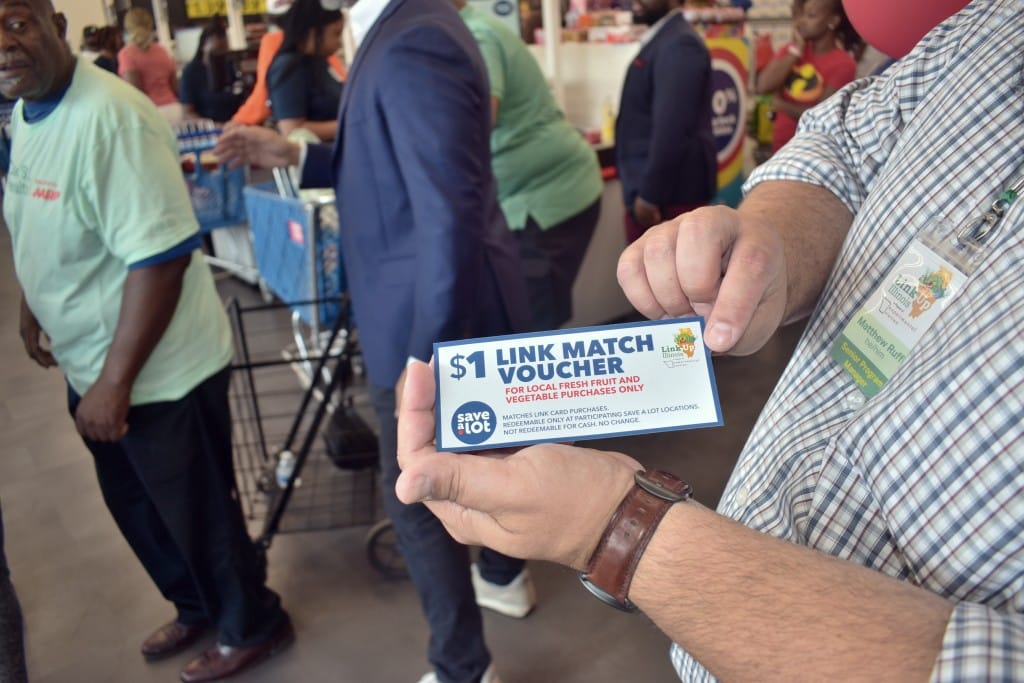
Retail groups added that a lapse in benefits could devastate grocers already struggling to stay open in low-income neighborhoods. West Side grocery stores derive a significant share of revenue from SNAP payments, with some partnering with the nonprofit Experimental Station on a program called Link Up Illinois. The initiative allows customers using the Illinois Link Card — which works like a debit card to access SNAP benefits — to have their purchases matched up to $25 per day with Link Match coupons.
The dual threat — a short-term federal shutdown and a long-term policy overhaul — has advocates on edge.
“We’re going to have to implement something like the healthcare-navigator program that was used for Obamacare,” Perry said. “People need guides who can help them understand what’s changing and how to keep food on the table.”
How to Help and Find Food
The Greater Chicago Food Depository is urging churches, block clubs, and neighborhood organizations to partner on public-awareness campaigns explaining the new SNAP rules and potential interruptions. Groups interested in training sessions or outreach materials can contact the Depository’s Policy and Advocacy team at govrelations@gcfd.org or visit chicagosfoodbank.org.
Residents who need immediate food assistance can locate a nearby pantry, soup kitchen, or mobile distribution site using the Depository’s searchable map here.
Related Articles
Austin Business Hub Opens Doors With Trades Program Aimed at Building West Side Workforce
The Rutues Center for Business & People Development launches 16-week trades program to create pathways into union jobs, entrepreneurship, and licensure
West Side NAACP Calls Community Meeting as CPS CEO Search Faces Scrutiny
The group is urging West Side residents to gather March 31 to talk about transparency and stability as CPS leadership search draws criticism amid uncertainty

Chicago Outpaces Suburban Cook in Primary Turnout Despite Record Early Voting in the Suburbs
Election Day brought isolated polling-place issues but no widespread disruptions, officials said