
The Ghost Sign at 5951 W. Madison St.
If you walk past 5951 W. Madison St., it’s easy to miss the story staring back at you. Look closer, and you’ll see a set of hand-painted letters — “NATION WIDE MOVERS” — weathered but still clinging to the white tile façade. It’s more than a faded advertisement; it’s a clue to the building’s former life.
If you walk past 5951 W. Madison St., it’s easy to miss the story staring back at you. Look closer, and you’ll see a set of hand-painted letters — “NATION WIDE MOVERS” — weathered but still clinging to the white tile façade. It’s more than a faded advertisement; it’s a clue to the building’s former life.
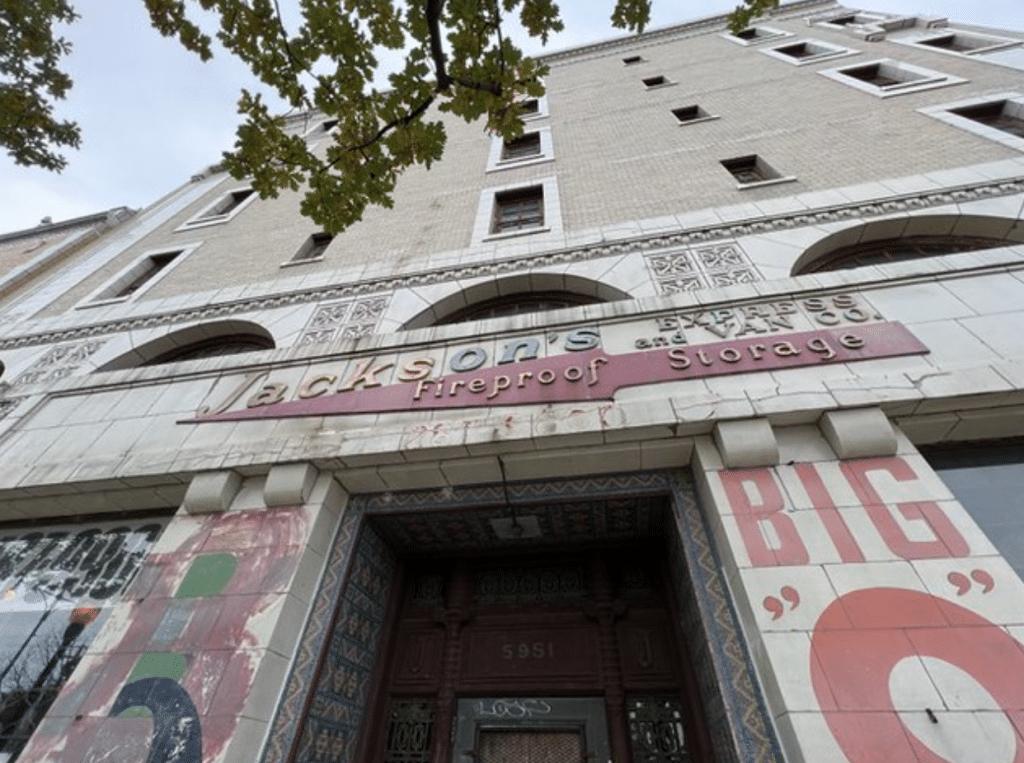
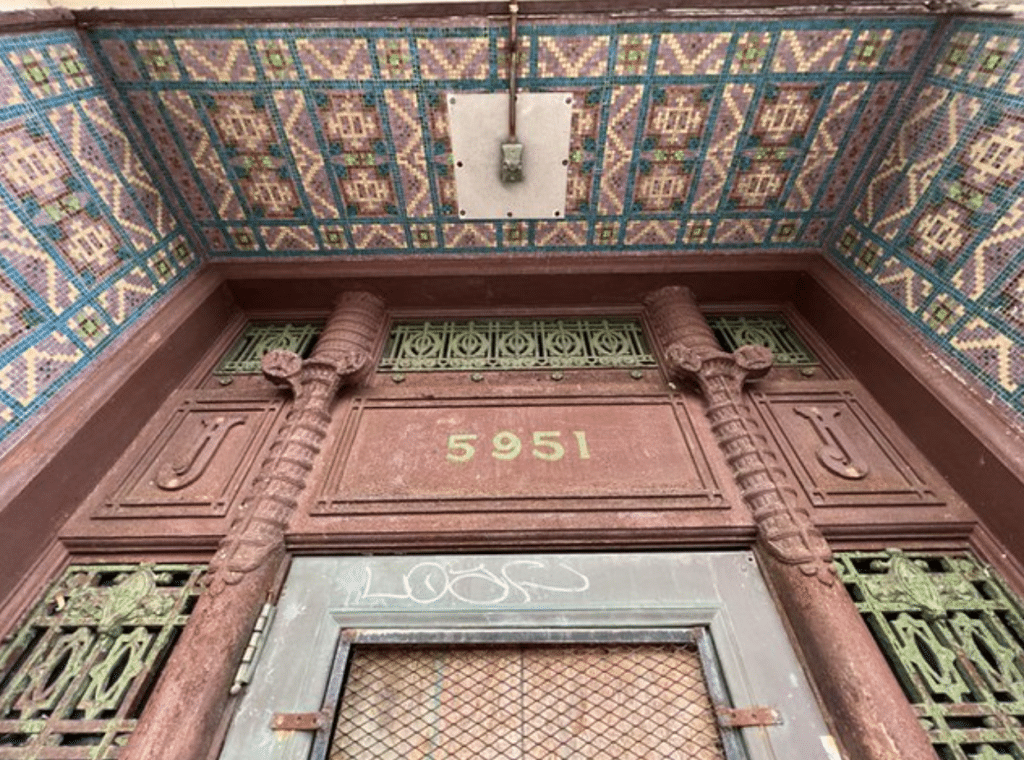
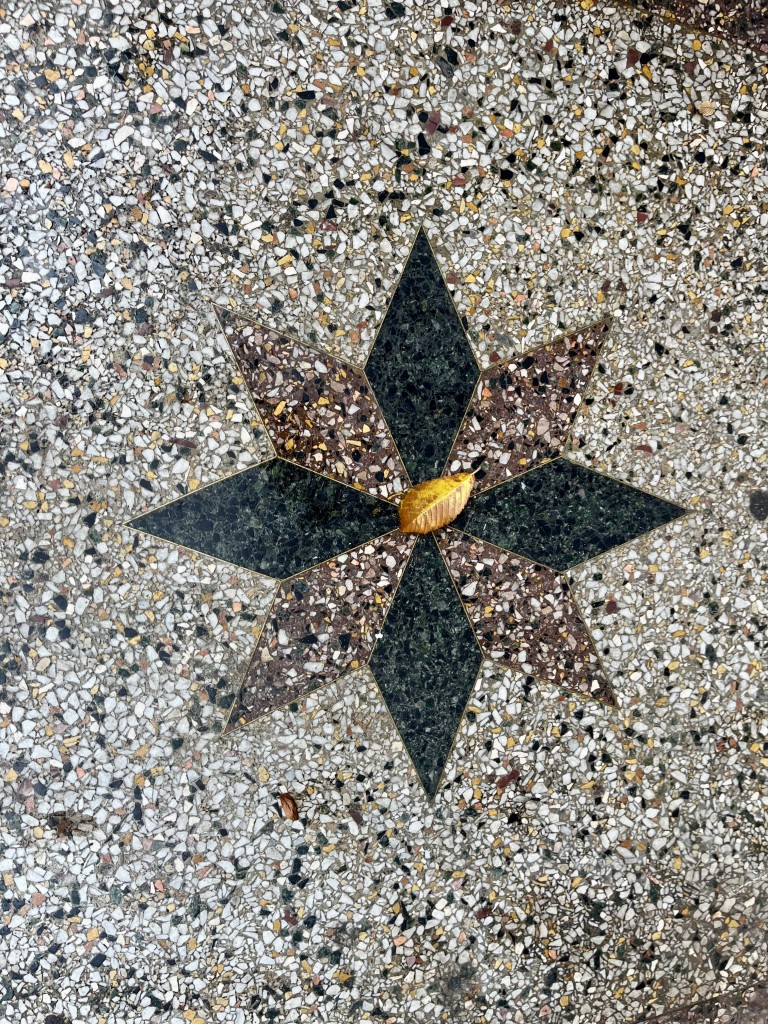
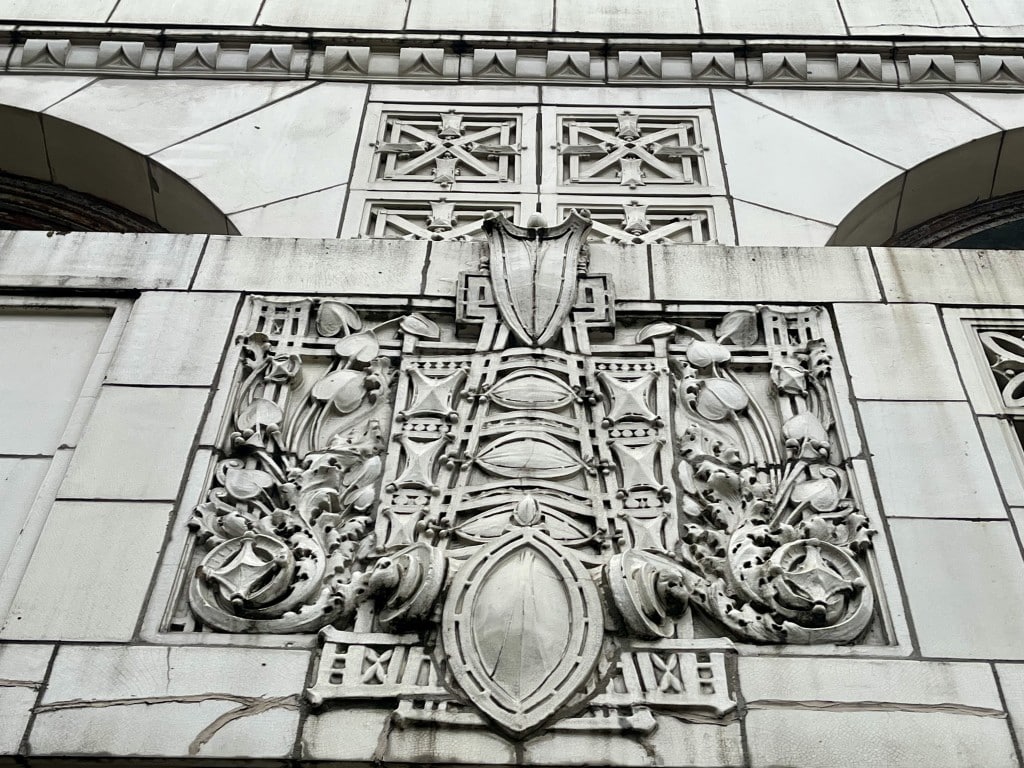
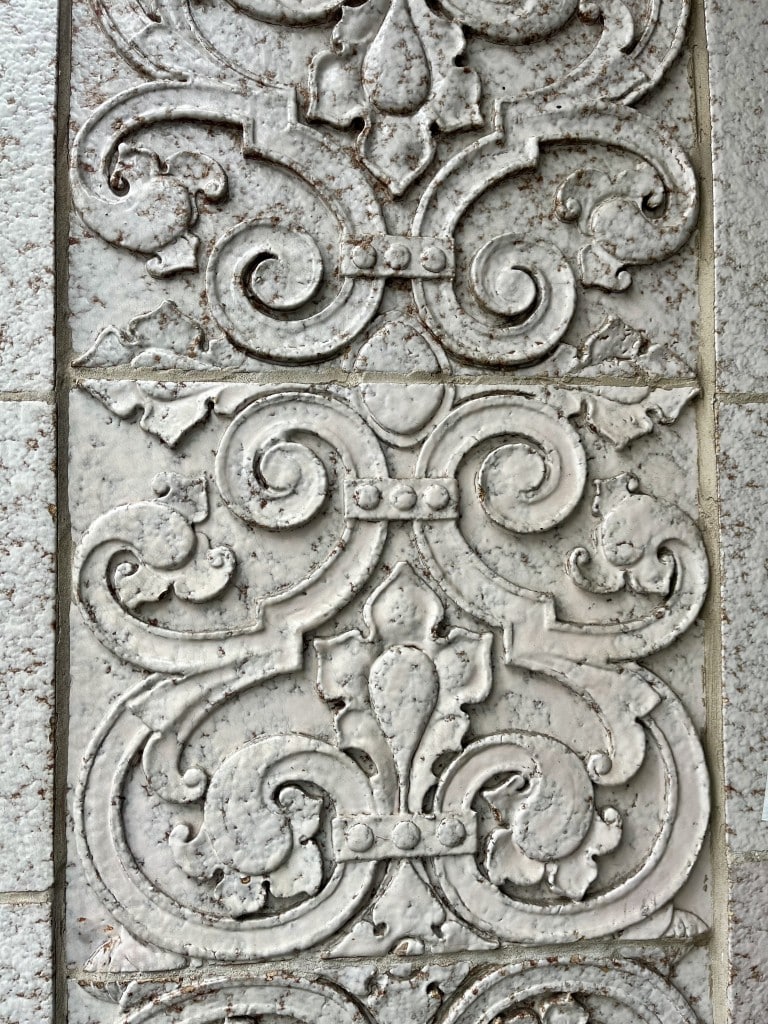
This building, built in 1920 as the Jackson Storage and Van Company warehouse, is an echo from Madison Street’s commercial heyday. Its terracotta ornamentation — a shield motif surrounded by stylized vines and geometric grids — is a testament to the pride of early-20th-century industrial design. Even the floor tells a story: step carefully toward one of the building’s entrances, look down, and you’ll find a terrazzo star inlaid in black and gold, a little luxury tucked beneath decades of footsteps.
Historic fire-insurance maps, like the 1921 Sanborn atlas, show the building’s footprint precisely as we see it today — a large, sturdy structure designed for warehousing, trucking, and long-distance moving. The words on the wall weren’t just marketing; they were a promise that this West Side business could carry your belongings anywhere in the country.
These layers of paint, tile, and stone are not just decoration. They are the West Side’s living archive. Next time you’re on Madison, slow down. Look up at the façade, trace the outlines of the ghost letters with your eyes, and imagine the crews who once loaded up furniture on this very sidewalk, bound for destinations far beyond Chicago.
Buildings like this one are more than bricks and mortar — they’re memory keepers. And if you look closely, they still have plenty to say.
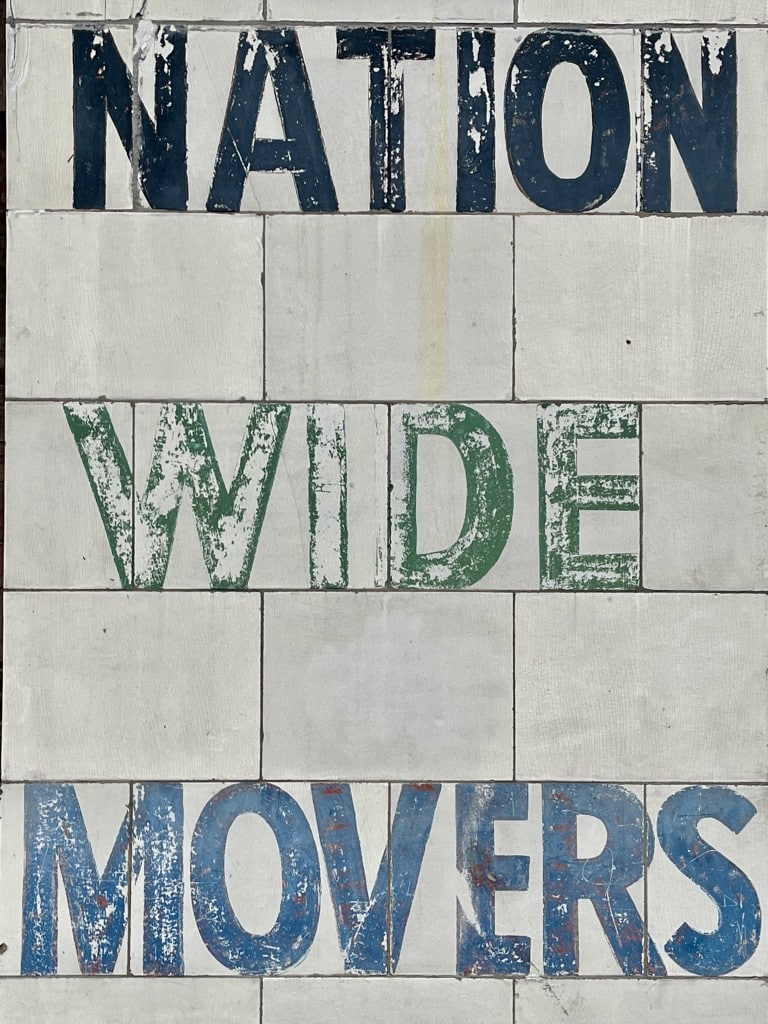
typeface typical of the 1930s–40s — tall, squared-off letters with minimal ornamentation designed for maximum legibility at street level. The white tile background, set in a running-bond pattern, frames the lettering like a billboard embedded in the wall. Decades of sun and soot have softened the paint, leaving a beautiful patina that hints at the building’s life as a hub for long-distance trucking. | MIKE ROMAIN
Related Articles
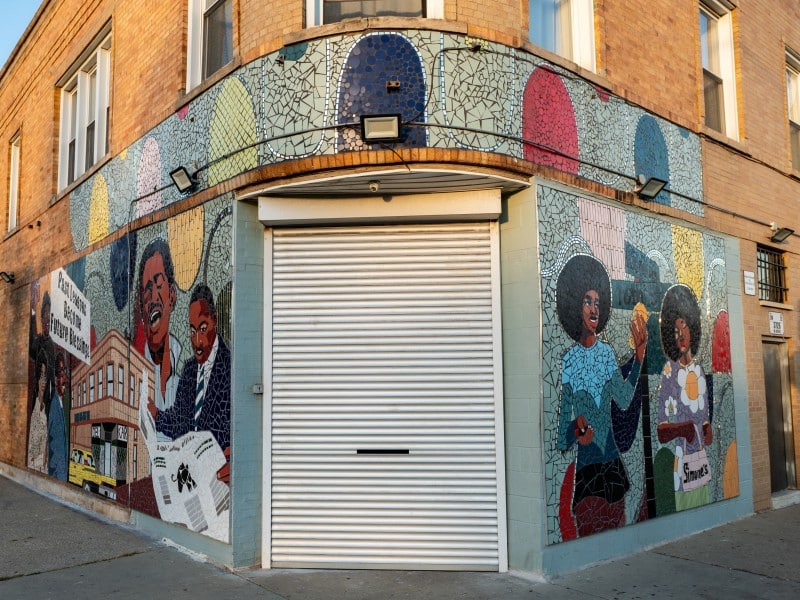
Past Lessons Become Future Blessings
At Del-Kar Drugs, a mosaic links personal memory with neighborhood history — from the Vice Lords and the Panthers to the Muldrow family’s enduring legacy
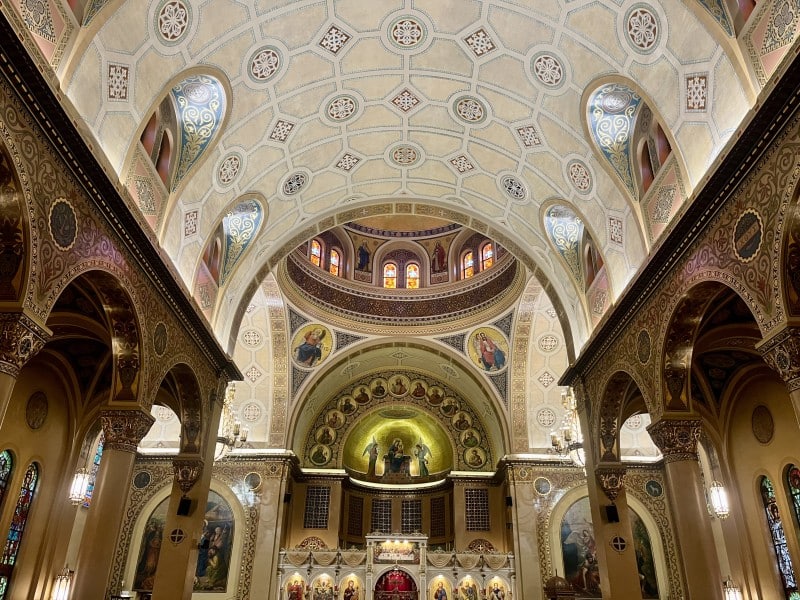
West Side Sanctuaries Shine During Open House Chicago
From Austin to North Lawndale, sacred spaces opened their doors during this year’s citywide architecture festival—highlighting the West Side’s growing prominence.
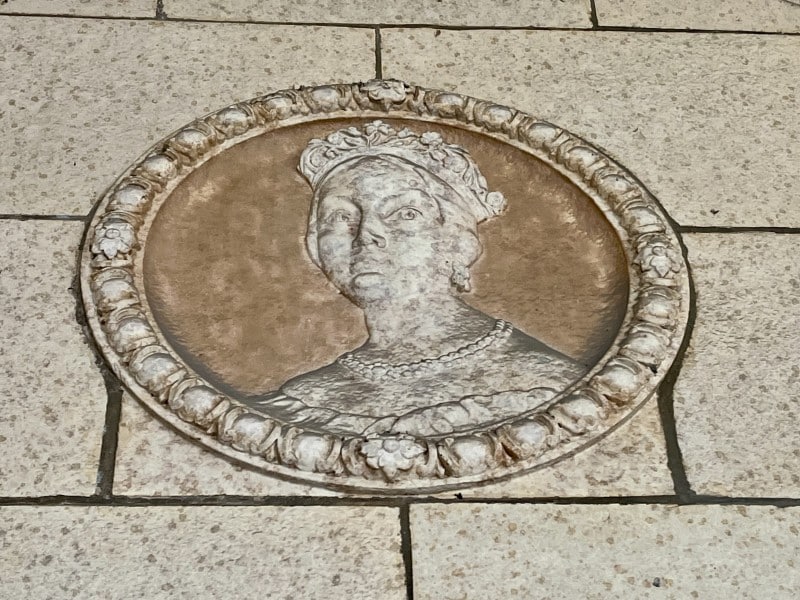
A Queen in Garfield Park
If you’ve ever passed under the Golden Dome, 100 N. Central Park Ave. in Garfield Park, you may have noticed a regal face staring back at you from the stonework.