
Saved From Blight, Chicago Avenue Apartment Complex Now a Soul City Beacon
After $2M remodeling effort, the building at 5246 W. Chicago Ave., once known disparagingly as ‘The Carter,’ now houses 20 affordable, modernized units
CARL ANKRUM/THE MEDIA MD
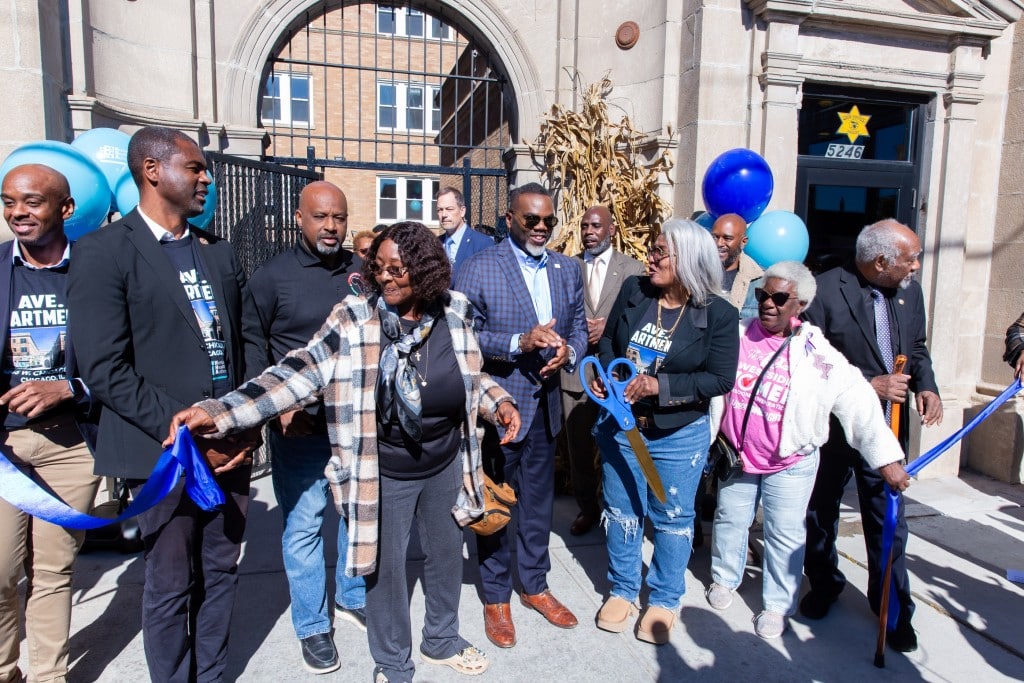
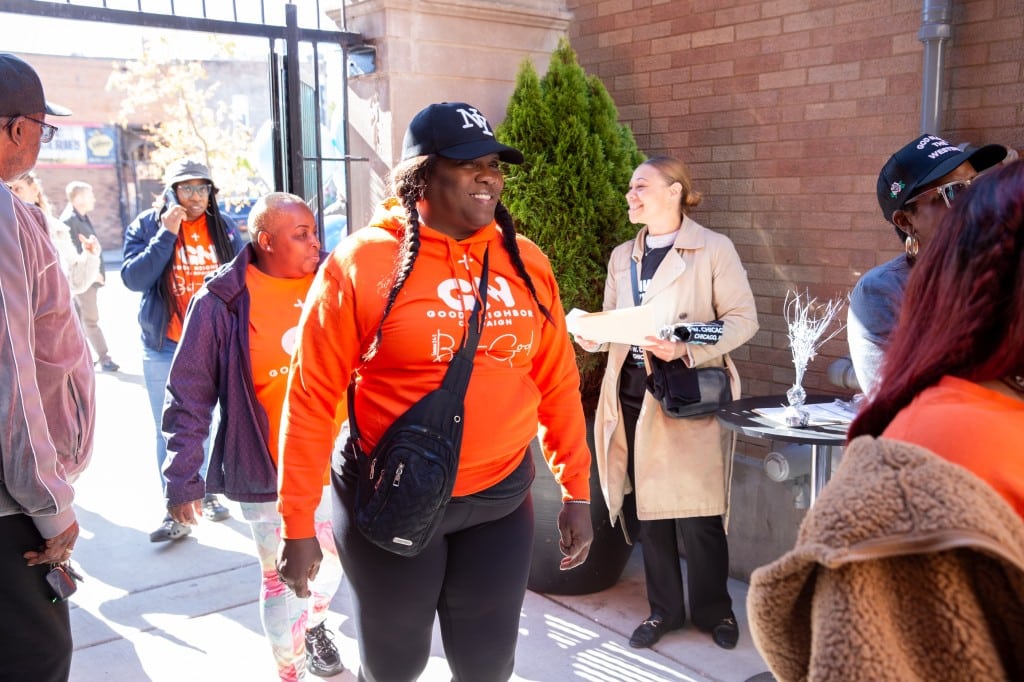
Community leaders, residents, and elected officials gathered Oct. 20 at 5246 W. Chicago Ave. to celebrate the grand opening of the Avenue Apartments. Local leader said the once-blighted property is now a symbol of transformation on the West Side.
For years, the building was notorious in the neighborhood, known derisively as “The Carter,” a reference to the drug-ridden apartment complex in the 1991 film New Jack City. On Monday, the crowd outside the restored brick structure cheered as speakers described the redevelopment as a hard-won victory for Austin.
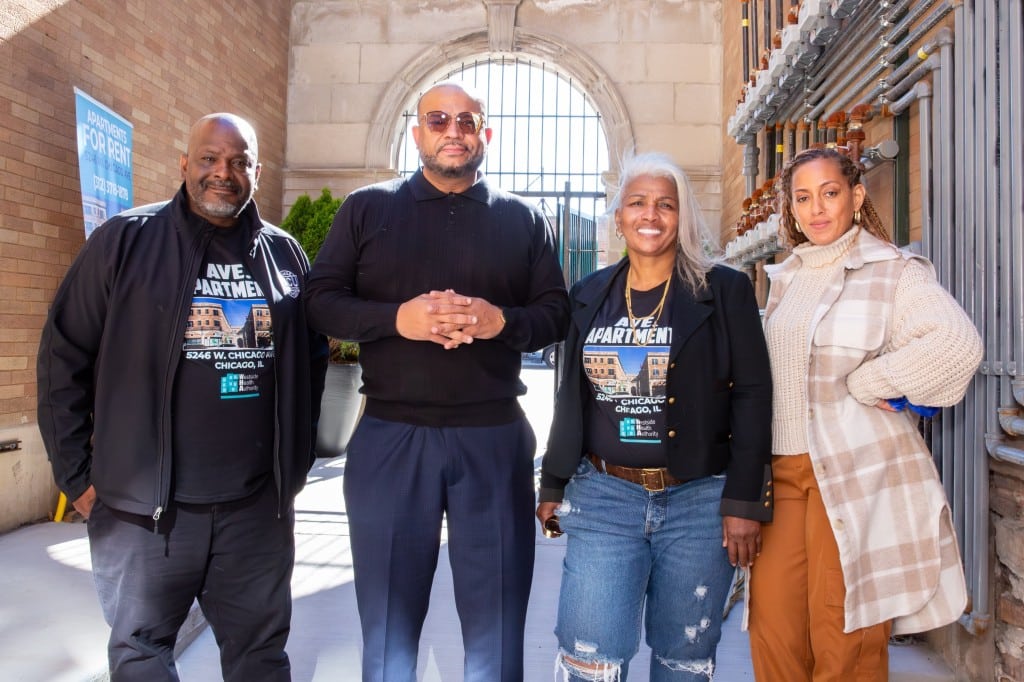
“This is not ‘The Carter’ anymore,” said Rosie Dawson, property director for the Westside Health Authority (WHA), the Austin nonprofit behind the redevelopment. “This is the Avenue Apartments — and all we ask is that Austin take care of it.”
Dawson, who led the nine-year, $2 million rehabilitation effort, said the project cost less than demolition and represents a promise kept to the neighborhood. The building features 20 one- and two-bedroom units renting between $1,400 and $1,600 a month — far below market rates for comparable apartments.
WHA, which also owns the site of Forty Acres Fresh Market and the adjacent PNC Bank branch a few blocks west, has positioned the Avenue Apartments as part of a broader campaign to stabilize Chicago Avenue’s “Soul City Corridor.”
Malcolm Crawford, executive director of the Austin African American Business Networking Association and the lead advocate for the Soul City Corridor, said the Avenue Apartments are the latest sign of progress along the state-designated cultural district.
The corridor — which traditionally spanned Chicago Avenue from Cicero Avenue to Austin Boulevard — recently expanded its boundaries to span Madison to Division streets between Cicero Avenue and Austin Boulevard.
Now an official state cultural district, which makes it eligible for state funding and other opportunities, the corridor has seen a wave of new investment and infrastructure upgrades — from city-funded streetscape improvements to the recent opening of Third City Studio, an arts hub on North Avenue that anchors a planned creative district.
“This isn’t just about a building,” said Vanessa Stokes, who owns VS Creative Consulting, is part of the Third City Studio development team, and whose planning to open Outwest Cafe & Art Gallery across the street from the apartments next year. “It’s about transformation and community. We’re seeing the impact of vision and investment come to life.”
Justin Hill, WHA’s research and policy analyst and the manager of Special Service Area 72, where the building is located, said the building is an example of the nonprofit’s history of development on the West Side.
“This is beautiful and a testament to what the Westside Health Authority has been doing for 37 years,” Hill said. “And I hope this is a testament to what we can build together in this neighborhood in the future.”
Morris Reed, WHA’s CEO, said the organization was determined to save the structure for the community despite pressure to demolish it.
“To quote the famous Chicago poet Gwendolyn Brooks, ‘We are each other’s business; we are each other’s harvest; we are each other’s magnitude, and bond,’ Reed said. “When you invest in people, people invest back.”
The project’s general contractor, Kareem Broughton, who owns Structure Re-Right, emphasized that the construction process itself became a source of pride, employing local Black tradesmen and apprentices.
“We had Black men working on every part of this building — from carpenters to plumbers to electricians,” Broad said. “They saw what it means to rebuild something for your own neighborhood.”
Mayor Brandon Johnson called the project a model of community-driven revitalization and tied it to his administration’s broader housing and economic development agenda. His administration has launched a $1.25 billion Housing & Economic Development Bond over five years — touted as among the largest such investments in Chicago’s history.
“This project reflects Austin’s history of organizing and resilience,” Johnson said. “Affordable housing is about more than shelter — it’s about dignity and stability. Downtown investments are finally making their way to the West Side.”
The mayor said the redevelopment project received over $950,000 in funding through the city’s TIF Purchase-Rehab Program, a $93,000 Small Business Improvement Fund grant through the Department of Planning and Development, and another $250,000 through an Equitable Transit-Oriented Development grant.
State Rep. La Shawn K. Ford (8th), who represents the area, praised the project as a turning point for a corridor long plagued by disinvestment.
“If you’re from the West Side, you know what was going on in this corridor,” Ford said. “Today is a different day. The cameras are here not because someone was killed or overdosed, but because someone was intentional about making life better.”
Ford also highlighted Dawson’s persistence and called for continued state support to expand affordability.
“We have to make sure landlords can make it work,” he said. “Projects like this show what happens when responsible landlords and public investment come together.”
The building’s first floor houses The Avenue Q and Kitchen, a new restaurant opened this summer by local entrepreneur Obidise Smith, who credited WHA for helping him secure the location.
Ald. Emma Mitts (37th) called the project proof that neighborhood investment and faith can coexist.
“I just get excited to see change,” Mitts said. “I get excited to take down old things and put in new stuff. In everything we do, we have to give honor and praise to God. That’s what allows us to see not with the natural eye, but with the inner eye … Seeing that we can have Black contractors working on projects in our neighborhood. Seeing that we can have a mayor who is from the neighborhood, investing in our neighborhood.”
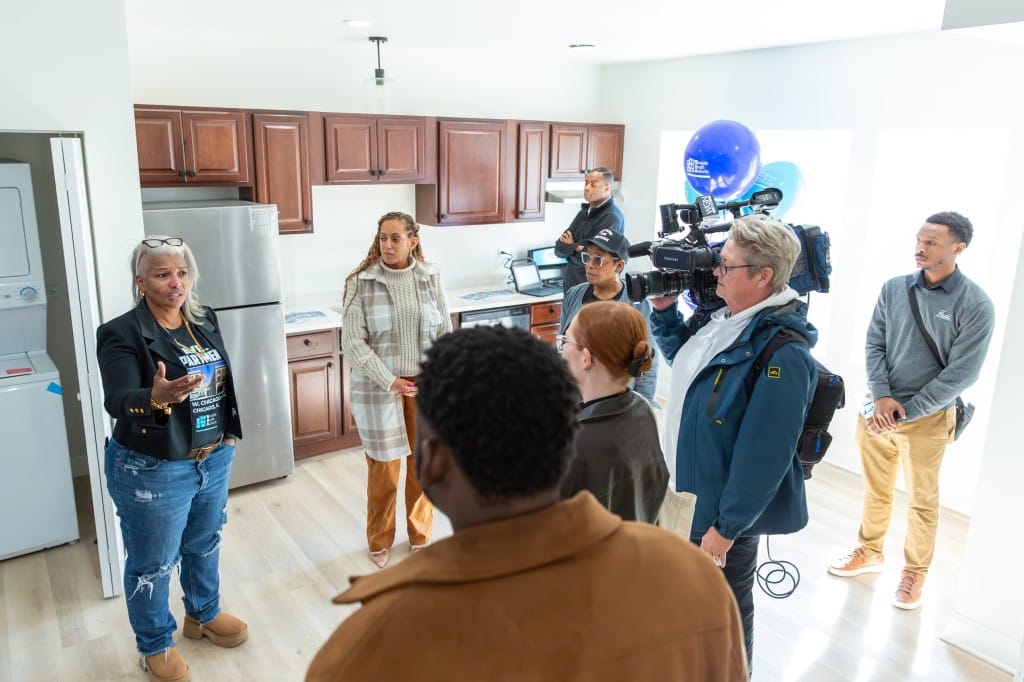
After the ribbon was cut, residents toured the bright, newly finished apartments, each outfitted with stainless-steel appliances, in-unit laundry, and modern security systems, among other amenities.
The ceremony ended with a prayer from the Rev. Robbie Wilkerson, owner of Spill the Beans Café, located down the block at 5300 W. Chicago Ave.
“Today we gather here in Austin on the West Side of Chicago, standing on what we claim to be holy ground,” Wilkerson said.
“To celebrate the grand opening of this affordable housing facility, a beacon of stability, health, and dignity for our community. May this facility not only provide shelter, but also peace, healing, and opportunity to all who dwell within its walls.”
Interested?
Westside Health Authority is taking applications from potential tenants in person at the Aspire Center for Workforce Innovation, 5500 W. Madison St., or by phone at (312) 224-4672.
Words Worth Sharing
And I thought to myself as I went my way,
Which of these roles am I prepared to play?
Am I a builder who works with care,
Measuring life by the rule and square?
Or am I a wrecker who walks the town,
Content with the task of tearing down?
— Part of a poem Congressman Danny K. Davis recited during the Oct. 20 grand opening of The Avenue apartments in Austin.
Related Articles
Faith Roselle Julian, Steadfast Steward of Father’s Legacy, Dies at 82
The daughter of pioneering Black chemist Dr. Percy Lavon Julian preserved a home and history in the west suburbs shaped by resilience
West Side NAACP Calls Community Meeting as CPS CEO Search Faces Scrutiny
The group is urging West Side residents to gather March 31 to talk about transparency and stability as CPS leadership search draws criticism amid uncertainty

Ford’s Suburban Edge Carries Him Past Conyears-Ervin in 7th District Democratic Primary
Franklin wins Ford’s old House seat; Stratton captures Senate primary as Hynes and Preckwinkle notch major Cook County victories