
Neighborhood Retail Activation Program Targets Austin’s Madison Street With New Storefront Opportunities
City initiative aims to fill vacant spaces, speed licensing, and help entrepreneurs build lasting businesses on the West Side
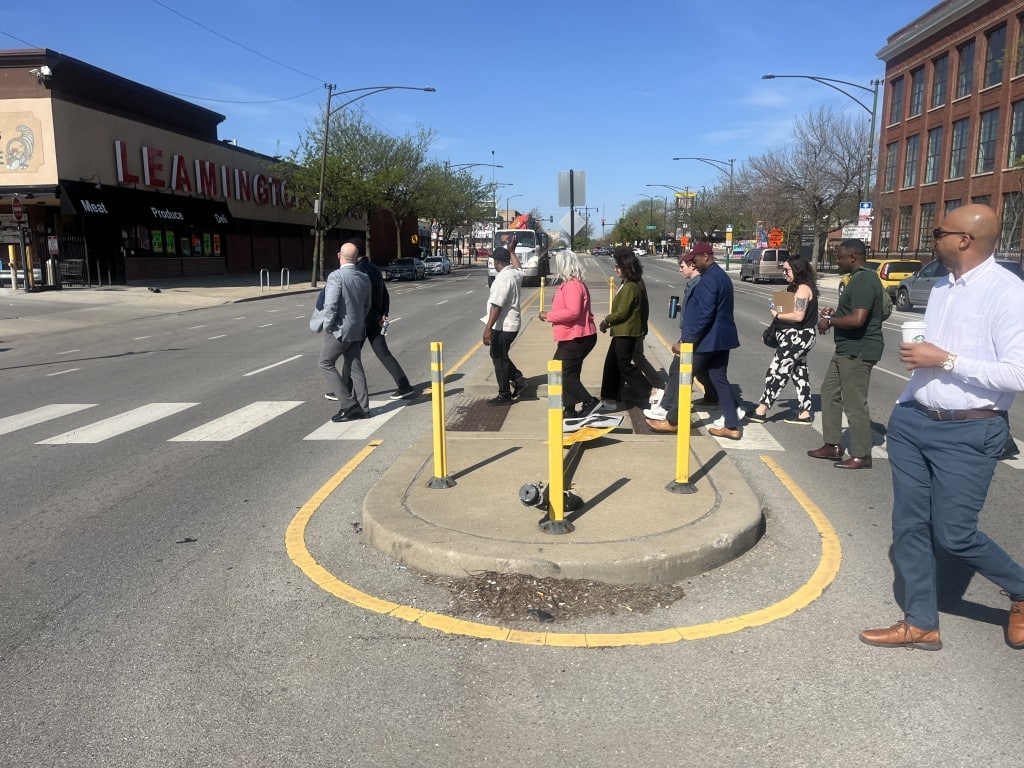
City officials, community leaders, and local property owners are looking to bring new business energy to Madison Street in Austin through the Neighborhood Retail Activation Program. The new initiative is designed to help revive commercial corridors impacted by recent summer storms and long-standing economic challenges.
On April 21, Westside Health Authority hosted a walking tour of three prospective storefront properties on the 5400 block of West Madison Avenue, giving prospective business owners and stakeholders a closer look at spaces that could become part of the program.
Among the featured properties were buildings owned by local businessman Marshawn Feltus, who also operates ACT Yoga on the block. Feltus owns two buildings in the area and is among the property owners applying to participate in the initiative.
“We’re changing the business concept where we can,” Feltus said during the tour. “We’re looking at a cluster of businesses where people have partnerships and are working toward the same goal.”
That cluster strategy reflects a broader vision for Madison Street—-not just filling vacancies, but building a connected corridor where businesses reinforce one another, increase foot traffic, and create a stronger neighborhood destination.
The Neighborhood Retail Activation Program was announced in March by Mayor Brandon Johnson and the Chicago Department of Business Affairs and Consumer Protection.
The effort focuses on Austin, Belmont Cragin, and West Garfield Park, areas affected by the 2023 and 2024 summer storms. The selected delegate agencies are tasked with identifying move-in-ready vacant storefronts, negotiating leases, and helping activate at least five spaces per corridor.
The four Delegate Agencies selected include:
- Austin African American Business Networking Association for the Austin neighborhood, specifically Chicago Avenue between Austin Boulevard and Cicero Avenue;
- Westside Health Authority for the Austin neighborhood, specifically Madison Street between Austin Boulevard and Laramie Avenue;
- Northwest Side CDC for the Belmont Cragin neighborhood, specifically the Belmont Avenue/Central Avenue commercial corridor;
- Together Chicago for the West Garfield Park neighborhood, specifically Madison Street between Kostner Avenue and Hamlin Boulevard.
City officials said each Delegate Agency will be responsible for identifying move-in-ready vacant storefronts, negotiating leases, and facilitating a goal of five pop-up activations per commercial corridor.
The program is also intended to help business owners navigate the city licensing and
permitting process—one of the biggest barriers to opening.
“We are truly honored to be awarded the Neighborhood Retail Activation Program grant and to continue investing in the vitality of the Chicago Avenue Soul City Corridor,” said Malcolm Crawford, the executive director of the Austin African American Business Networking Association. “This grant will help support our mission as we continue to do the work of uplifting small businesses in Austin and revitalizing the West Side.”
Justin L. Hill, the director of Special Initiatives at Westside Health Authority, said the program will allow the nonprofit to help five local business owners strengthen their operations on the path toward generational wealth.
“For more than 37 years, the Westside Health Authority has centered Austin residents and their voices, recognizing that West Side families seek not just survival, but the ability to build legacy and pass opportunity to the next generation,” Hill said.
Ivan Capifali, commissioner of Business Affairs and Consumer Protection, said the city has been working to streamline processes that have historically delayed small business openings.
“For many years, it’s taken forever to get a city license, a public way permit, a sign like that takes months and months because of bureaucracy,” Capifali said. “Mayor Johnson wanted to change that.”
Capifali said multiple city departments are often involved when a business applies for licenses or renovations, including Buildings, Health, and BACP. That layered review process could once stretch to roughly five months.
“We’re at 40 days on average when it was 150 days on average,” he said, noting that timelines still vary depending on the license type.
For prospective entrepreneurs, that reduction could be significant. Faster approvals can lower carrying costs, shorten vacant periods, and help owners begin generating revenue sooner.
Business owners interested in the program can apply by submitting the city’s Neighborhood Retail Activation Business Interest Form. Property owners with vacant or available storefronts can also submit a separate Property Owner Interest Form if they want their spaces considered.
After forms are submitted, applicants are encouraged to follow up directly with the delegate agency managing their corridor. Those agencies will oversee the final selection process, evaluate fit, and provide next-step guidance to participants.
For Madison Street applicants in Austin, that means contacting Westside Health Authority. Businesses may be considered for pop-up activations, storefront placements, or technical assistance depending on readiness and corridor needs.
The program also promises technical assistance beyond real estate placement, including marketing support, business planning, operations guidance, and help securing long-term leases.
For Austin residents, the stakes go beyond storefront occupancy.
Successful corridor redevelopment can bring neighborhood jobs, safer and more active streets, new services, and stronger local ownership in a community that has long faced disinvestment.
Entrepreneurs seeking more information can visit the city’s program page at Chicago.gov/BACPRetail or email BACPEconomicRecovery@cityofchicago.org.
Those specifically interested in the Madison Street corridor can also contact Westside Health Authority directly at healthauthority.org.
Related Articles

Austin Artist Wants to Bring Color, Craft, and Artistic Community to the West Side
Multidisciplinary artist Briana Shields recently launched Deco Ave Creative Studio & Wellness House
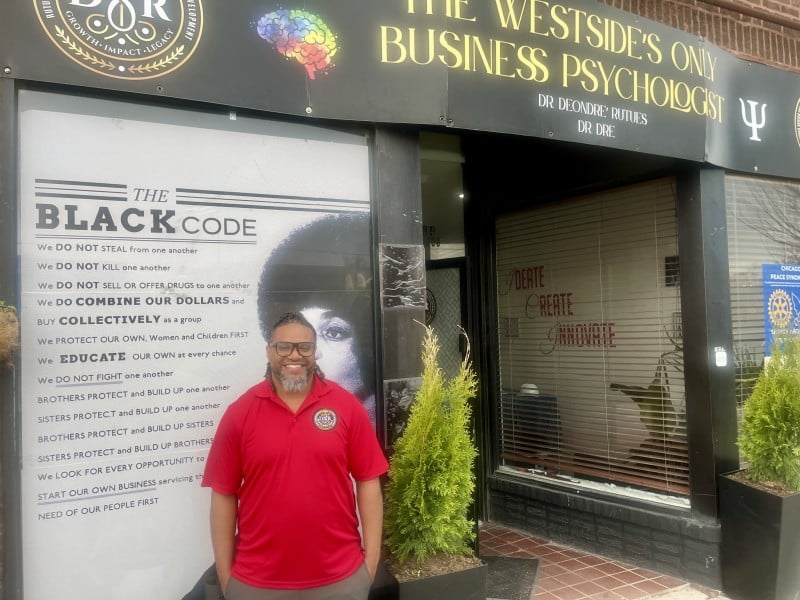
Austin Business Hub Opens Doors With Trades Program Aimed at Building West Side Workforce
The Rutues Center for Business & People Development launches 16-week trades program to create pathways into union jobs, entrepreneurship, and licensure
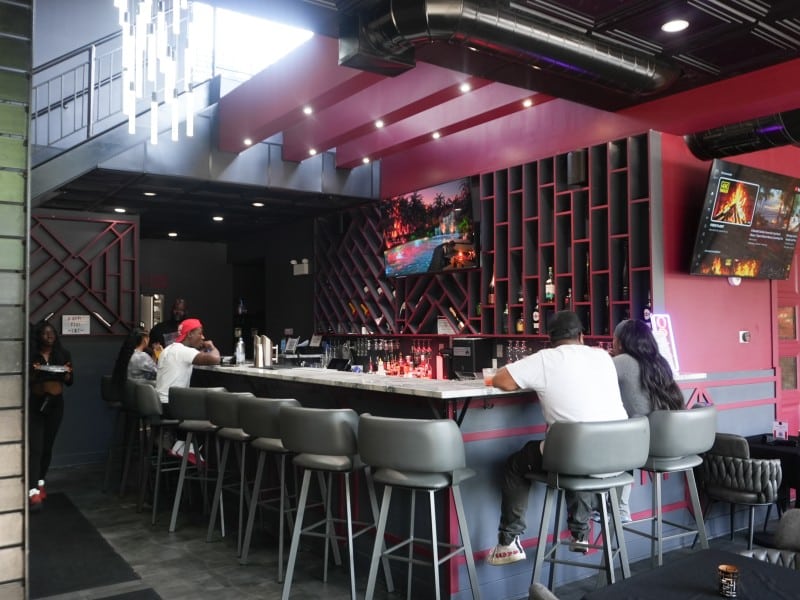
Chicago Black Restaurant Week Runs Feb. 8-22
One Austin restaurant and four west suburban restaurants will participate this year