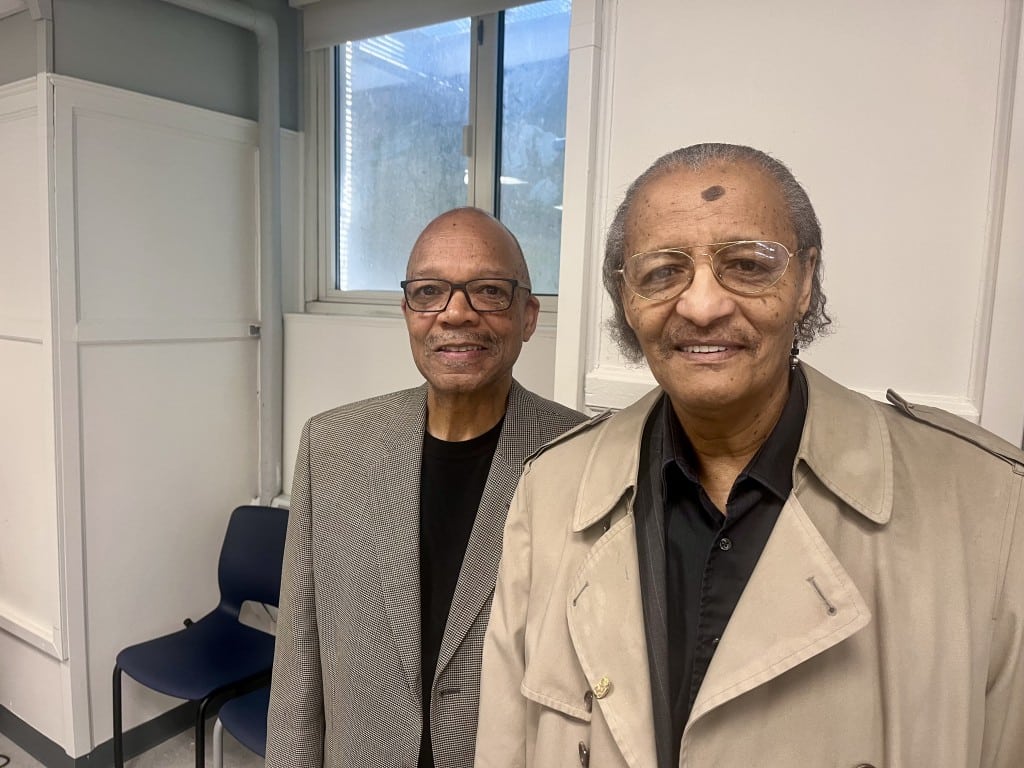
Mark Allen Boone, 74, and Cranston S. Knight, 74, Speak on Writing and the West Side Writers Guild
In 1990, five West Side writers—Mark Allen Boone, Cranston S. Knight, Harold Hunter, Tina Jenkins Bell, and Irene J. Steele—formed the West Side Writers Guild to fill the need for literature about the West Side and by West Side authors.
Boone, a poet, and Knight, a novelist, were at Legler Regional Library, 115 S. Pulaski Rd., in May to talk about writing and the Guild’s importance during one of photographer and Legler artist-in-residence Kenn Cook Jr.’s Monthly Listening Sessions.
In 2017, the Jane Addams Hull-House Museum hosted all five writers for a reunion, reading, and reception. You can still see that rich conversation on YouTube.
Meanwhile, we’ve extracted parts of Boone’s and Knight’s insight from both the Legler and Hull-House Museum conversations and presented them below:
Mark Allen Boone: Record your authentic experience. Put it down. You don’t have to know where it’s coming from.
The Guild didn’t have any forerunners. We just created a mode ourselves. We didn’t know that it would be recognized. It’s been about eight years since Jane Addams Hull House Museum hosted us for one of their programs to promote what we did as a group on the West Side. We just want to encourage writers. I’m all about mentorship and guiding writers to put their best foot forward. You have to be willing to give, to share.
(Boone at Hull-House): When we were writing in the late 1980s and early 1990s, it was extremely difficult to get your work evaluated and accepted by agents. New York was pretty much off-limits. At the time, they were selling the urban experience, or what they’d call street fiction. I had written a couple manuscripts that I’d shopped around and circulated, and one of them was (connected to an agent). He believed in it and shopped it and shopped it. I may have got 13 rejections. I said something’s not right with this picture. By then, I was working as an editor, so I knew the process. After enough rejection, I decided to self-publish my work. I decided, as part of the West Side Writers Guild, we wouldn’t even attempt to get it published by a commercial publisher.
Cranston S. Knight: I felt that, as a vehicle, writing is a really cross-cultural, multidimensional format for me to address the problems and issues I and other people living in housing projects were going through.
Just write, and if you do it long enough, your work will improve. Considering how much there is to write about, just write about it. … I kept saying to myself that I’m going to continue writing. I told myself the United States is not the only place I can publish my writing, so I started sending my stuff to Canada. There were a lot of small presses that would take my work and publish it there.
(Knight at Hull-House): To get your work out there (as a poet), experiment. Go to lots of poetry readings, because you get a lot of feedback from people. The more feedback I received, the more I was able to tighten my work. The more you’re doing your craft and getting feedback, the more you’re honing your craft.
Related Articles
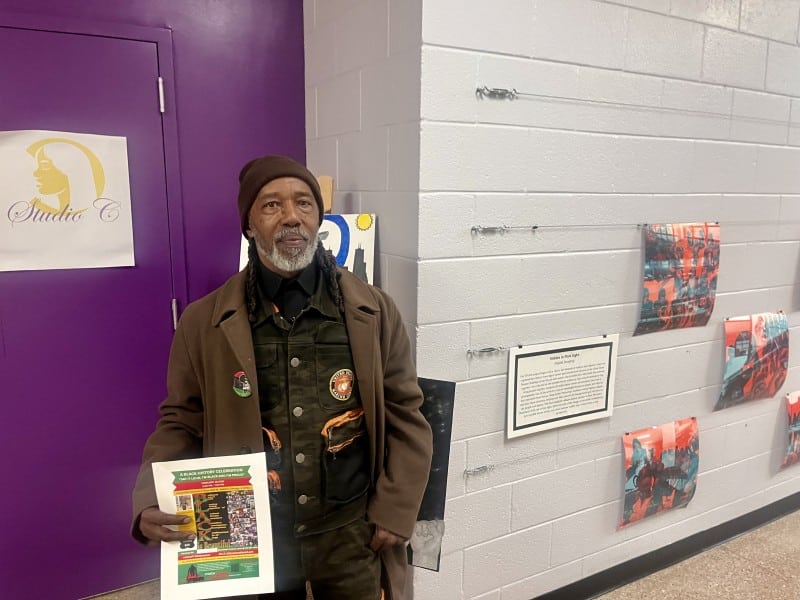
‘Let Me Share a Poem About a Brotha We All Know’
Jason Ferguson, Marshall High’s Last Track-And-Field Medalist, Fuses Sports and Black History

Softball ‘Was a Chess Match for Me’
Sharif Walker, a New Inductee Into the 16’’ Softball Hall of Fame, Dissects His Passion
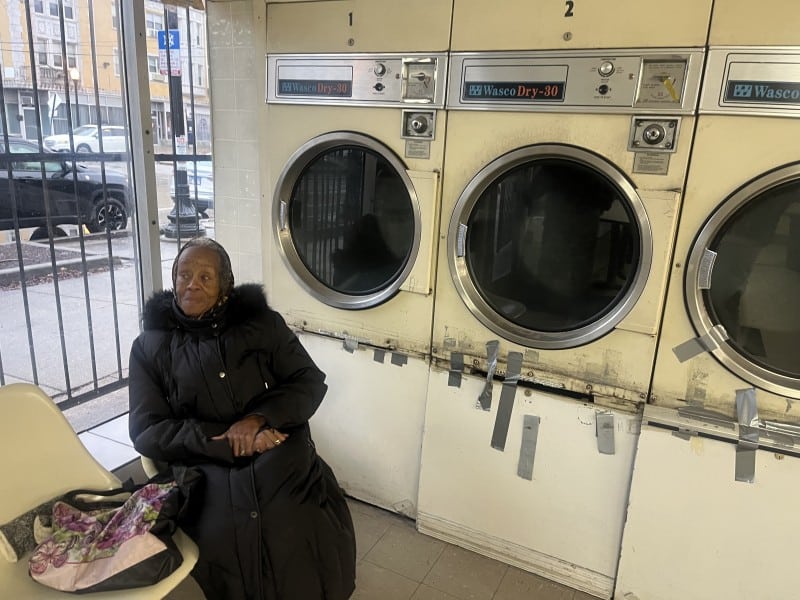
Ellen Jones, 85, at the Laundromat of African American History
The steward of Budget Wash in Austin spends most of her days working within the laundromat’s history-laden walls