
Kindred Civic Arts Forum Opens Women’s History Month With Cole Arthur Riley Conversation in Austin
Author of Black Liturgies and This Here Flesh reflects on Black interior life, spirituality, and emotional survival during a turbulent political moment
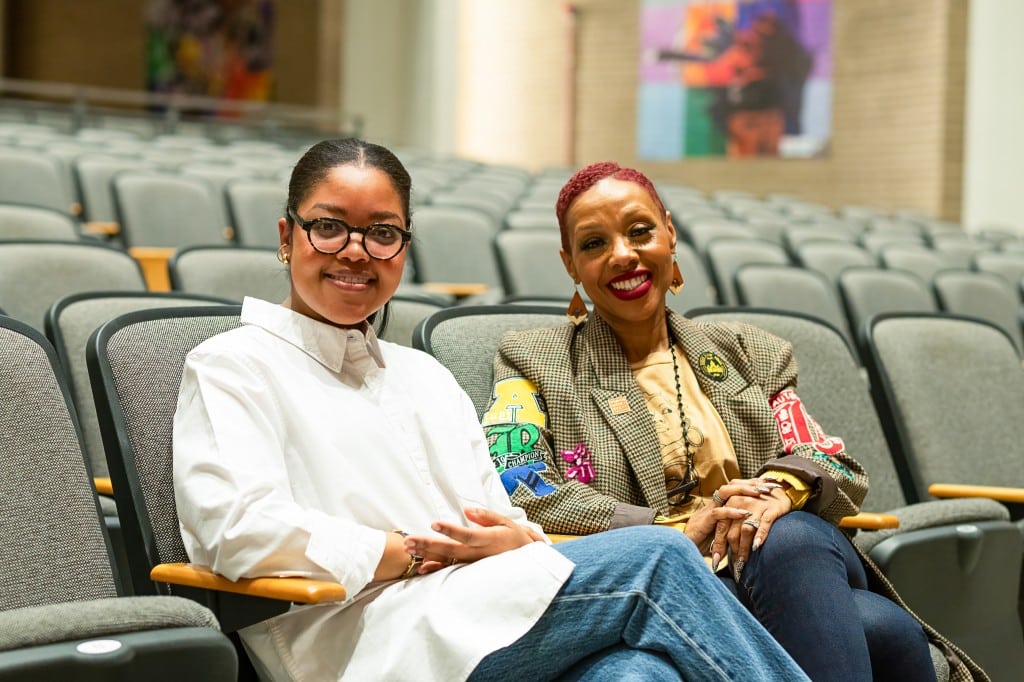
The start of Women’s History Month in Austin opened with a conversation about spirit, memory, emotional life, and the demands of remaining human in difficult times.
On March 1, at the Kehrein Center for the Arts, 5628 W. Washington Blvd., the Kindred Civic Arts Forum — formerly known as the Kehrein Center for the Arts Foundation — hosted bestselling author Cole Arthur Riley for an intimate discussion titled Sustaining Women, Sustaining Lives.
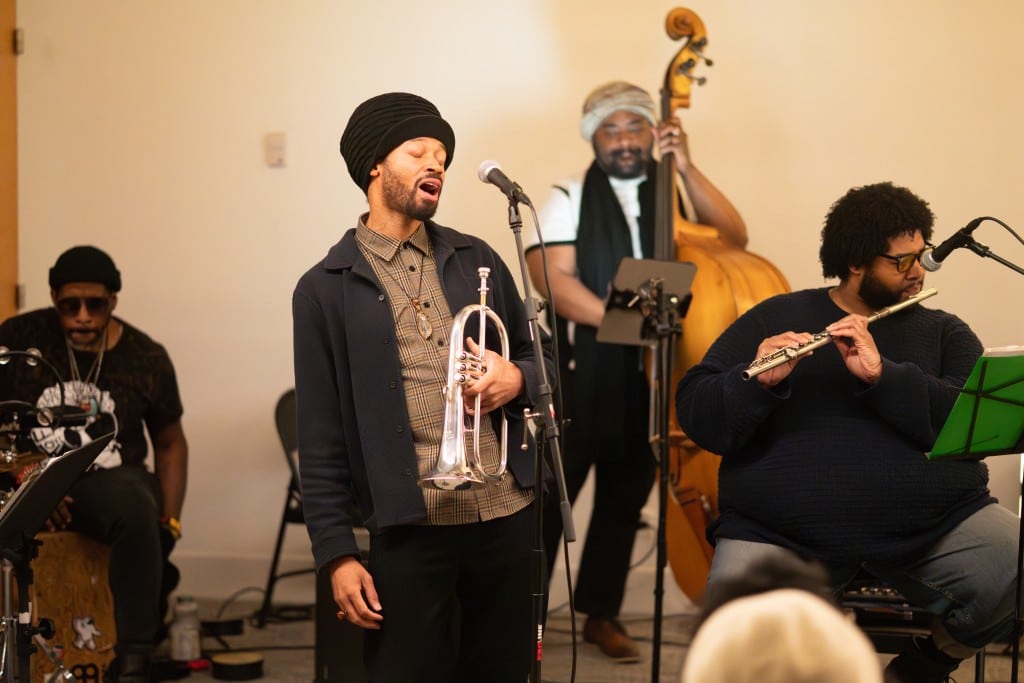
The evening, which also featured performances by musical artists Sam Thousand and Harold Green, brought together residents, creatives, and readers for a conversation centered on Black spirituality, interior life, and sustaining oneself in a period marked by political anxiety and social upheaval.
“This dialogue was necessary in this tumultuous period,” said Reesheda Nicole Berry, co-director of Kindred Civic Arts Forum. “We’re seeking in this very peculiar season we are in as a city and a country to stay near to ourselves.”
Riley—whose work has gained a national following through essays, prayers, and meditations that connect spirituality with Black emotional life—discussed the origins of her two books and the personal histories behind them.
Her first book, “This Here Flesh,” she said, emerged from family memory.
“It’s the intergenerational account of my grandmother, my father, and myself,” Riley said in an interview after the event. “I combined that with spiritual reflections on dignity, rage, and other things that shape how we live.”
Her second book, “Black Liturgies: On Selfhood,” grew from a digital project she launched several years ago that paired short reflections with Black literary voices, prayers, letters, and meditations on identity, grief, and belonging.
Riley, 35, who is from Pittsburgh and now lives in Ithaca, New York, said her relationship to spirituality developed outside conventional church structures.
“I wasn’t raised in the church,” she said. “My grandmother was, but she did not have a good experience there and did not raise my father in the church. I was raised with a spiritual conditioning, but not within a specific religious background. My family has a lot of spirituality that is more imprecise.”
That openness, she said, later led her into Christian spaces in college, though she now remains interested in multiple forms of religious expression rather than any fixed tradition.
“I’m curious,” she said. “I’m interested in all kinds of religious expressions.”
For many attendees, that openness — and Riley’s language for Black inward life — was precisely what drew them to the event.
“I’ve heard so much about Cole’s speaking, so in addition to the books, I wanted to experience her for the first time, and it was incredible,” said attendee Tracie D. Hall. “I think she’s one of the most important thinkers and speakers about Black interior life and spirituality.”
Hall said one of the strongest messages she took from the conversation was Riley’s insistence that people resist becoming emotionally numb amid violence and political crisis.
“One thing I took away today is the need to be alive — not just brave, but alive — as we witness what’s happening now,” Hall said. “Whether we’re talking about the war in Palestine, how our neighbors are being disappeared off the street, or movements toward war that make people forget injustices at home, she weaved all this into the notion of Black spirituality and the responsibility as Black people to feel and testify.”
Riley said that after a period of creative exhaustion, she now feels compelled to return to writing with renewed urgency.
“There are seasons where your creativity comes back and seasons where it ebbs and feels hard to access,” she said. “For a while, I was feeling like I couldn’t contribute anything that meant anything. There is so much despair and pain being amplified right now. But after taking a rest, I am ready to engage.”
She said that sense of return is tied less to ambition than to obligation.
“I feel responsible — not as a savior, I don’t believe in changing the world in that sense — but I feel a sense of responsibility with the platform I have to write about things that matter.”
That responsibility, she added, begins with guarding one’s emotional life.
“People should protect their emotional life,” Riley said. “Our situation isn’t entirely unique, but there is a particular kind of despair and fear people are feeling in this season, and a lot of us will be asked to discard our emotions in the name of peacekeeping or civility.”
Related Articles

Ford’s Suburban Edge Carries Him Past Conyears-Ervin in 7th District Democratic Primary
Franklin wins Ford’s old House seat; Stratton captures Senate primary as Hynes and Preckwinkle notch major Cook County victories
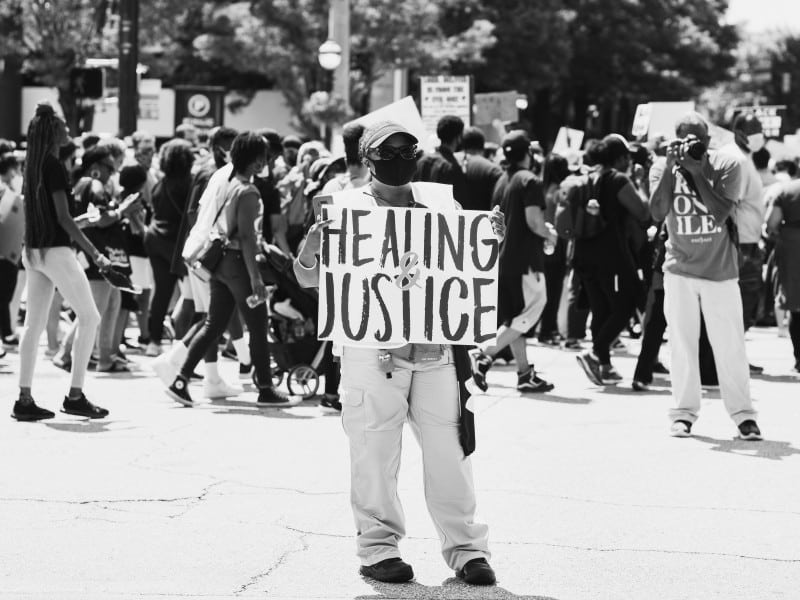
Circle Up Conference to Bring Youth, Educators, and Organizers Together Around Restorative Justice in Austin
March 28 gathering at BUILD will focus on healing, accountability, leadership, and breaking cycles of harm
BALLOT POWER
A nonpartisan voter guide for the Greater West Side created with the help of the Westside Branch NAACP