
Karl Brinson, Eyewitness to 60 Years of Westside History
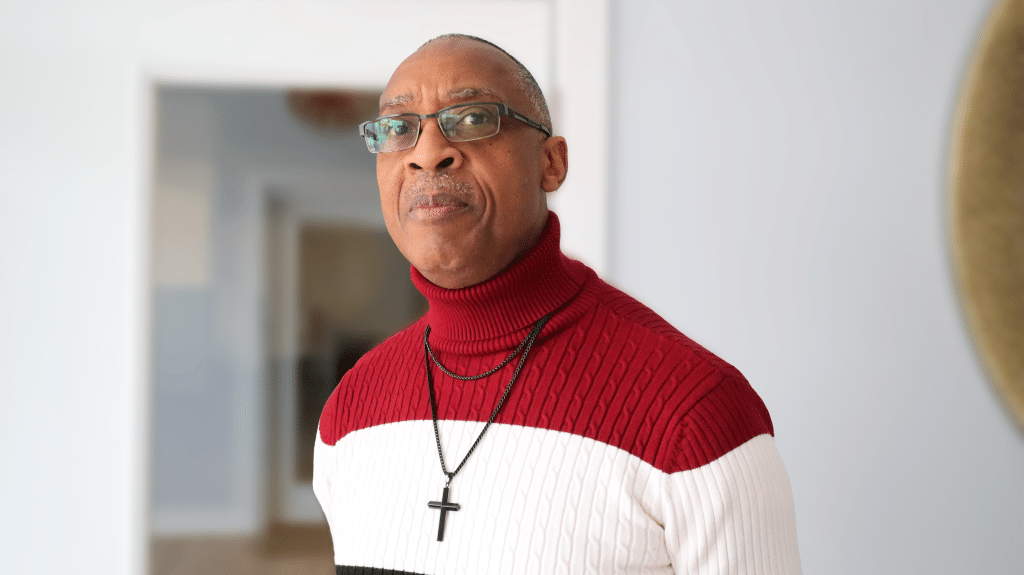
Karl Brinson, president of the Westside Branch NAACP, spoke about what he witnessed during his early years on the Westside and how the community, and its politics, evolved over time.
Karl Brinson, the president of the Chicago Westside Branch NAACP and a member of the Moore Park Advisory Council, is a lifelong Westsider. His family to Austin in the late 1960s, when he was 11 years old and the community was still predominantly white. Racial tension was high as more Blacks moved here.
In his own words, Karl spoke about what he witnessed during his early years on the Westside and how the community, and its politics, evolved over time.
A time of tension
We were the second black family to move to the 5100 block of West Quincy in 1967. When we went to Columbus Park, we didn’t go individually, we went as a group for protection, for security and safety. They had a place up there in Columbus Park called ‘Devil’s Path’ and it used to be a little area where you would ride your bike through … and white guys would jump out of the bushes on you plus they would just bum-rush you if you went up to Columbus Park by yourself.
You always hear the phrase ‘white flight’ but it’s one thing to live ‘white flight.’ By us being that second [Black] house on the block, we didn’t even see the people when they were moving out. I’m being candid with you, the next time you wake up they gone. You wouldn’t see them packing up, having a party, saying, ‘Hey, we’re moving out!’ because you probably wasn’t that neighborly with each other.
The ‘Plantation Wards’ and patronage
I watched how [the neighborhood] changed and who was in control of the politics back then. Our alderman was Leroy Cross and our ward committeeman was Willie Flowers. Both of them were Black, but the person who had the political power was Bernie Neinstein, a white Jewish guy. Neinstein ran the ward; he told them what to do; he was the one that got you the jobs.
They always called the wards in the Westside of Chicago the ‘Plantation Wards,’ because even though you had Black faces [by the 1980s, Austin was 75% Black], they were still ran by whites. The Jews and the Irish were still running the Westside of Chicago.
If you wanted to get a government job you had to get a letter from your committeeman, because that was part of the patronage system, that was part of the Democratic Party. That system is what helped make Chicago such a powerful city in terms of labor and industry.
When you went to get that letter [for a job], it did not come from Willie Flowers, it came from Bernie Neinstein. [Flowers] was just a figurehead. The demographic population had changed, so you had to put a Black face in place to influence the election turnout.
On Mayor Harold Washington and today’s disconnect
I remember watching how City Hall looked when Harold was there, the amount of young, Black professionals who were in positions at City Hall and then seeing [Mayor Richard M.] Daley come in. It went from Black faces walking up and down the hallways back to whites.
When you talk about how much has changed, not too much has changed, and it’s probably even gotten worse because most of our folks don’t even know their history. They think that what they’re doing now is something new and they don’t know what it looked like before, so they have nothing to base success on, especially when it comes to politics on the Westside.
When you’re with the machine you’re looking for promotions, you’re looking for jobs, you’re looking for job security, you’re looking to have access to the perks that come with being part of the Democratic Party.
When I joined the independent movement, I didn’t get paid a dime to work them polls and go ring doorbells. I was fighting against something. I wanted to change the system and break the Machine and try to change the way they did business in Chicago. I did it because I believed in something; I wasn’t promised something, I was just trying to change something.
Related Articles
‘If I Don’t Speak Up, Who Will?’
Catherine Jones, 67, is still advocating for students after all these years
‘Let Me Share a Poem About a Brotha We All Know’
Jason Ferguson, Marshall High’s Last Track-And-Field Medalist, Fuses Sports and Black History

Softball ‘Was a Chess Match for Me’
Sharif Walker, a New Inductee Into the 16’’ Softball Hall of Fame, Dissects His Passion