
‘Everything Now, We Must Assume, Is in Our Hands’
After last summer’s flooding, Westsiders came together to help themselves, but frustrations are growing over a lack of funding.
“Everything now, we must assume, is in our hands; we have no right to assume otherwise.”
— James Baldwin, “The Fire Next Time,” 1963
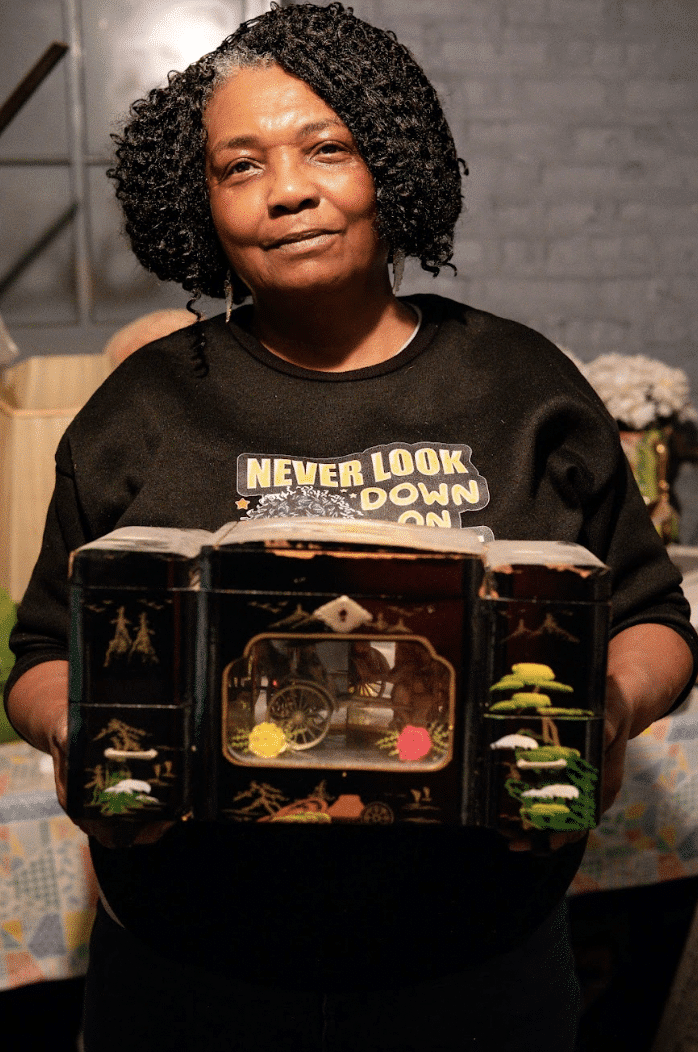
Mary Buchanan, 68, was one of the thousands of Westsiders who called 311, the city’s non-emergency service request line, in the days, weeks and months following the flash flood on July 2, 2023.
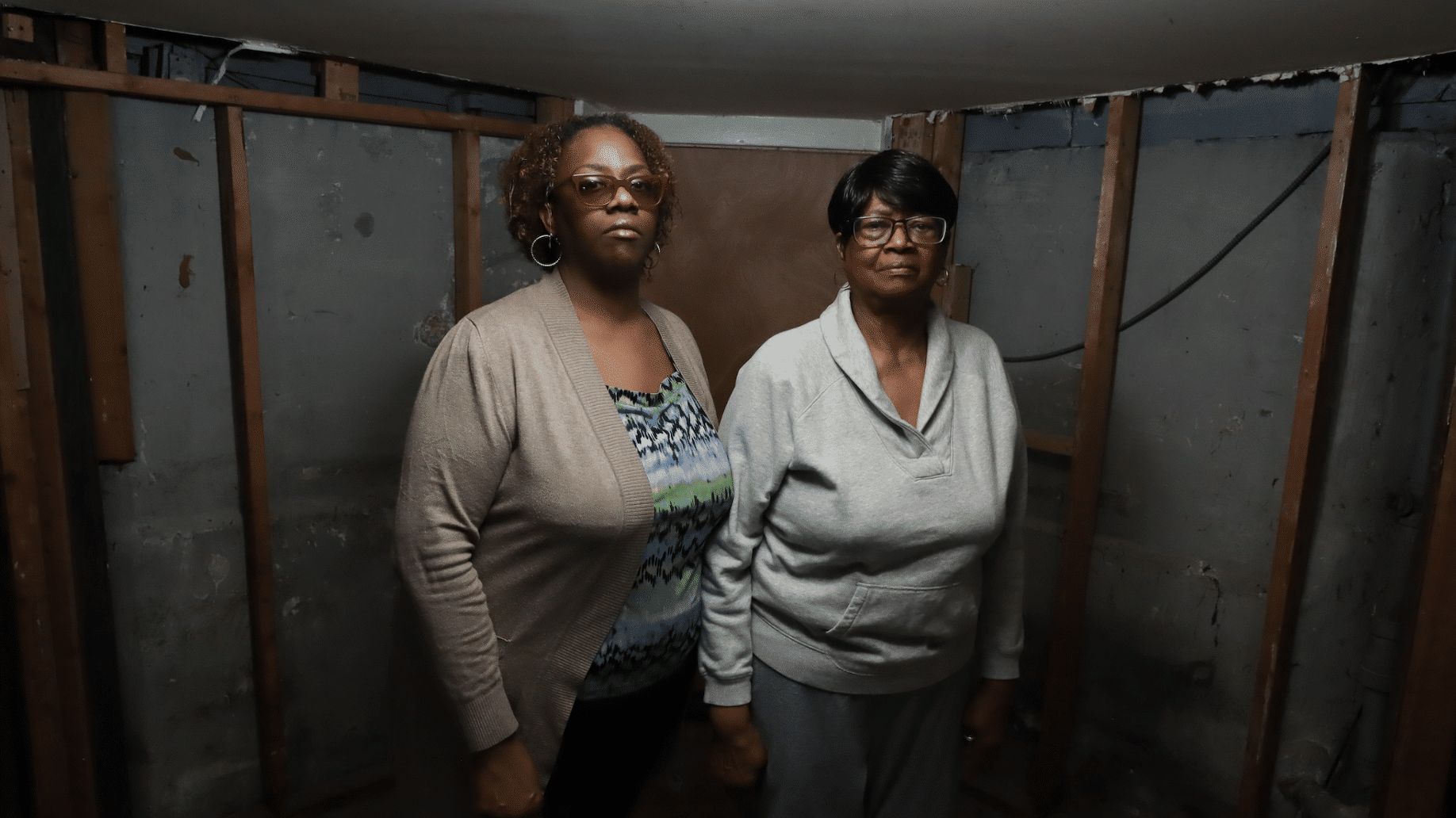
“The city ain’t do nothing! We didn’t get no help calling the city,” Mary says nearly a year later while walking through the empty, hollowed-out basement of her home at 4228 W. Jackson Blvd. As Mary vents, her husband, George Johnson, 80, mops the floors.
Other flood survivors say the city at least sent over crews to help haul out things that were damaged from their basements, even if the workers came months later.
But the Westside flood survivors we interviewed say the most significant assistance they received in the flooding’s aftermath came from a small group of local organizers working out of the Every Block a Village Christian Fellowship church at 5834 W. Augusta Blvd. in Austin.
The church’s pastor, Jacqueline Reed, founded the nonprofit Westside Health Authority (WHA) in 1988 and anchored the organization’s mission in the principle that the best solutions to people’s problems are the people themselves — not consultants or professional experts or bureaucrats or academics.
Each Thursday morning for the last two years, Reed has held community meetings where residents workshop solutions to any number of crises. Naturally, after July 2, dozens of community members converged on the church to talk about the water and all the problems that came with it.
‘We need as many warriors as we can get’
From the Thursday gatherings, more emergency meetings followed while local organizers and community leaders pushed for local, state and federal officials to declare the Westside and other places affected by flooding a disaster area. This is often the first step that needs to happen before people can start applying for assistance from the Federal Emergency Management Agency (FEMA).
“We were in regular communication with Mayor Johnson,” recalls Jitu Brown, who heads the 1,000 Strong Block Club and helped organize those meetings.
“We were holding really grassroots town hall meetings. We did a town hall meeting in the middle of the street on Division. We did one at La Follette Park. These were working meetings. We didn’t want people giving speeches; we were doing client services,” he says. “My block club was [also] doing cleaning supply giveaways on Division and Long.”
A few weeks after the flood, the Good Neighbor Campaign, a community-building, anti-violence initiative launched by WHA in 2016, teamed up with local organizers like Brown and state Rep. La Shawn K. Ford (8th) to hold a public meeting about flood relief at the Good Neighbor Center, 5437 W. Division St. in Austin.
Local organizers like Darnell Clark and Roman Morrow, along with organizations like the Leaders Network, a prominent coalition of Westside clergypeople, also provided awareness by hosting press conferences and public meetings.
“I’m never of the mindset, ‘If you’re doing good, I’m trying to compete with you,’” Jitu says. “If you’re doing good, I’m locking arms with you because we need as many warriors as we can get.”
As WHA was doing local advocacy, Jitu says, “I was in Washington, D.C., meeting with the head of FEMA’s community relations and we were just pressuring every angle we could.”
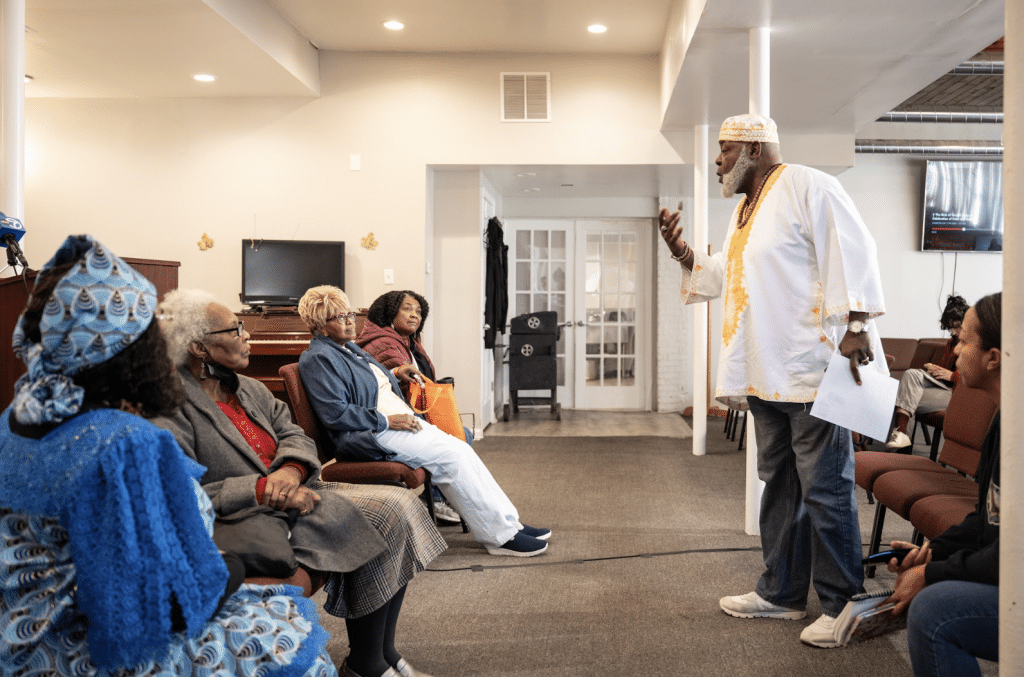
President Joe Biden approved a major disaster declaration for Illinois on Nov. 20. After that point, Jitu says, “it was about managing and organizing to make sure we could maximize FEMA’s investment.”
Princess Shaw, the founder of Light Up Lawndale, a nonprofit whose purpose is to provide economic empowerment to the Lawndale community, was one of the main organizers navigating people through FEMA’s application process.
“When this first happened, the city told people to call 311 and make a report,” Princess says. “That’s a 59-page report. What has the city done with those reports? We don’t know. But we can’t just sit around and wait for them to tell us.”
To further complicate the process, people had to apply for FEMA assistance separately, forcing them to enter yet another bureaucratic maze.
“None of the [processes] filtered into each other,” Shaw says. “You have different systems and they aren’t working together with each other. That’s how you lose people.”
Princess says FEMA informed her and other organizers that they should establish a Long-Term Recovery Group. According to FEMA’s website, long-term recovery groups “generally are made up of faith-based, nonprofit, community-based, private sector and voluntary agencies. Their goal is to help affected families access resources for their recovery.
“The recovery groups can connect survivors with organizations that offer a wide variety of assistance, including food, clothing and grants to help pay for security deposits and past-due utility bills. They can also direct survivors to groups that will perform tasks, such as mucking and gutting disaster-damaged homes or clearing debris and tree stumps from yards.”
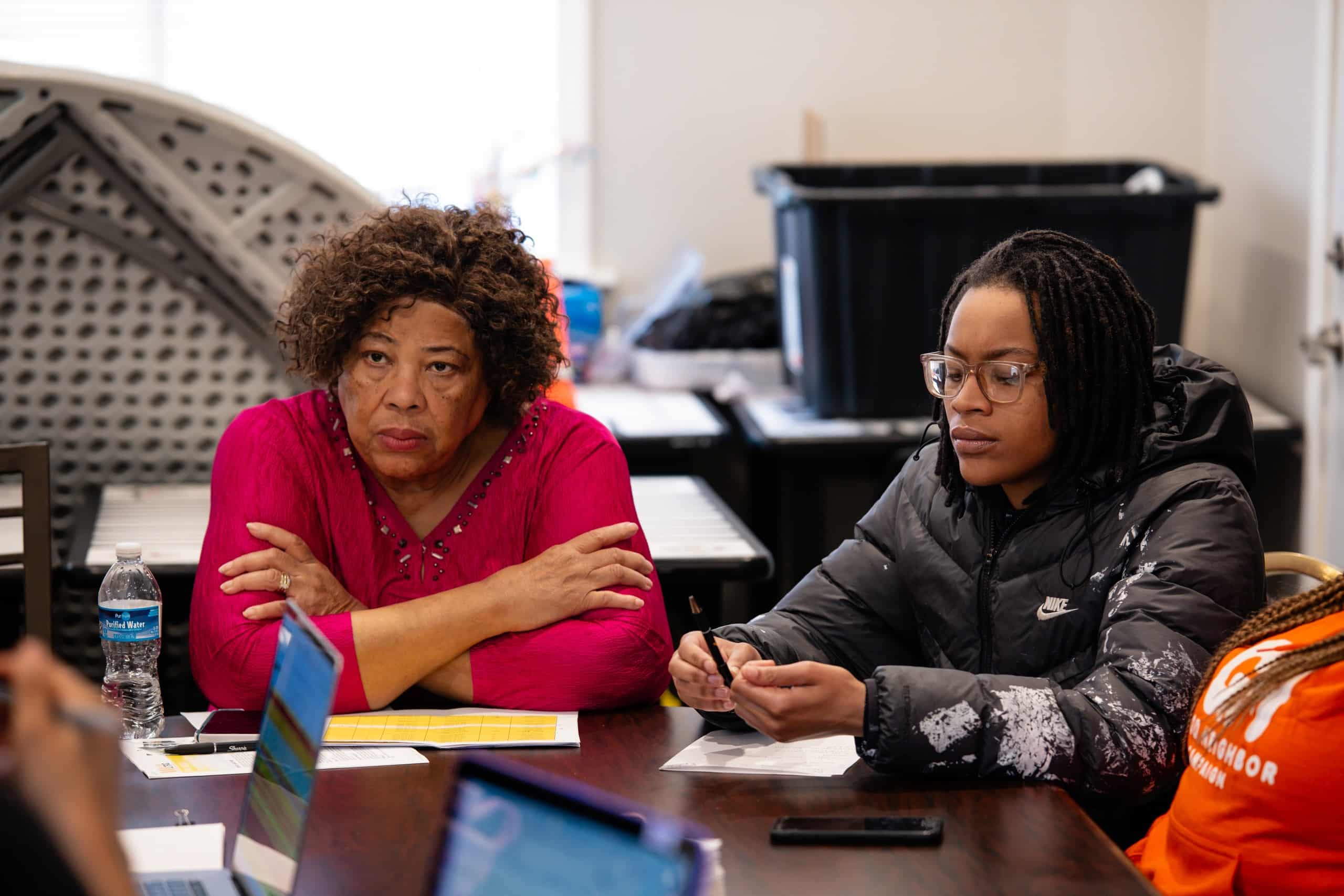
That’s how the West Side Long-Term Recovery Group (LTRG) was born. Its parent organizations include WHA, Light Up Lawndale, Every Block a Village, BUILD, Inc., World Renew, Team Rubicon, Illinois Voluntary Organizations Active in Disaster, Chicago Tool Library and Northwest Austin Council.
“We started the West Side LTRG because we don’t want to have people falling through the cracks and living with mold in their basement,” Princess says.
Princess says the group’s constant interactions with community members allowed them a bottom-up, grassroots perspective to tasks like hauling all of that flood-damaged stuff from basements.
“We were able to galvanize and get Streets and Sanitation workers [who checked with their union reps first] to come out for three weekends at the end of July and the beginning of August to take stuff out of basements,” Princess says. “Our advocacy told them that many of these [flood survivors] are older. They put a lot of that stuff in their basements 20 and 30 years ago, when they didn’t have bad hips and arthritis. So, we just had those realistic conversations like, ‘Hey, let’s think outside of this box.’”
More funding, resources needed
Since the West Side LTRG’s formation, Princess and WHA’s policy analyst, Justin Hill, have kept a list of 250 flood survivors who need help. Princess says she would like city, state and federal government officials to step in and start vigorously monitoring flood survivors and their needs.
“The $50 million is an average guesstimate based on what we’ve seen so far,” Princess says, adding that the average Westside household affected by the flood may need another $25,000 to $30,000 to pay for repairs not covered by their FEMA payouts. “There’s definitely 16,000 to 17,000 people affected in this area, which includes Austin, Garfield Park, Galewood, Lawndale and Humboldt Park.”
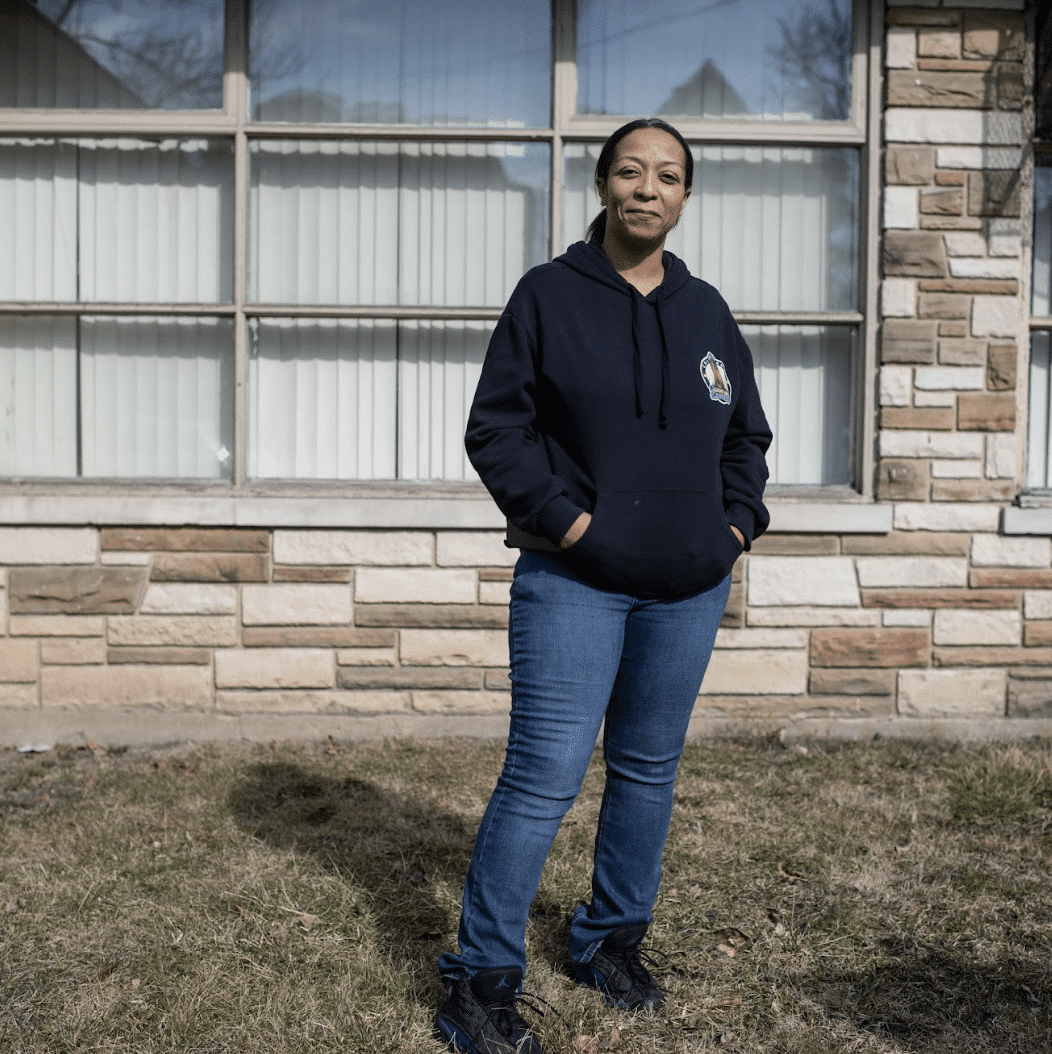
Jitu and other organizers also want the city to contribute between $25 million and $50 million in special funding to help survivors pay for flood-related improvements that FEMA and their insurance didn’t cover. Princess says the West Side LTRG can be the conduit for those funds being allocated to affected community members, but added that the amount might have to be higher.
In the meantime, Princess, Jacqueline and other West Side LTRG members are slowly but deliberately checking their list. Mary Buchanan is fortunate to have been on it.
Mary says Princess helped her file around four appeals with FEMA to get more money to replace critical appliances she lost in the flood, including a furnace and two hot-water heaters.
“Princess Shaw helped me,” Mary says. “She’s the one who has been helping us get this stuff together.”
Princess also referred Mary to Team Rubicon, “a veteran-led humanitarian organization, built to serve global communities before, during, and after disasters and crises,” its website explains.
Team Rubicon removed the molded walls and virtually the entire bathroom in Mary’s basement at no cost.
“Those people — all I can say is they were amazing,” Mary says. “Princess got them to come in here. We called her at all times of the night and she answered her phone.”
Pleshette Spears and her mother, Mary Spears, 80, connected with Team Rubicon after attending a community meeting hosted by WHA.
“They came and sprayed and got most of the mold,” Mary says while standing in the basement of their home at 826 N. LeClaire in Austin. The basement apartment was home to Pleshette’s son and his family before the flooding happened.
“Before they took these walls down, there were gnats that would fly around in my apartment upstairs,” Mary says. “When Rubicon took the floor and walls out of the basement, everything stopped.”
“If it wasn’t for Westside Health Authority, I don’t know where we’d be right now,” Pleshette says. “We would still be living with mold.”
Jacqueline Crowther, an administrator with Every Block A Village, says for every Mary Spears, there are a dozen other Westsiders who are still living with mold and the health problems it brings. But without more funding and resources, there’s only so much the West Side LTRG can do to help.
“We have weekly calls with people from the city’s Office of Emergency Management and Communications and FEMA has helped us establish this organization but FEMA has not funded us,” Crowther says.
“Nobody is funding our efforts and nobody seems to care that people are suffering and have had mold in their basements for seven months and growing, with families who live in basements because this is a city where housing is expensive,” she says. “We need to understand why there’s money for everything else, but when it comes to people dying in their homes, senior citizens, vulnerable family members — [there is no] urgency.”
Related Articles
Athena Williams’ Dream of Bringing Downtown Living to Austin is Nearly Complete
The 78-unit mixed-income apartment complex will start accepting applications in June

Supreme Court’s Latest Voting Rights Decision Continues Long Rollback of Civil Rights Era Protections
Rep. Danny K. Davis says the recent Louisiana v. Callais decision ‘further erodes critical safeguards that protect voters’
West Siders Learn Tools and Techniques of Preserving Their Own Stories
At a May 9 workshop at Legler, residents explored how oral history can preserve firsthand accounts often missing from mainstream narratives about Black life