
Ellen Jones, 85, at the Laundromat of African American History
The steward of Budget Wash in Austin spends most of her days working within the laundromat’s history-laden walls
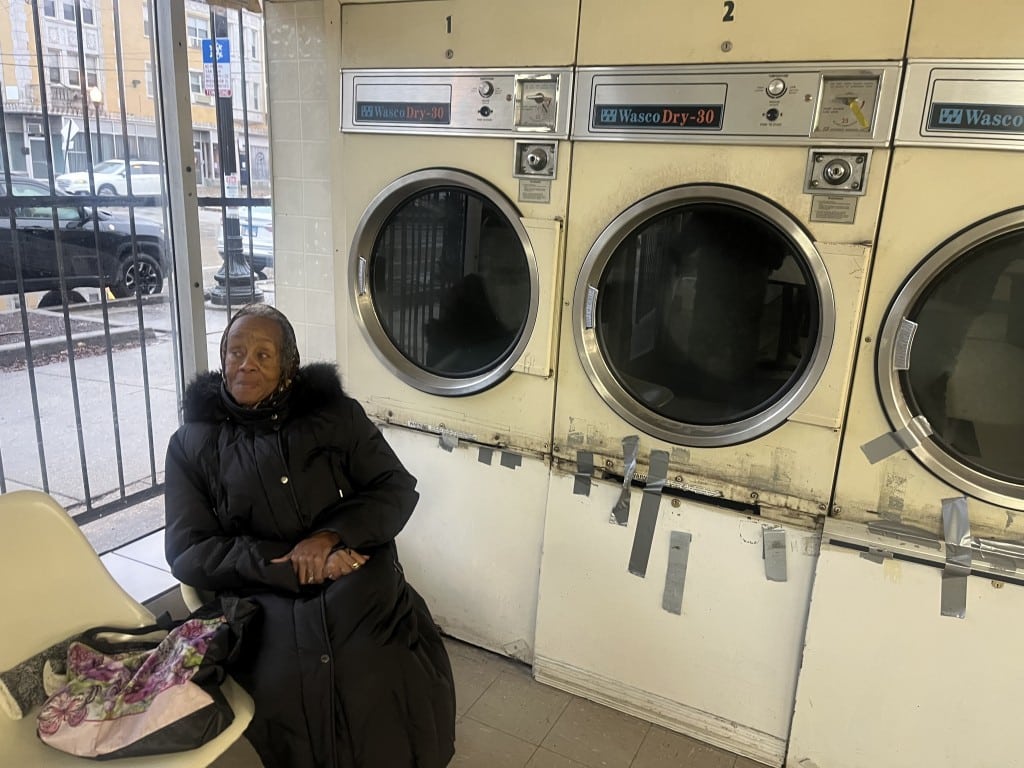
On any given day, West Siders can see Ellen Jones, 85, sitting inside Budget Wash, 5920 W. Madison St., in Austin. The Better Business Bureau lists the establishment as The Laundromat of African American History. When I spoke to Jones on Thursday, she had just washed a bundle of clothes someone had dropped off and was sitting contentedly near a window.
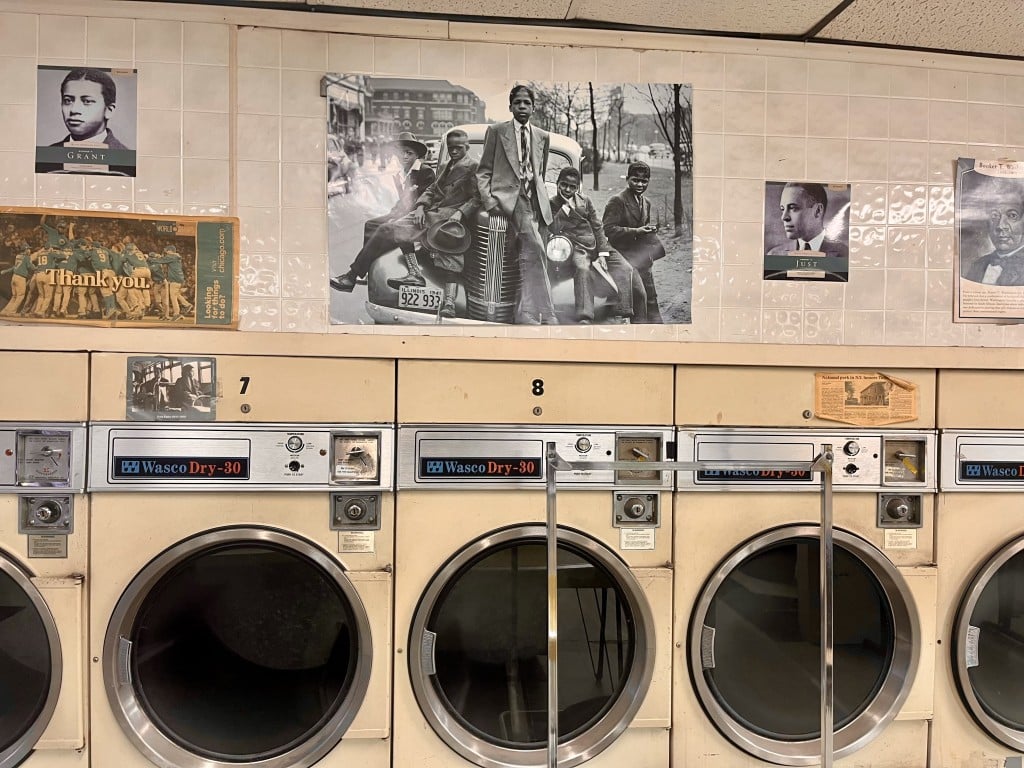
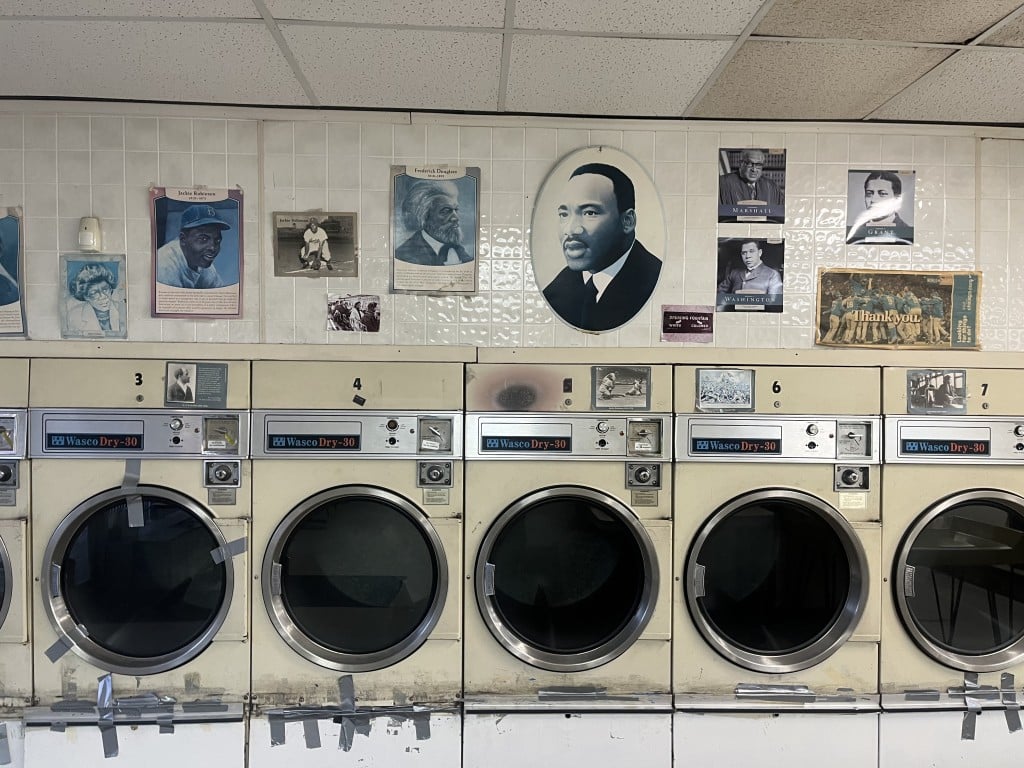
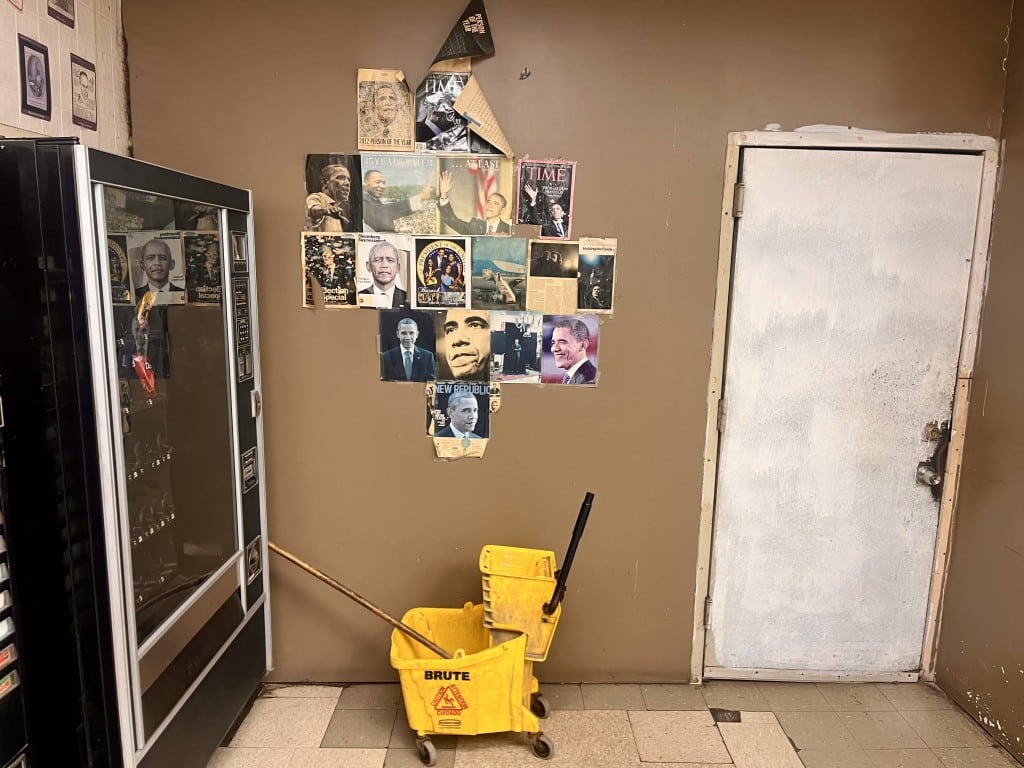
All around the laundromat, customers can see relics of Black history: a historic faded headshot of Martin Luther King Jr.; the iconic photo of Olympians Tommie Smith and John Carlos raising their fists in the Black Power salute, taken by Life magazine photographer John Dominis in 1968; Jackie Robinson crouching to scoop up a baseball; an image of Frederick Douglass; photos of Thurgood Marshall and Booker T. Washington; images of Harriet Tubman; and quotes from Jesse Jackson (“America is not a blanket woven from one thread, one color, one cloth”)—and more.
I asked Jones if she was familiar with one iconic photo in particular that looms over patrons’ heads like sacred stained glass in a cathedral.
The photo, “Negro Boys on Easter Morning,” was taken “on Easter Sunday in 1941 across from the Regal Theater in Bronzeville by a government photographer named Russell Lee,” WTTW reports.
“Yeah, I’m familiar with that photo. I also remember when King came to Chicago. I moved to this area on the West Side around 1955. I’ve been coming to this laundromat for 28 years. This laundromat was here when my grandson graduated elementary school. The husband died and the wife took over the place. Her nephew Calvin Davis, bought it with her, and he’s responsible for all the pictures.”
You must have seen a lot over the years.
“Nothing bad happens up in here. People know how to act when they come in here—for some reason,” she says, laughing. “Even the kids learn from all the stuff on the walls.”
How’d you end up working here?
“I used to live right on Menard and Washington, but now I’m further down—on Madison, near Hamlin. I worked at a preschool as a parent teacher. There was a laundromat on that corner down the street before they tore everything down. It was a cleaners, a laundromat, and a breakfast shop, and all that. They tore that down. I worked at that laundromat, and somebody gave the lady the word down here that I worked at a laundromat, and she sent for me to come down here, and I’ve been here ever since.”
“I have two daughters. One, Paula, died from COVID four years ago. My oldest works at Stroger Hospital. She’s been there for 47 years.”
“I wash clothes that people drop off—85 cents a pound. I’m here every day. My daughter told me before she passed, ‘Mommy, you go to that laundromat every day, even when you off.’ I said, ‘Paula, I’m not sitting at home looking at no walls, now.’”
These walls are much better, right?
“That’s right,” she says, laughing.
Related Articles
‘If I Don’t Speak Up, Who Will?’
Catherine Jones, 67, is still advocating for students after all these years
‘Let Me Share a Poem About a Brotha We All Know’
Jason Ferguson, Marshall High’s Last Track-And-Field Medalist, Fuses Sports and Black History

Softball ‘Was a Chess Match for Me’
Sharif Walker, a New Inductee Into the 16’’ Softball Hall of Fame, Dissects His Passion