
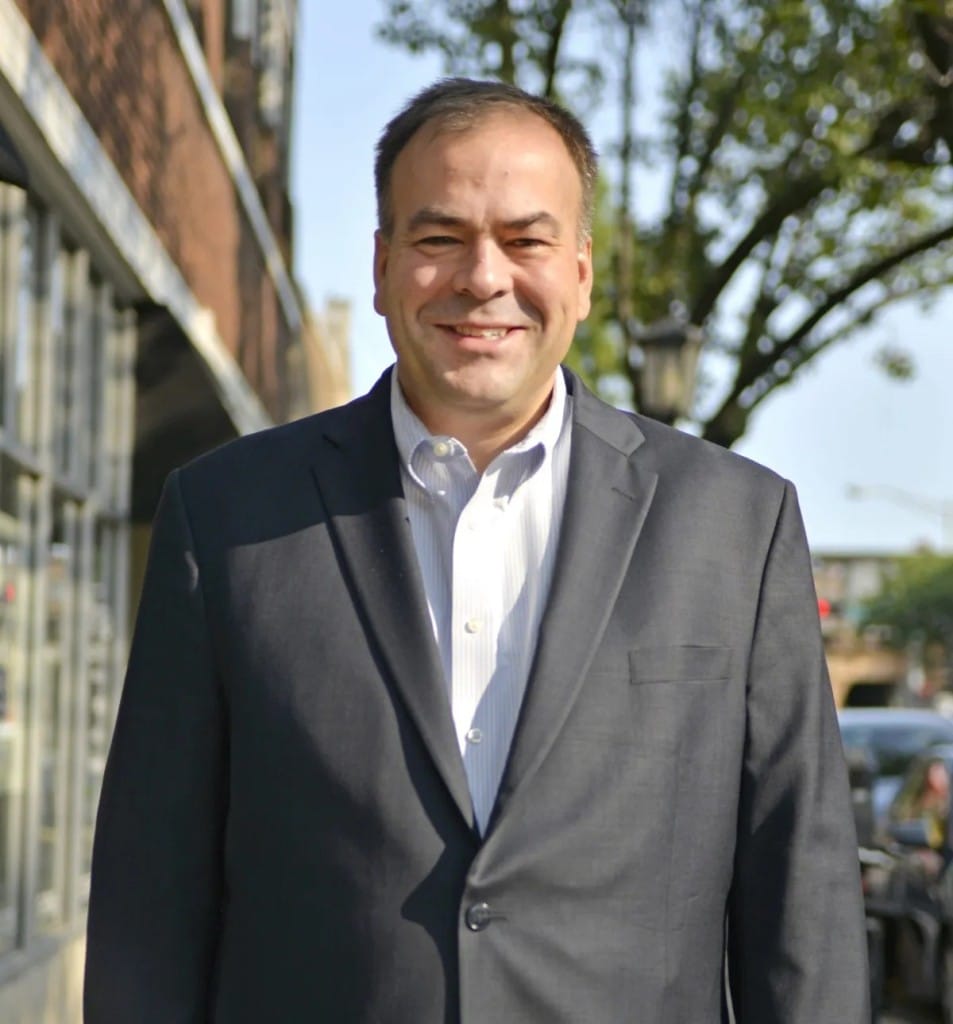
Cook County Assessor Fritz Kaegi
Kaegi’s full response to a questionnaire submitted by The Culture and the Westside Branch NAACP
Full Name (as it will appear on the ballot)
Fritz Kaegi
Party affiliation
Democrat
How can people learn more about your campaign?
My campaign website (www.fritzforassessor.com/) provides information about how I’m working to lower homeowners’ costs and my overall vision for the office. The website includes all social media handles (@fritzforassessor) and a form to join our email list.
There is an incredibly strong body of research showing how property assessment practices and the broader system can shift the tax burden toward lower-income, majority-Black neighborhoods. Do you believe Cook County’s assessment system operates with a racially disparate impact—what many researchers call an ‘assessment gap’—where Black homeowners are more likely to be over-assessed relative to market value and therefore pay a higher effective tax burden than similarly situated white homeowners? Yes or no.
Yes
If yes, name the top three remedies you will implement using the Assessor’s powers in your first year, and the metrics you will publish to prove the gap is shrinking (e.g., neighborhood-level sales-ratio studies, overassessment rates, exemption uptake, and appeal outcomes by race/income).
The assessment gap is real, it disproportionately harms Black and Latino residents, and my office has been working to close it since day one.
A University of Chicago study found that our reforms saved the bottom 70% of homeowners nearly $2 billion, but there’s more work to do. The Board of Review keeps giving out big commercial tax breaks that shift the burden onto Black and Latino neighborhoods. This year alone, families are paying an average of $700 more than they should because of these cuts.
Here’s what I’m doing to fix it:
I’ll keep fighting to make big corporations pay their fair share. Right now, the Board of Review is cutting commercial assessed values by nearly 18% in Chicago. If those values had held, about two-thirds of Black and Latino neighborhoods would have seen flat or lower bills.
I’m leading the push for circuit breaker legislation in Springfield. HB 3808 would give credits to homeowners whose bills spike more than 25%. Twenty-nine other states already have this protection.
I’ll expand outreach and exemption enrollment where it’s needed most. We hold over 200 events a year, with a third in Spanish. In my last term we added over 10,000 new exemptions. I want to deepen those partnerships on the West Side and set benchmarks for every community area.
Illinois law allows the Cook County Assessor to issue a Certificate of Error to correct an assessment after a tax bill is finalized — including valuation errors or missed exemptions, and owners can seek refunds if approved. Several West Side community members are asking why certificates of error haven’t been broadly used to help neighborhoods hit by massive tax hikes this year, similar to what some North Shore property owners have gotten in other contexts. If elected, would you commit to a policy that proactively reviews and issues certificates of error in cases of sharply disproportionate tax increases — not just on request — and if so, what criteria would you use?
This sounds like a good idea on the surface, but the Assessor cannot legally do it. Rolling back assessments or freezing them for entire neighborhoods violates the state property tax code. The law requires my office to assess property at market value. When an Assessor uses something other than market value, the office gets sued.
What I can do is issue certificates of error for actual mistakes, and we do that all the time. My office has issued thousands of certificates of error to correct missing exemptions and valuation errors. We’ve held dozens of outreach events in the hardest-hit communities to help families identify those mistakes and get relief.
But I want to be direct about what’s really driving these bill increases. It’s not my assessments. If my assessments had held, most homeowners in these neighborhoods would have seen flat or lower bills.
The real problem is that Board of Review commissioners are giving massive tax cuts to downtown hotels, data centers, and corporate properties. When those properties pay less, homeowners pay more. And the lawyers who win those tax breaks for their corporate clients donate to the Board of Review commissioners, and they’re bankrolling my opponent’s campaign. That’s the cycle we need to break.
This year saw explosive bill spikes (e.g., 133% in West Garfield Park and 99% in North Lawndale) that many residents say they can’t pay. Do you believe the Assessor’s Office should push for retroactive relief (through exemptions and certificates of error) and prospective systemic fixes (such as valuation methodologies or legislative advocacy)? If so, what specific changes would you pursue first?
When large commercial properties get tax cuts at the Board of Review, homeowners and renters make up the difference. This year, those cuts added about $700 to the typical Chicago homeowner’s bill. If my assessments had held, about two-thirds of homeowners in Black and Latino neighborhoods would have seen flat or lower bills.
On retroactive relief, my office is already correcting missing exemptions and assessment errors through certificates of error and outreach in the hardest-hit communities. We’ve held dozens of events on the West and South Sides to help homeowners get the relief they’re owed.
On prospective fixes, the most urgent priority is circuit breaker legislation. HB 3808 would give tax relief to homeowners whose bills spike more than 25% in a single year.
My office is also implementing Cook County’s Policy Roadmap for commercial valuation reform. We’re sharing data with the Board of Review and sending staff to defend our assessments at hearings on the largest commercial properties. The goal is to stop the pattern where corporations get deep, unwarranted cuts so families in neighborhoods like West Garfield Park and North Lawndale no longer absorb the cost.
The assessor can advocate for legislative changes like a property tax “circuit breaker” to cap increases relative to income or value growth — something the current assessor has publicly supported. Will you actively push for state legislation (e.g., a true circuit breaker or an income-based cap) to prevent future shock bills, and what allies and strategies would you use to get it passed?
Yes, I’ve been the leading voice on circuit breaker legislation in Cook County, and I’m not going to stop until it passes.
HB 3808 and SB 1978 are the bills my office helped develop. We’re also pushing for the automatic renewal of the senior freeze exemption, so seniors on fixed incomes don’t have to remember to file paperwork every year or worry about losing their tax relief.
Mayor Booker in Maywood and Mayor Woods in Park Forest co-authored an op-ed with me calling for circuit breaker legislation. The South Suburban Mayors and Managers Association and the Southland Regional Mayoral Black Caucus have endorsed it. And I have a growing list of legislators across Cook County committed to championing it.
There’s an ongoing debate about whether property tax hikes stem primarily from assessor valuations or from shifts caused by the Board of Review’s disproportionate cuts to commercial properties that shift the burden onto homeowners. What will your office do to improve transparency and fairness between assessor valuations and Board of Review outcomes so that West Side homeowners are not unfairly bearing the burden?
Independent studies show our assessments are more accurate and fair than those of the Board of Review, which cuts nearly a quarter of the value off commercial properties — well below what those buildings were actually selling for.
The Treasurer’s office reported that appeals shifted roughly $2 billion from commercial properties onto homeowners, with Black and Latino neighborhoods hit hardest.
My office is improving how we work with the Board of Review by following the Cook County Roadmap’s guidance, specifically by partnering with the Board of Review so they use our assessment data and methodology, and by sending our staff to Board of Review hearings on large commercial properties to defend our assessments with evidence. These reforms should prevent the Board of Review from giving tax cuts to large corporate properties – cuts that too often shift the tax burden onto Black homeowners.
My office will continue publishing our assessments to ensure transparency in the process and show the effects of the Board of Review’s tax cuts to large corporations.
The Assessor’s Office has hosted outreach events to help West and South Side residents check exemptions and appeals. How would you expand outreach — especially to Black homeowners who may not know about exemptions or the certificate of error process — and what measurable benchmarks will you set for reducing disparities in awareness and participation?
My office held over 200 outreach events in each of the past two years, more than 70 in Spanish, and we’ve built outreach into its own department with multilingual staff. That includes one-on-one appeals assistance and clinics where homeowners get help filing exemptions without hiring a lawyer.
In my last term, we set a goal to increase exemption enrollment by 10,000 households and exceeded it. Almost 20% more seniors claim the senior exemption now than in 2018. We’ve doubled the number of people with disabilities receiving the disability exemption through the auto-renewal legislation we passed.
Going forward, I want to set specific benchmarks for West and South Side communities where exemption uptake is lowest, tracking new enrollments by community area, year over year, and publishing those numbers. We’re also launching targeted text and email campaigns to homeowners in communities going through reassessment so people know their options before bills arrive, not after.
On certificates of error, we’re expanding communications to explain the process clearly, with brochures and seminars focused on getting mistakes corrected. I’ll push for the County to publish exemption uptake and assessment reduction data by community area for both our office and the Board of Review.
Between the Assessor’s Office and the Board of Review, many residents feel the appeals process is opaque and expensive. What reforms would you champion to make the tax appeals process more accessible (e.g., reducing costs, assistance clinics, simplified filings) for low-income homeowners who cannot afford attorneys?
Filing an appeal with my office is free, and homeowners don’t need a lawyer. That’s a point worth emphasizing because a lot of people don’t know it. The previous administration didn’t offer online filing for appeals or exemptions. We do.
I’m extremely proud of my office’s outreach work and our increasing partnerships across the county. We host clinics on the West and South Sides where staff sit down with homeowners to walk through the appeals process, review property records, and help file paperwork on the spot. We’re expanding those partnerships with community organizations so people can get help in their own neighborhoods.
We’re also continuing to improve our assessment models and property data so that more assessments are accurate the first time around. If the assessment is right from the start, homeowners don’t have to rely on the appeals process to get a fair result. Residential appeals have dropped by more than 100,000 since we took office, which is a sign that initial assessments are getting better.
Given the recent property tax increases and community frustration, what measurable outcomes will you set for your first term (e.g., reduction in effective tax rates for the hardest-hit West Side neighborhoods, number of certificates of error granted, improved exemption uptake), and how would you report progress publicly?
In my second term, my office set a goal to increase the number of exemptions by 10,000, and we exceeded it.
This term, we hope to make the senior freeze renewal automatic, so eligible seniors receive the tax relief they deserve without having to reapply every year.
I am also focused on passing the “circuit breaker” legislation so the roughly 300,000 Cook County homeowners who’ve seen 25%-plus bill spikes in the past few years have a safety net going forward.
On the commercial side, I want to see the gap between our assessments and the Board of Review’s final values narrow. Right now, the Board is cutting commercial values by 20-30% after we set them. That gap needs to shrink, and I’ll publish the data showing whether it does.
We will also continue publishing our assessment data, annual reports, and new equity metrics broken down by community area, so West Side residents can track progress themselves. Our office has won national recognition for transparency from the National Association of Counties. I intend to keep earning it.
Related Articles

Rory Hoskins
Rory Hoskins’ full response to a questionnaire submitted by The Culture and the Westside Branch NAACP

Reed Showalter
Reed Showalter’s full response to a questionnaire submitted by The Culture and the Westside Branch NAACP

Anabel Mendoza
Anabel Mendoza’s full response to a questionnaire submitted by The Culture and the Westside Branch NAACP