
As SNAP Funds Fray, West Siders Mobilize to Keep Food Flowing to Those in Need
With benefits cut and stolen, neighbors are finding new ways to feed one another—from overextended pantries to restaurant kitchens turned community tables
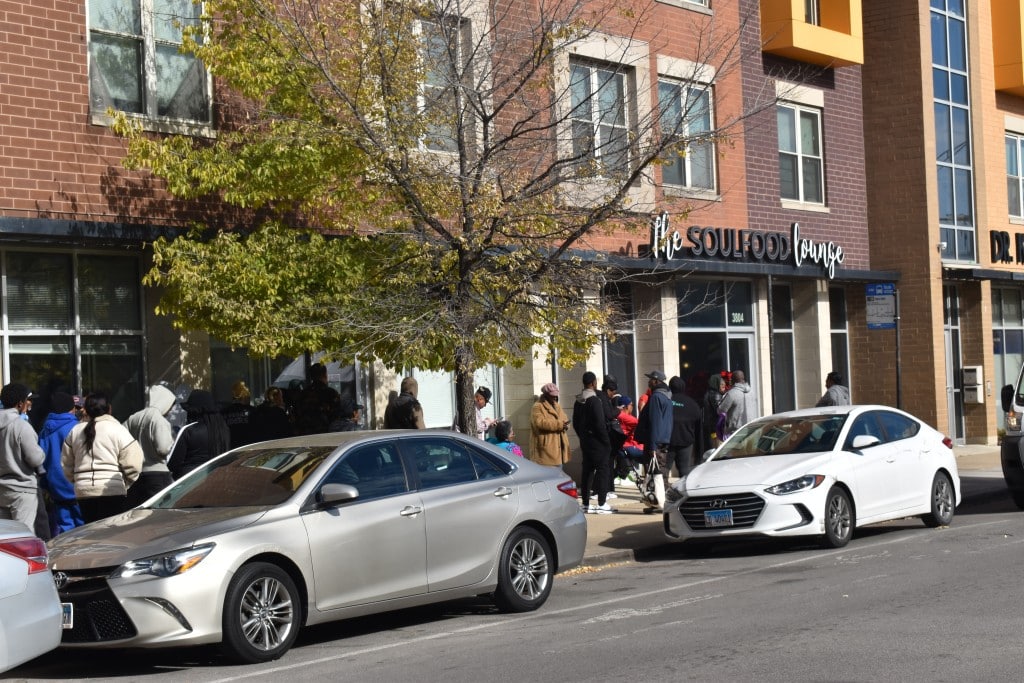
As the federal government shutdown stretches on, West Side residents are facing the double blow of reduced food aid and a wave of theft targeting their benefits — with little relief in sight. Meanwhile, local restaurants and food pantries are doing what they can to fill the enormous void.
The Trump administration announced Nov. 3 that it will use $4.65 billion in emergency funds to cover only half of November’s Supplemental Nutrition Assistance Program (SNAP) benefits, citing limits on using money from other federal nutrition programs. The decision affects more than two million Illinoisans, many of whom will see smaller payments and delays of days or even weeks as the Illinois Department of Human Services (IDHS) recalculates aid.
At the same time, IDHS and law enforcement are warning that hackers are draining electronic benefit cards across Illinois, often wiping out accounts overnight — and for now, the state cannot reimburse victims.
Congress first authorized states to reimburse victims of stolen SNAP benefits in 2023, after a nationwide surge in EBT card skimming. But that temporary authority expired Dec. 20, 2024, when House Republican leaders declined to include a renewal in the year-end spending bill that kept the government open. Without that extension, states like Illinois are legally barred from refunding victims even when theft is proven.
“The state does not have a way to replace stolen benefits without federal support,” IDHS said in a statement to ABC 7 Chicago.
An ABC 7 I-Team investigation published March 6 found hackers have drained hundreds of thousands of dollars from Illinois SNAP accounts in recent months. Experts told ABC 7 that criminals are installing skimming devices on some store payment terminals and capturing card data and PINs — the same technology used in credit card theft.
The U.S. Department of Agriculture’s Food and Nutrition Service has confirmed the problem is nationwide and growing.
For Shanice Bailey, 37, a college student and mother, the SNAP crisis isn’t an abstract policy fight — it’s a daily struggle shaped by congressional gridlock and organized theft.
Earlier this year, Bailey lost her SNAP eligibility after federal work-requirement changes took effect under the 2023 Fiscal Responsibility Act. The policy expanded the age range for able-bodied adults without dependents (ABAWDs) to 54 and tightened eligibility for college students who aren’t employed. Bailey, who is pursuing her bachelor’s degree full-time, said she was told she needed to work 30 hours a week to remain eligible — a reflection of how both federal and state rules now link food aid to consistent employment or training.
“Once they implemented the new policy, I automatically was unqualified for SNAP because I go to school,” she said. “I can’t work 30 hours.”
To bridge the gap, she applied for Temporary Assistance for Needy Families (TANF) — a modest monthly cash benefit that, unlike SNAP, wasn’t immediately affected by the shutdown. But on the morning of Nov. 4, the funds she was counting on vanished.
“I got up at 3 a.m. and someone had already taken all my cash off my LINK card,” she said. “The card was still in my purse.”
When Bailey reported the theft, she learned that IDHS could not reimburse her because states are now legally barred from refunding stolen benefits.
“Even a bank reimburses people,” Bailey said. “To be told as a vulnerable person that nothing can be done — it’s disheartening.”
What You Can Do
Illinois officials are urging SNAP users to take extra precautions while waiting for longer-term solutions. According to IDHS, recipients should:
- Change their PIN every month
- Freeze their LINK card between transactions
- Disable the out-of-state purchase feature in the EBT app
The state also plans to join the USDA’s Mobile Payment Pilot later this year, which will allow LINK users to “tap to pay” with their mobile phones at grocery stores — eliminating the physical cards that can be skimmed.
For updates, SNAP recipients can visit www.link.illinois.gov.
‘We’ve Doubled the Number of People We Serve’
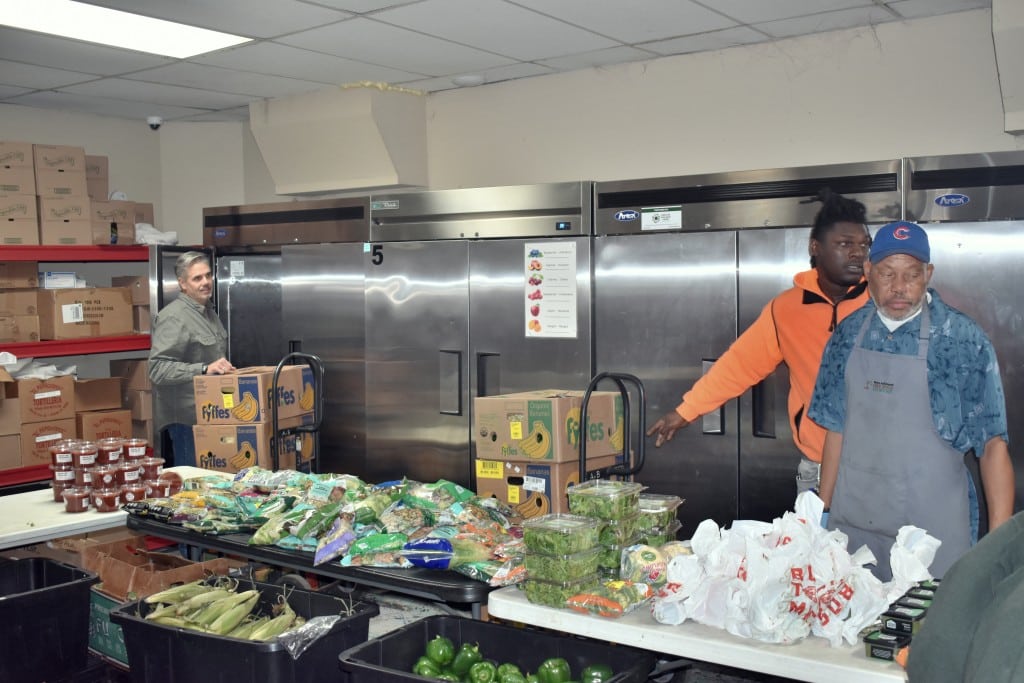
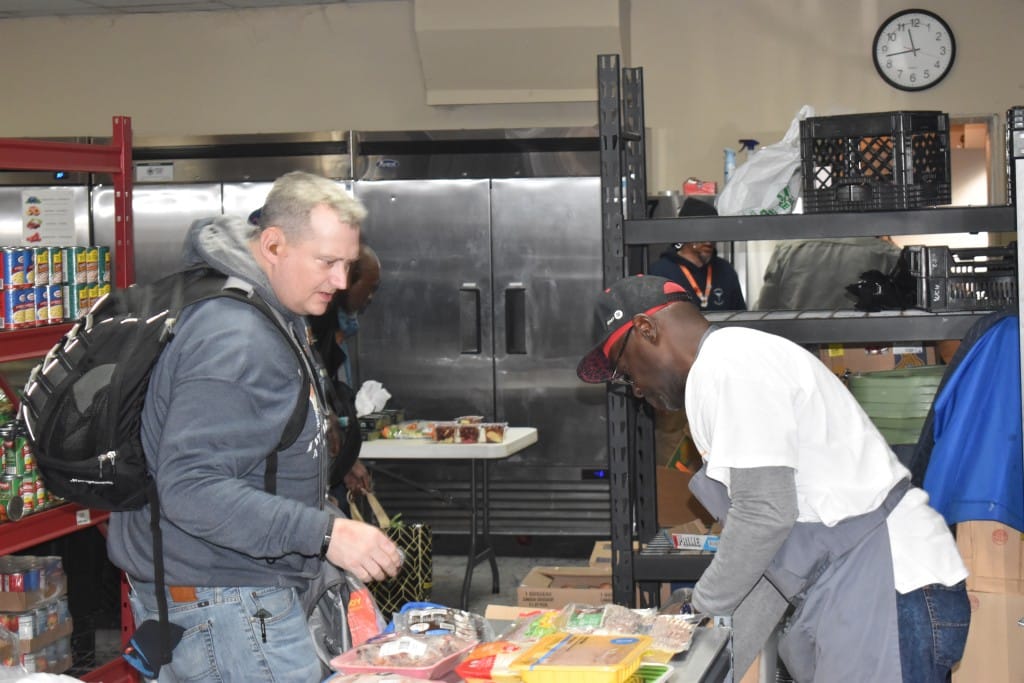
At the Above and Beyond Food Pantry, 817 S. Pulaski Rd., director Ken Cozzi said on Nov. 4 his pantry — one of the few open six days a week — has seen its numbers nearly double since the shutdown began.
“I averaged around 175 people between January and September; now it’s over 350,” Cozzi said. “This week, we got about 18,500 pounds of food, which is nothing. We blow through it.”
The pantry gets weekly deliveries from the Greater Chicago Food Depository and also picks up donations from local retailers such as Costco, Target, Mariano’s, and Sam’s Club. Cozzi said the volume and type of food can change daily.
“We never know what we’ll get,” he said. “I was at a location where we usually get 30 to 40 boxes — this time I got one.”
Storage is another major issue.
“We can always use more food, but we need places to store it,” he said. “Most pantries have one fridge and one freezer. I’m a larger pantry than most, but even we run out of space.”
Above and Beyond also collects food for a pantry in East Garfield Park and two in Austin.
“We do work with each other,” Cozzi said. “If I can’t store something, I’ll call other pantries and they’ll store it. But it’s not a system-wide thing — it’s just based on relationships.”
Cozzi said the pantry’s budget is stretched thin.
“We’re private, self-owned, where 100 percent of everything we get goes out,” Cozzi said. “We make no money. We’re hemorrhaging money constantly.”
Cozzi said his pantry does more than give out food. A social worker points clients to a range of services and resources—obtaining ID and Social Security cards, to finding jobs and houses—that might help them “break the cycle of food insecurity.”
David Kaszuvski, 45, said he attended the Above and Beyond Food Pantry for the first time on Nov. 4. The West Side resident said the pantry serves a larger need.
“People need to eat regardless of political party, so it’s important that places like this are funded and they exist,” he said. “It helps out the community.”
In North Lawndale, chef Quentin Love has opened his restaurant, The Soul Food Lounge, 3804 W. 16th St., to neighbors affected by the SNAP cuts. Every Tuesday from noon to 3 p.m., he plans to serve free meals to anyone who walks in. Love said he’ll continue doing it as long as there’s a need.
In a video posted to Facebook, Love said restaurant owners can play a direct role in easing food insecurity. A GoFundMe fundraiser Love started recently had secured around $4,700 by Nov. 4.
“We have a food insecurity problem that restaurant owners can fix,” Love said. “If you’ve got a restaurant, open your doors for a few hours and feed people. We have the power, the food, and the responsibility.”
Marvin Gary was among at least 40 people who had lined up even before the doors opened to get a free meal at The Soul Food Lounge on Tuesday afternoon. He lauded Love’s efforts.
“I’ve seen tougher times, but I just think it will work out. It’s just about us sticking together and doing stuff like this,” Gary said. “If we have stuff like this, it will be better for us. I’ve seen a lot of reciprocity and people extending their hands to others. But it’s tough. It’s a war. It’s weird. I don’t have a lot of money, but it’s people who are in way worse positions than I am.”
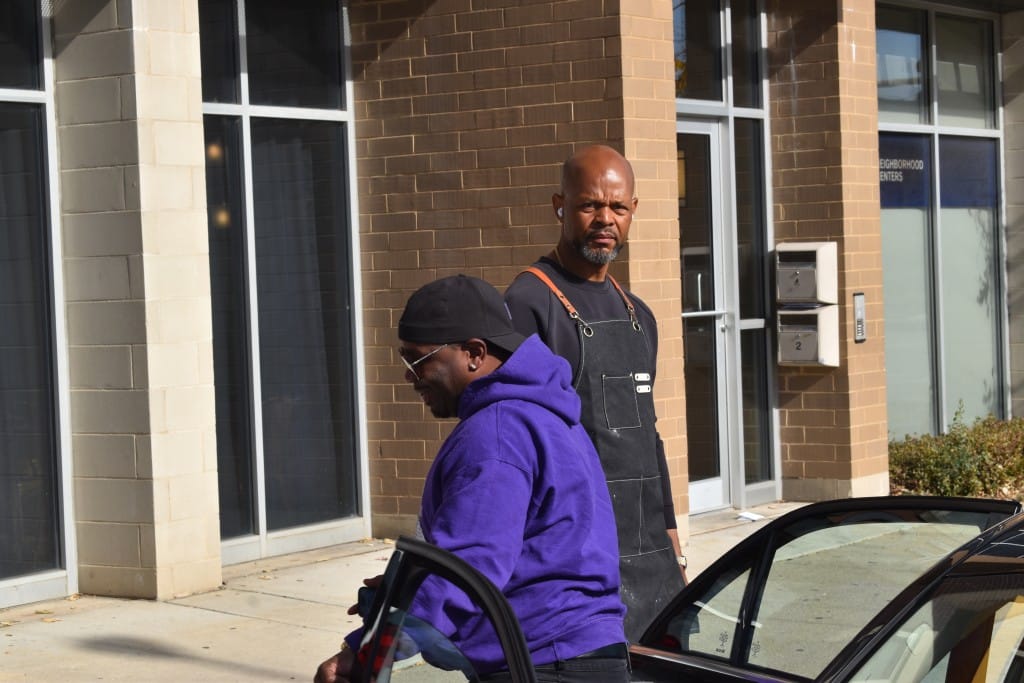
MIKE ROMAIN
Discounted Meals Across Chicago
According to Eater Chicago, restaurants citywide are now offering free or discounted meals for SNAP recipients and others affected by the shutdown. Highlights include:
- Kale My Name (Albany Park) — Free vegan meals with a soft drink daily, 3–5 p.m. (3300 W. Montrose Ave.)
- Chesa’s (Avondale) — Free hot meals every Tuesday, 5–7 p.m.; donations accepted via GoFundMe. (3235 W. Addison St.)
- Edgebrook Coffee Shop (Edgebrook) — Free pancakes and bacon; $5 donations buy a meal for someone in need. (6322 N. Central Ave.)
- Lou Malnati’s & Lawndale Community Church (North Lawndale) — $10 pizza coupons for SNAP recipients, distributed through Nov. 16.
- Paulie Gee’s (Logan Square) — Free kids’ cheese pizzas for children of SNAP recipients. (2451 N. Milwaukee Ave.)
- The Soul Food Lounge (North Lawndale) — Free community meals Tuesdays, noon–3 p.m. (3804 W. 16th St.)
- October Cafe (Norwood Park) — Free meals daily, 3–5 p.m. through November. (6046 N. Avondale Ave.)
- Spoken Café (Ravenswood) — Pay-what-you-can community suppers Mondays, 6–8 p.m. (1812 W. Montrose Ave.)
- Manny’s Deli (South Loop) — Free sandwiches, sides, and drinks for the first 300 SNAP recipients daily; GoFundMe supports the initiative. (1141 S. Jefferson St.)
- The StopAlong (Various) — Free 16-inch pizzas at both locations through Nov. 16. (2210 N. California Ave.; 1812 N. Milwaukee Ave.)
- Penelope’s Vegan Taqueria (Pilsen, River North, Andersonville) — Free meals for children and pregnant women, Mon–Thu, 3–5 p.m.
- Wooden Paddle (Lemont and La Grange) — Free lunches for SNAP recipients, 11:30 a.m.–3 p.m., all November.
- Bobby’s Eastside (Forest Park) — Free blue-plate special and 10% discount for those affected by the shutdown. (7321 Madison St.)
- Tazza Italian Ristorante (Homer Glen) — Free pasta dinners, Tues–Thurs, 4:30–6 p.m. (14065 S. Bell Rd.)
Related Articles

Mayor Brandon Johnson’s Budget Dealt Blow After Failing in Committee, but What’s in It?
The City Council’s Finance Committee vote underscores divisions over head tax, cloud tax hikes, and citywide cost pressures
Illinois Restoring Full SNAP Benefits After Shutdown Ends
All recipients expected to receive November aid by Nov. 20

Illinois Lawmakers Pass Clean Slate Act to Automatically Seal Eligible Criminal Records
New legislation could automatically seal millions of old Illinois criminal records — giving people a fairer shot at jobs, housing, and stability