
Reed Showalter
Reed Showalter’s full response to a questionnaire submitted by The Culture and the Westside Branch NAACP
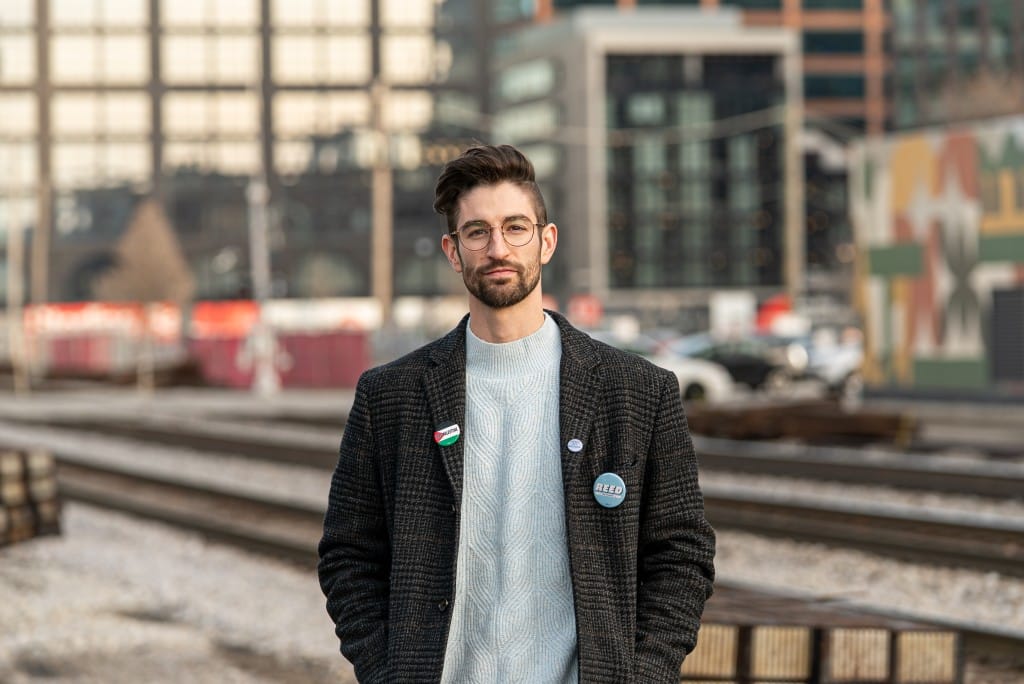
Full Name (as it will appear on the ballot)
Reed Showalter
Party affiliation
Democrat
How can people learn more about your campaign?
- Website: reed4congress.com
- Instagram/BlueSky: @reedforcongress
- Facebook/TikTok: @reed4congress
What do you believe this office is actually responsible for—and what is it not responsible for? How would that understanding guide your decisions if elected?
I believe this office is responsible for representing the views, concerns, needs, and values of the people of the 7th District. This includes both in the day‑to‑day work of constituent services and in the broader decisions that shape policy choices at home and abroad. That means listening closely to the communities I serve, elevating their priorities, and ensuring that federal policy reflects the lived realities of the district. This office is not responsible for advancing the interests of corporations or powerful actors who already have outsized influence in Washington. The responsibility is to people, not to corporate agendas, not to lobbyists, and not to those who can afford special access. I would keep my focus anchored on the district’s needs, on transparent and accountable governance, and on the values my constituents expect me to uphold.
Congressman Davis brought decades of seniority and committee access that helped direct federal resources to this district. Without that institutional leverage, what is your concrete plan to compete for federal funding—especially in the early years of your term?
My approach to federal funding for the district is two-fold: setting goals and building coalitions toward bold, progressive change, and making sure any incremental steps we take are aimed at those goals. While we build coalitions to advance major investments like Medicare for All, a public housing works program, and public infrastructure for our food system, I will ensure that our district benefits from incremental changes that move toward those goals. For example, the farm bill is often treated as a fight over SNAP and crop subsidies, but it also includes requirements for food procurement. I would propose provisions that require USDA-funded grant programs to purchase food from local farms and businesses, creating access to opportunities for Chicago businesses rather than huge corporations, and driving real local economic growth. This approach can be applied across industries by digging into the text of legislation and making sure resources serve our communities.
Washington is undergoing major changes in how federal education policy is administered, including significant restructuring of the Department of Education, shifts in grant administration, and ongoing legal disputes over Title IX enforcement. These changes have real consequences for local school districts. If elected, how would you help constituents understand what is changing—and what responsibility do you believe Congress has to intervene when executive actions may conflict with congressional intent or existing law?
If elected, I would make sure my constituent services offices are equipped to help people, including school districts, navigate these shifts in policy. When institutions are under attack or rules are changing quickly, members of Congress have a responsibility to help communities understand what’s happening and how to respond. Congress also has a clear constitutional role. It is Congress’ job to fight back against cuts and any illegal impoundment of funds that Congress has already allocated. If the executive branch withholds or weaponizes funding in ways that conflict with congressional intent or existing law, Congress must intervene, through oversight, legislation, and, if necessary, the courts. Finally, we should fund schools over multi-year periods whenever possible, so education dollars aren’t destabilized or weaponized every time there’s a change in administration.
Both parties’ House leaders—Democratic Leader Hakeem Jeffries and Speaker Mike Johnson—operate under intense scrutiny and internal debate about strategy, effectiveness, and governance. As a prospective new member of Congress, how do you evaluate party leadership, and under what circumstances would you support or oppose your party’s leaders?
Party leadership should advance the well‑being of the American people, and serve as an anchor for the party’s values. If, for example, Democratic leadership were standing firm against policies that harm our communities, I would support them in that leadership. But if leadership prioritizes corporate interests, caters to billionaires, or looks the other way on policies that ignore human rights, I would be vocal in my advocacy to replace that leadership. Currently, I believe Democratic Leader Hakeem Jeffries is in the latter category, and I do not support his continued leadership of the Democratic Party in the House. That is not to say that I would prevent Democrats from governing if Leader Jeffries was the only option in front of us. But I believe that he has shown that he is unable to meet the moment we are in, and I would like the Democratic Party to look elsewhere for a leader that can lead a real opposition party against an increasingly authoritarian regime.
On the West Side, there’s a critical need for affordable housing. Will you cosponsor and actively whip support for the Neighborhood Homes Investment Act (H.R.2854) to finance rehab/ownership in disinvested neighborhoods—and what specific guardrails would you demand so it prevents displacement rather than accelerating speculation and gentrification?
Yes, I would support the Neighborhood Homes Investment Act (H.R. 2854) and work to build backing for it. The West Side urgently needs resources for rehab and pathways to ownership in disinvested neighborhoods. I would push to prevent institutional investors from owning or purchasing any housing built or rehabbed with federal funds. These homes should not become speculative assets for large firms. I would also propose a broader public works housing program, where the federal government helps finance and build housing that is made available at cost to the people in the communities where it’s built. The goal is stable, affordable homeownership and community control, not accelerating gentrification. That means clear requirements and incentives to ensure that longtime residents can actually access and live in these homes, through owner-occupancy rules, resale restrictions, and community-based eligibility standards.
West Side households get hit hardest when food, utilities, and essentials jump. Would you vote for the Price Gouging Prevention Act of 2025 (introduced as H.R.4528 / S.2321)—and what should count as an “exceptional market shock” where gouging enforcement kicks in?
I would vote for the Price Gouging Prevention Act. In fact, when I worked at the DOJ on price-gouging issues, I was part of the collaborative team that drafted the bill. As for what should count as an “exceptional market shock,” that should clearly include pandemics, major storms, natural disasters, and military conflicts, events that significantly disrupt supply chains and create sudden imbalances in essential goods markets. At the same time, it’s important to leave room for flexibility. Enforcement should be able to respond to other serious disruptions that meaningfully affect supply chains and markets, even if they don’t fit neatly into one category. The goal is to protect families from exploitative price hikes when they are most vulnerable, while still allowing legitimate cost increases tied to real disruptions.
One major Democratic voting-rights agenda item is restoring/modernizing Voting Rights Act protections through the John R. Lewis Voting Rights Advancement Act of 2025 (H.R.14 / S.2523). Would you support this?
I support efforts to restore and modernize Voting Rights Act protections. The John R. Lewis Voting Rights Advancement Act is critical to undo the damage the Supreme Court has done to the Voting Rights Act over the past several years. And I believe that wider democracy reforms are necessary. In addition to supporting this legislation, I would co-sponsor and support bills banning partisan gerrymandering, banning corporate PAC money in politics, capping total campaign spending, and creating a matching-funds system so grassroots candidates can actually compete and win. I would also push legislation to protect an independent Department of Justice, free from political interference. And I would also introduce Supreme Court reform bills that creates a nonpartisan nominating process for many more justices, so we are not stuck indefinitely with the Court that got us here in the first place.
What is your understanding of the SAVE Act and what is your position on the pending legislation?
I strongly oppose any legislation that creates hurdles to exercising the right to vote. The SAVE Act (and the SAVE America Act) is the continuation of a decades-long project to disenfranchise people through additional barriers to voting. Claims that this legislation addresses noncitizen voting clearly serve as pretext for voter suppression that disproportionately affects communities of color, women, and transgender people. Additionally, the SAVE Act’s requirement that states share voting information the the DHS is disturbing. The agency that houses ICE, the Trump administration’s active secret police, should not be given access to state voting records. This requirement is part of Trump’s fascist plan to “nationalize” elections so that he can rig them in his favor. I would fight against this bill, and would support measures that create greater ease of participation, including making Election Day a holiday, automatic voter registration, and secure infrastructure for online voting.
Many West Side leaders argue violence reduction requires poverty reduction and local investment, not just enforcement. What federal funding streams would you expand or protect for community violence intervention, trauma services, and youth employment—and how would you measure success in IL-7 beyond arrest stats?
I would work to expand funding streams that address the root causes of violence, including increased funding and expansion of Medicaid Section 1115 waivers to allow flexible use of Medicaid funds for wraparound services like housing and nutrition. I would also continue to represent IL-7’s support for initiatives like Congressman Davis’ Second Chance Act to protect funding for employment, housing, and mental health and substance abuse services. I would look at reductions in emergency hospital visits, graduation rates, youth job placement rates, long-term reductions in recidivism, and improved economic outcomes. Most importantly, I would measure success through feedback from community leaders and engagement with the community. I would help the community assess issues and solutions through a well-staffed constituent services office, and would hold frequent meetings and town halls to understand the lived experiences in our district and advocate for their needs in Congress.
Would you support the George Floyd Justice in Policing Act of 2025 (H.R.5361), and which provisions matter most to you (qualified immunity standards, national misconduct registry, DOJ “pattern or practice” power, training requirements)?
I support the George Floyd Justice in Policing Act. Among the most important provisions are those that prevent violence and those that create accountability when police harm or kill people. I particularly support expanding the DOJ’s “pattern or practice” power to identify systemic problems before they escalate. This was one of the essential tasks that the DOJ was undertaking when I worked there, and it is critical that we expand this accountability and make it more systemic. But beyond just investigating and identifying these issues, we need real accountability. It is critically important that we end qualified immunity and prevent officers from harming people and violating their rights without any recourse for victims of police violence. This requires new laws that give people and states real legal recourse against federal officers, reversing course on recent decades of Supreme Court precedent.
Related Articles
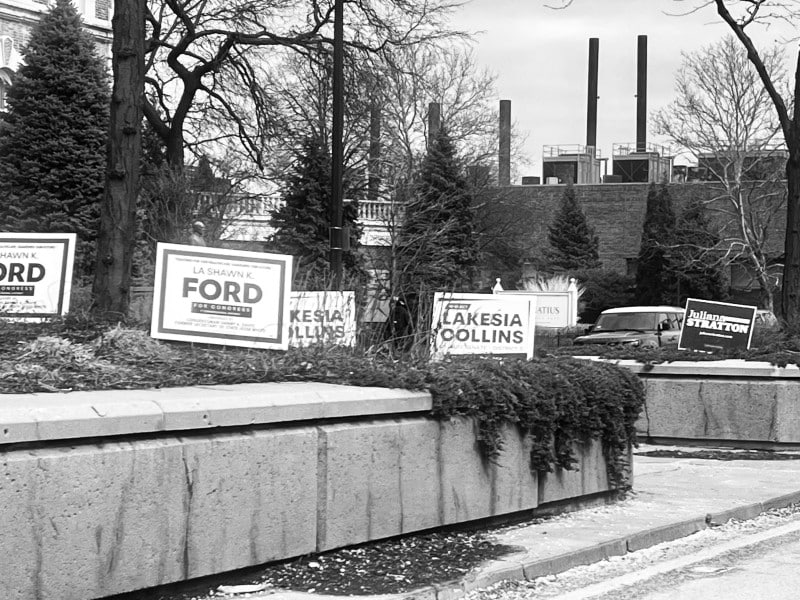
Chicago Outpaces Suburban Cook in Primary Turnout Despite Record Early Voting in the Suburbs
Election Day brought isolated polling-place issues but no widespread disruptions, officials said
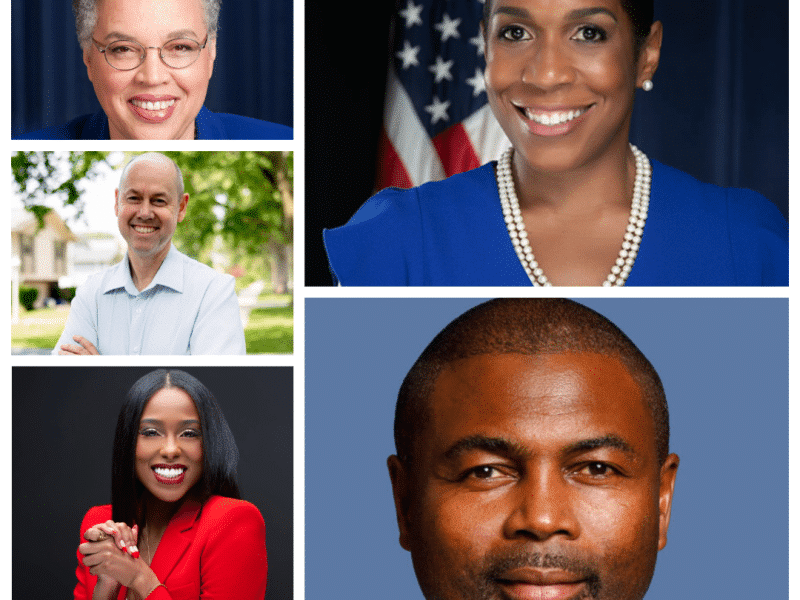
Ford’s Suburban Edge Carries Him Past Conyears-Ervin in 7th District Democratic Primary
Franklin wins Ford’s old House seat; Stratton captures Senate primary as Hynes and Preckwinkle notch major Cook County victories
BALLOT POWER
A nonpartisan voter guide for the Greater West Side created with the help of the Westside Branch NAACP