The Making of an Argument
How photographer Kenn Cook Jr.’s #BLACKMENWELOVEYOU, a multimedia exhibition displayed on June 15 at Columbus Park Fieldhouse, sees Black men through a different lens.
On Feb. 23, Loyce Wright, a 43-year-old security guard working at Family Dollar store, 5410 W. Chicago Ave., was fatally shot after reportedly arguing with a man. Four days later, Chicago police announced that they had arrested and charged Rodgerick O’Neal, 36, of Maywood, with Wright’s murder.
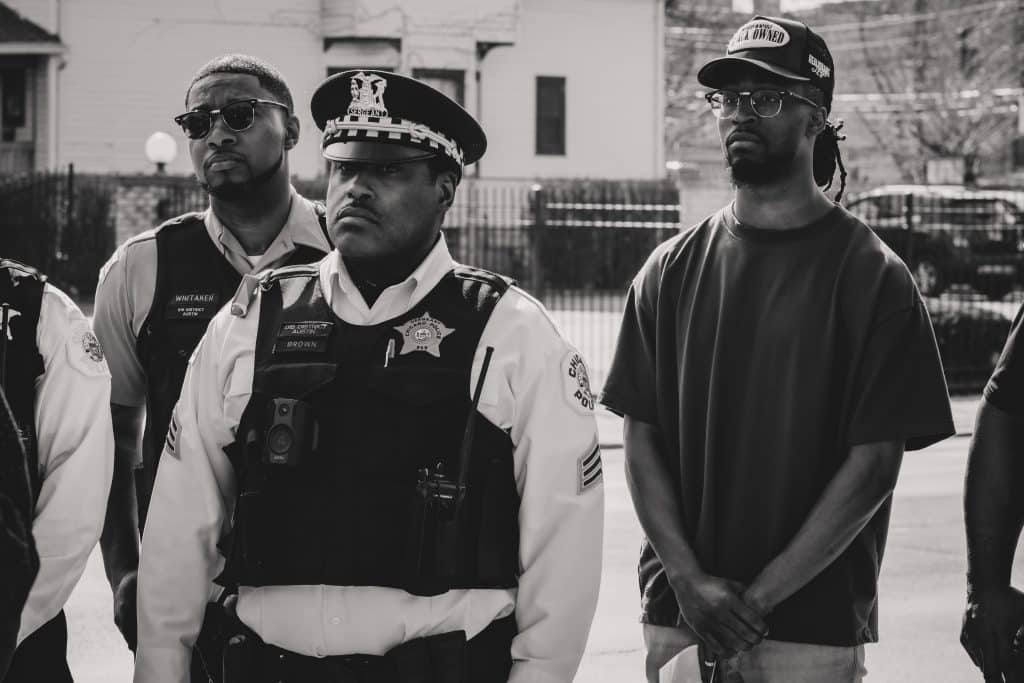
About a week later, on Feb. 27, community members and police officers walked along Chicago Avenue to demonstrate concern and compassion for Wright’s family, the dollar store employees, and anyone who may have been traumatized by the shooting. The 15th District’s community policing office organized the walk.
Chicago Police Sgt. Edgard Brown and Ofc. Ed Whitaker attended the walk and stood alongside community members. The Culture’s staff photographer and Austin resident, Kenn Cook Jr., was there to capture the moment.
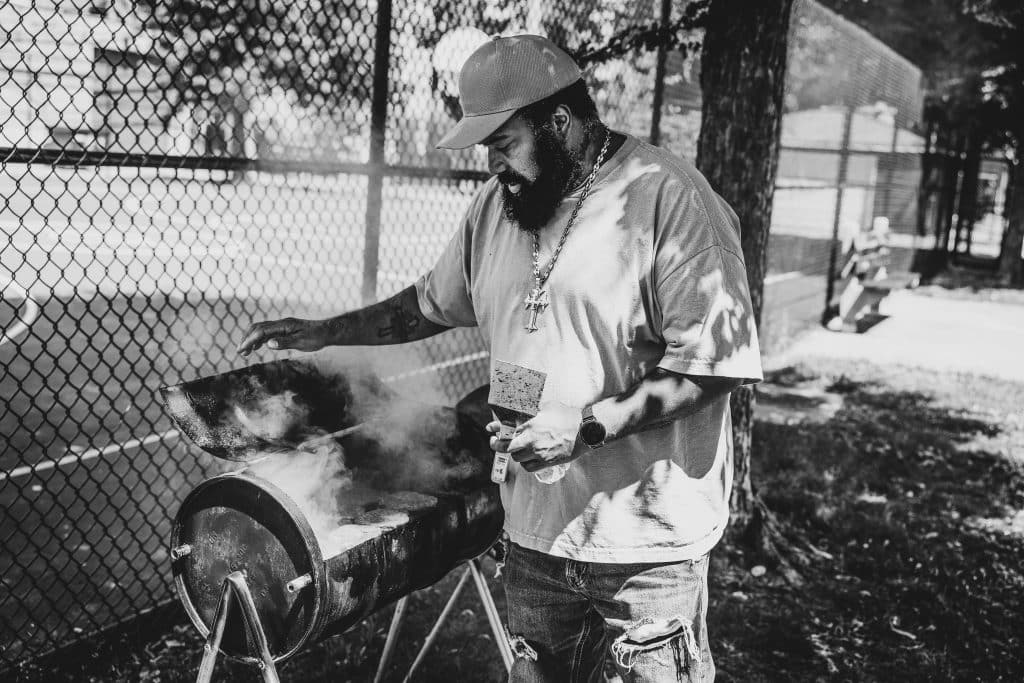
Several months later, Cook printed that monochromatic photograph and about a dozen others showing Black men frozen in the mundane at a PrintLab Chicago and a local Walgreens.
He went to Michael’s, the arts and crafts store, and bought black picture frames (“I got a deal on the frames — buy one, get two free,” he said).
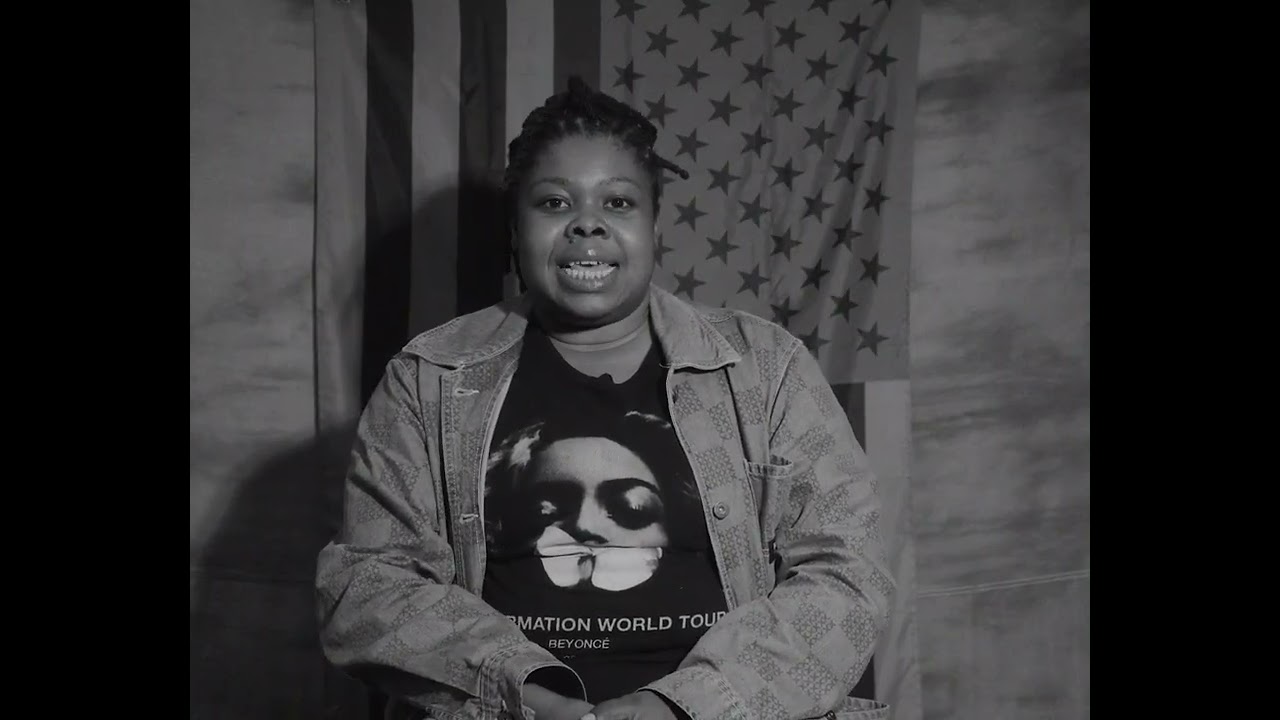
He recorded a small group of people, myself included, saying “Black men, we love you,” into his cell phone. He also recorded a video of people, including his wife, Rebecca Cook, in his living room, articulating their love for Black men while foregrounding the African-American flag.
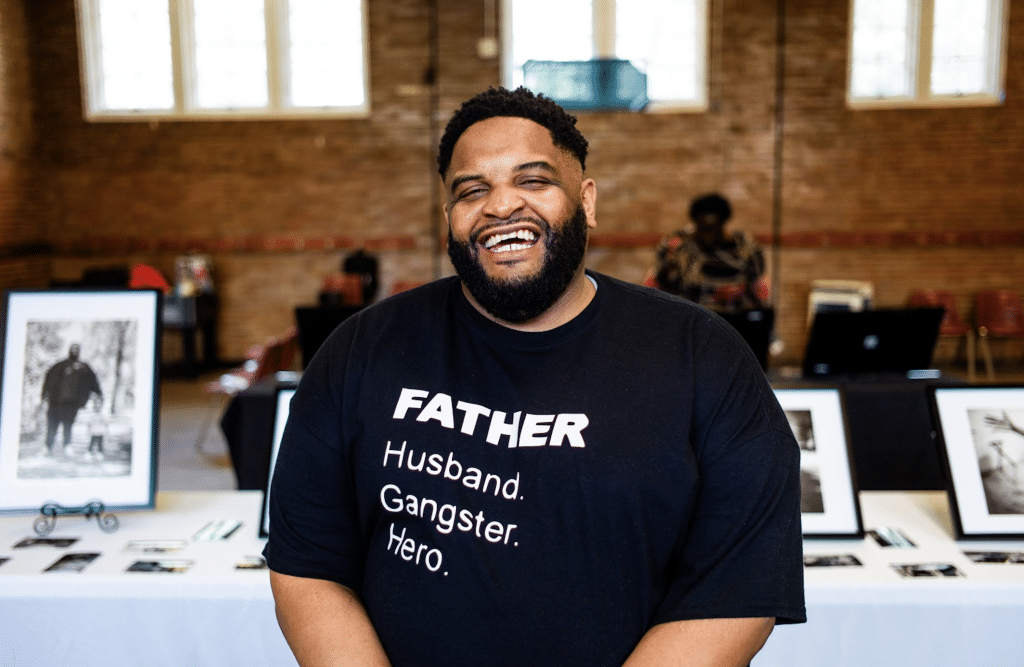
On June 15, Cook, with the support of the Westside Branch NAACP, arranged those photos, that flag backdrop, and a TV screen that played a continuous loop of that roughly 2-minute video and those audio affirmations (“Black men, we love you”) into an arresting solo exhibition — “#BLACKMENWELOVEYOU” — displayed during the Austin Juneteenth West Fest at Columbus Park.
Cook explained the photo of Sgt. Brown and Ofc. Whitaker at the Feb. 27 peace walk, which he captured while on assignment for The Culture.
“I shot that one because people are always thinking Black people are against the police,” he said. “They say we don’t come out when it’s Black-on-Black crime.”
Sgt. Brown walked into Cook’s exhibition, looked around, and noticed his photograph. He said he felt seen.
“It feels good to know that somebody else sees the work we’re doing, which is amazing,” Brown said.
“I like being in the background, but the camera sometimes finds you. We weren’t out there because a police officer shot anybody,” he said. “A Black man shot another Black man. That [demonstration] needs to happen more often, and we need to stop being numb to what we see on these streets.”
Dannie Daniels of Austin said one of the photos prompted her to think about the Black men in her life.
“I thought about my dad embracing my son and his son,” she said. “One of our family’s things is hugging. You don’t see much hugging going on. My dad makes it his business to chop it up with his kids and grandkids.”
Gordon Parks is an influence
Chicago Police Supt. Larry Snelling, the city’s top cop and a Black man in uniform, walked through Cook’s exhibition. So did Cook County Commissioner Tara Stamps, who lit up when she saw people she knows in Cook’s photos.
“Look at Marshawn [a yoga instructor in Austin whom Cook photographed while stretching in his Madison Avenue yoga studio]! That’s a great shot. I love black and whites,” Stamps said.
“At my first Democratic National Convention in Atlanta, when Jesse Jackson ran, I worked as an intern for the Associated Press,” Stamps recalled. “The photographers would take the pictures, and I’d run the film to get it printed. One of the photographers and I were out, and he was snapping pictures of old Black men — in the barbershop, sitting on the porch. It was so Gordon Parks-esque. Gordon’s the icon in terms of photographing Black life.”
Cook said Parks and the photographer LaToya Ruby Frazier, known for her powerful photos of people at the margins of society — from a Black female steel worker to a Black girl in Flint, Mich. opening her mouth to take in a measured amount of bottled water —- are both heavy influences.
Frazier writes about how Parks, a pioneering photographer and filmmaker who famously used his camera as a weapon to document Black life in the 1950s and 1960s, influenced her work.
“I first encountered Gordon Parks’ work when I saw his ‘American Gothic’ portrait of Ella Watson from 1942,” Frazier writes. “That was the moment I realized photography is more than just taking pictures.”
In “American Gothic,” Parks has Watson, a government worker, stand in front of the American flag while holding a broom in one hand and a mop in another. It’s an ironic reference to the famous 1930 painting of the same name by Grant Wood that shows a white farmer standing next to his daughter in front of a house. The reference suggests that Parks intended to place Ella Watson, a worker that American society had deliberately excluded, firmly within the American traditions of labor and democracy. The famous photo is both a protest and an affirmation.
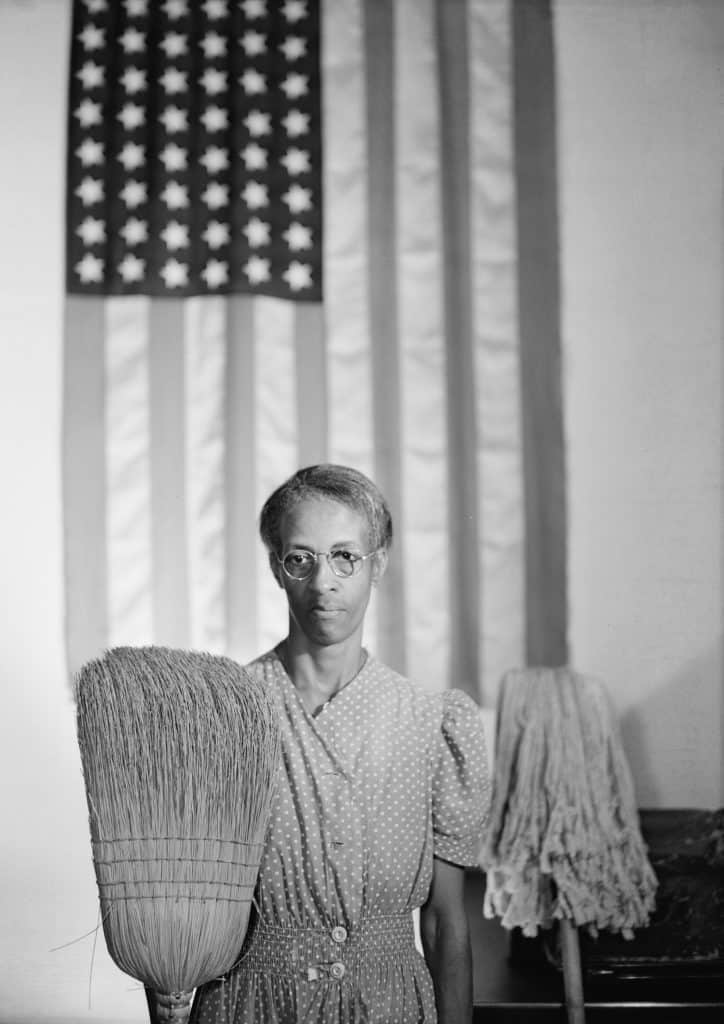
“I learned that, through one dignified image, you could speak about your position as a black woman and how the value of your labour is viewed in society; you could show what inequality does to humanity while also capturing the strength shown in the face of it,” Frazier writes of ‘American Gothic.’
For instance, Cook’s inclusion of the African-American flag in #BLACKMENWELOVEYOU both gestures toward ‘American Gothic’ and employs the Gordon Parks-esque technique of inverting symbols of the dominant society to protest or affirm Black identity.
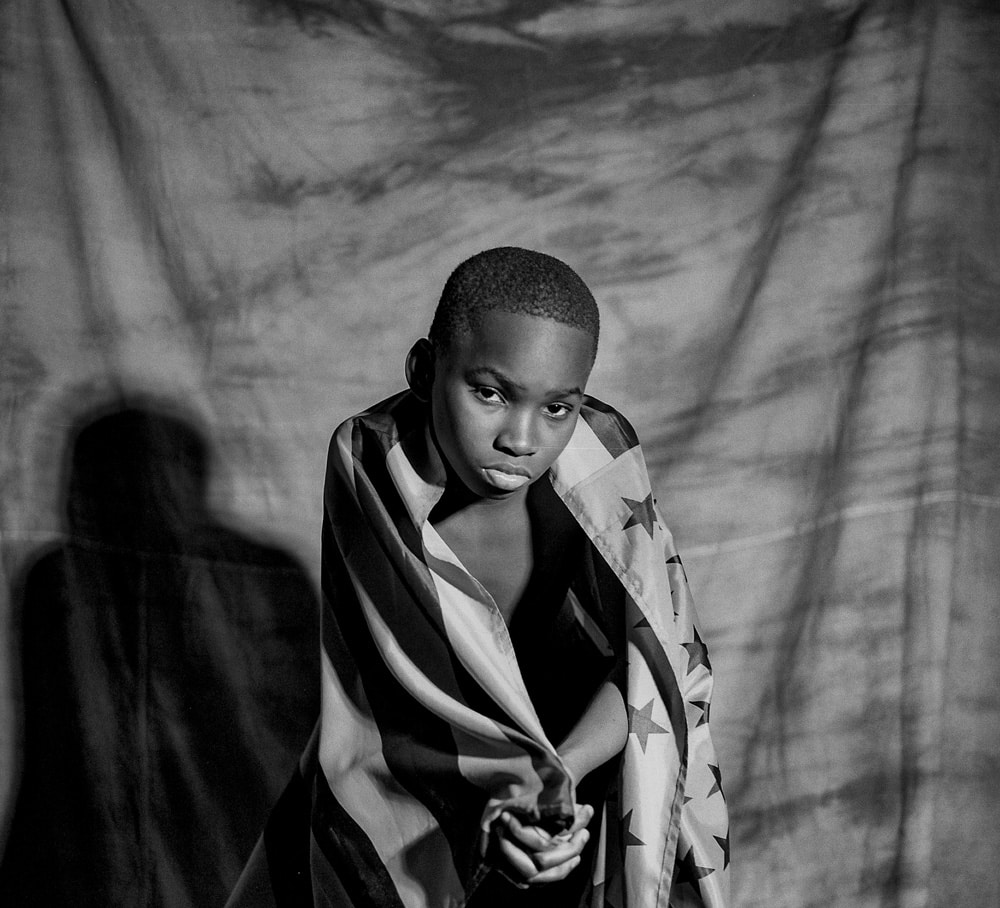
The African-American flag “takes the stars and stripes design of the United States flag and replaces the red, white, and blue with green, red, and black, the colors of the Pan African flag,” the National Museum of African American History and Culture explains.
“Their work tries to change the narrative,” Cook said of Parks and Frazier. “These [photographic moments I captured] are mundane things. This is us. This is how we live on the Westside.”

However, Cook differs from Parks in how he argues for the dignity of Black life.
In 2017, the Berkeley Art Museum and Pacific Film Archive (BAMPFA) at the University of California hosted “Gordon Parks: The Making of an Argument,” an exhibition that pulled together “more than eighty items from the Gordon Parks Foundation archives to offer a comprehensive investigation into the African American photographer’s first Life magazine photo-essay, ‘Harlem Gang Leader’ (1948),” BAMPFA’s website explains.
For the photo essay, Parks gained the trust of 17-year-old Harlem gang leader Leonard “Red” Jackson. The photos tell a complex and layered story of Jackson’s life. Shots of “boys fighting in the streets” stand in stark relief to “affectionate portraits of Jackson doing domestic work in his family’s apartment.”
Parks gave the editors at Life magazine hundreds of photos, but only 21 were published, and the editors’ choices “are telling,” BAMPFA says. “While the published piece is an impressive photojournalistic feat, bringing issues of poverty and blackness into mainstream media while depicting Harlem in an emotive and personal way, much of Parks’s perspective was lost in the editors’ selection.”
The omission “raised the questions: What was the intended argument, and whose argument was it?”
There is no such mystery in #BLACKMENWELOVEYOU, because Cook didn’t just shoot the photos. He made the final decision about which photos he would include in the exhibition. He had the editorial control. Armed with a camera, a cell phone, and money for prints and frames, Cook was his own curator. And he let others in his community (his wife and friends) make his argument — Black men, we love you — without mediation for a mainstream audience. In some ways, the project’s simplicity and directness are the point.
“I want people in my community to feel like they can do something like this, too,” Cook said.
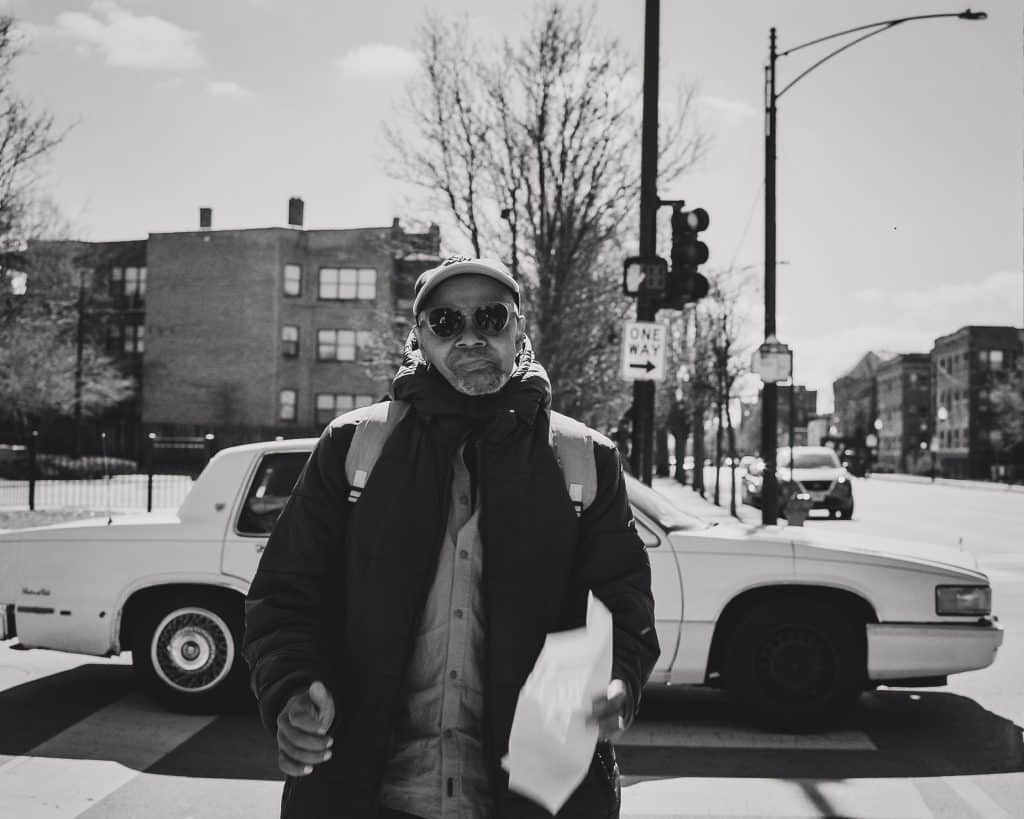
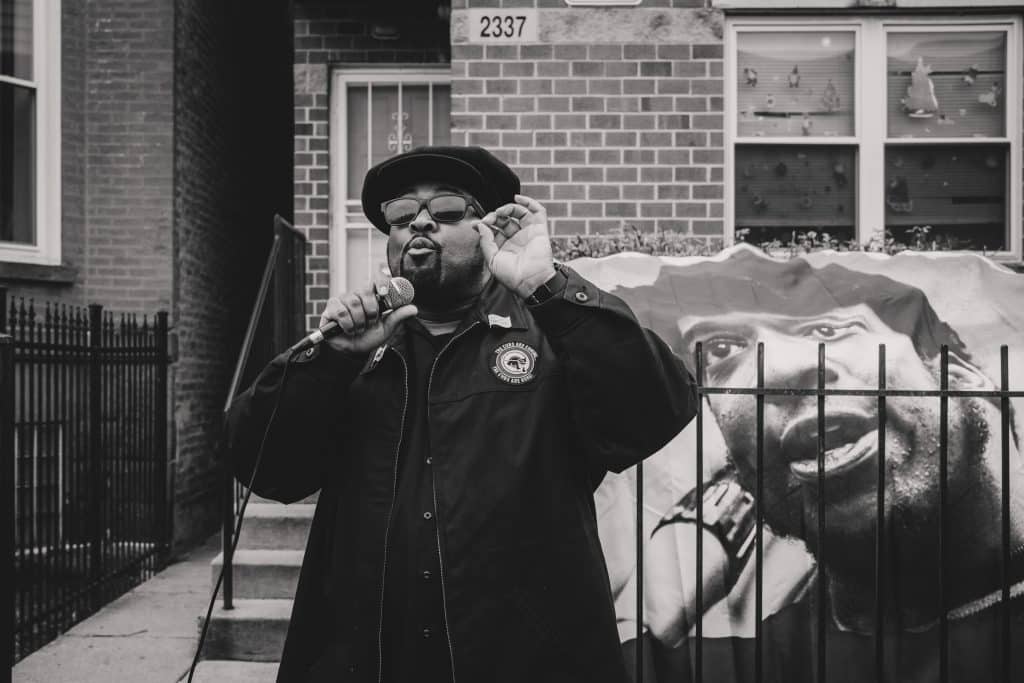
More #BLACKMENWELOVEYOU Photographs

Related Articles
Artist Hebru Brantley Visits Lil Mama’s West Side Home
The Chicago artist saw his Austin sculpture in person for the first time and met a young West Sider dressed as his soaring character.
Athena Williams’ Dream of Bringing Downtown Living to Austin is Nearly Complete
The 78-unit mixed-income apartment complex will start accepting applications in June

Supreme Court’s Latest Voting Rights Decision Continues Long Rollback of Civil Rights Era Protections
Rep. Danny K. Davis says the recent Louisiana v. Callais decision ‘further erodes critical safeguards that protect voters’