
$1M for Backwater Valve Installation Available in Ford’s 8th District
Austin nonprofit Westside Health Authority will administer the state-funded grant program designed to cover up to $20,000 in installation costs for an estimated 60 eligible homeowners.
Homeowners hit hard by the historic flooding in 2023 may soon have a powerful new line of defense. A new state-funded program will offer eligible property owners in state Rep. La Shawn K. Ford’s 8th District grants to install heavy-duty backwater valves—devices designed to stop sewage and stormwater from flowing back into basements during extreme downpours.
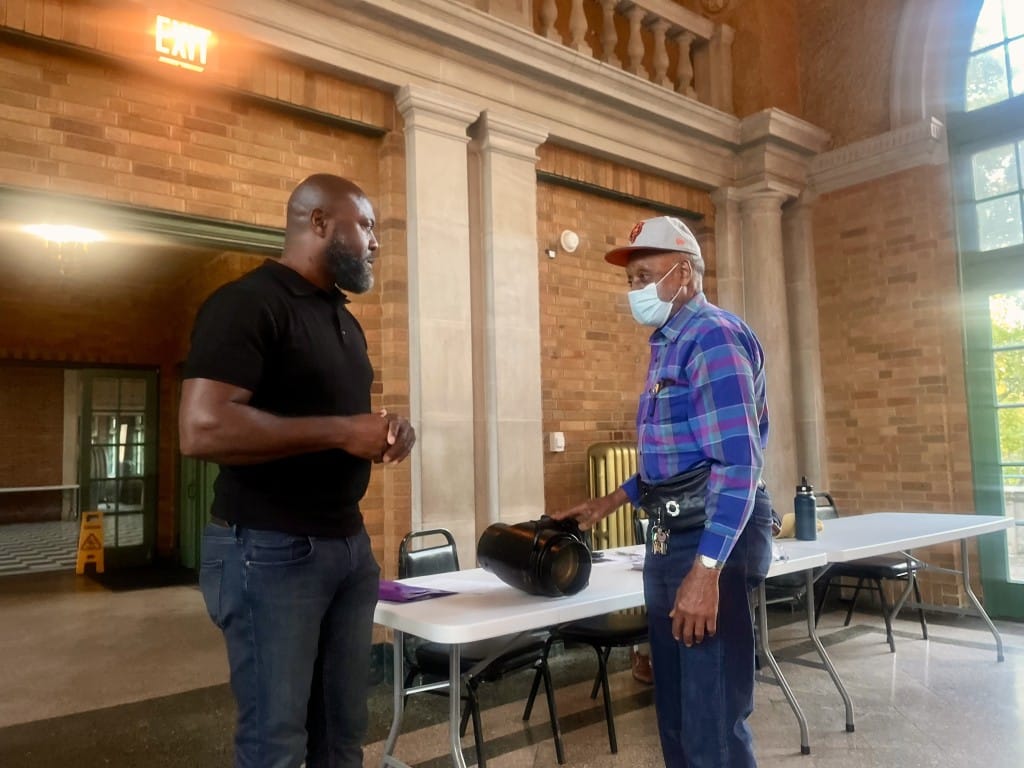
The program, officially called the Residential Backflow Preventers Program, was unveiled at an Oct. 2 community meeting at the Columbus Park Refectory, 5701 W. Jackson Blvd. in Austin.
The $1 million initiative is a partnership between the Westside Health Authority (WHA), an Austin community development nonprofit, and Ford’s office, with funding from the Illinois Department of Commerce and Economic Opportunity. It is expected to run until the funds run out.
How It Works
To qualify, residents must live in the 8th District, earn at or below 100% of the Area Median Income (AMI), and provide proof of homeownership. Homes must not be condemned or deemed uninhabitable, cannot be in foreclosure, and must be single-family dwellings or two-flats in flood-prone areas. Homeowners must also agree not to sell their property for three years after receiving the grant.
“Rep. La Shawn Ford was working on this two years ago,” said Rosie Dawson, property director at WHA. “Now we’re ready to launch.”
“We’re committed to protecting residents and their homes,” Ford stated. “By offering this installation at no cost, we’re making sure every eligible property has the opportunity to safeguard not only their home but also our entire community.”
“Flooding doesn’t just damage property—it disrupts lives,” said WHA CEO Morris Reed. “This program is about equity as much as safety. For too long, West Side families have borne the brunt of basement flooding without the resources to fight back. We see this as a critical step toward leveling the playing field.”
Backwater valves typically cost between $18,000 and $20,000 to install, according to licensed plumber Delvonn Frelix, who spoke at the meeting. The brass valves act as one-way gates: water can flow out of a home but not back in when city sewers overflow. “During these 10-year rains, the city’s sewers get overwhelmed and push water into basements,” Frelix explained. “This valve stops the water at the point of entry.”
The valves require annual cleaning and maintenance, which costs around $150. If not properly serviced, the devices can seize up, leaving homeowners unprotected.
“There’s nothing in life fully guaranteed, but in my 25-plus years of doing this, I have not had a single client say it didn’t work, because I explain to them that if you want it to work properly, you have to use it properly,” Frelix said. “That means you can’t flush feminine products, cleaning wipes, rags—basically anything that doesn’t break down in water—down the toilet. Those things can get stuck in the valve and prevent the flap from closing when water comes in.”
The urgency of the program stems from catastrophic storms in July 2023, when thousands of homes on the West and South Sides flooded after record rainfall overwhelmed Chicago’s sewers. While wealthier neighborhoods had greater access to insurance and flood-prevention investments, communities like Austin bore the brunt of the damage. Many West Side residents are still recovering.
Dawson recounted that a backwater valve spared her South Side home during that storm while her neighbors’ basements flooded.
Learn More
Who qualifies?
- Homeowners in Illinois’ 8th District
- Income at or below 100% of Area Median Income
- Proof of residence and homeownership required
- Homes must be habitable and not in foreclosure
Maintenance: Annual cleaning required (approx. $150/year)
Deadline: First-come, first-served basis. Residents must sign up with WHA. Program launches Oct. 16 and runs until funds are exhausted.
More info: Visit healthauthority.org.
Related Articles
Athena Williams’ Dream of Bringing Downtown Living to Austin is Nearly Complete
The 78-unit mixed-income apartment complex will start accepting applications in June

Supreme Court’s Latest Voting Rights Decision Continues Long Rollback of Civil Rights Era Protections
Rep. Danny K. Davis says the recent Louisiana v. Callais decision ‘further erodes critical safeguards that protect voters’

West Siders Learn Tools and Techniques of Preserving Their Own Stories
At a May 9 workshop at Legler, residents explored how oral history can preserve firsthand accounts often missing from mainstream narratives about Black life